Menopause Supplements: What the Evidence Says About Each
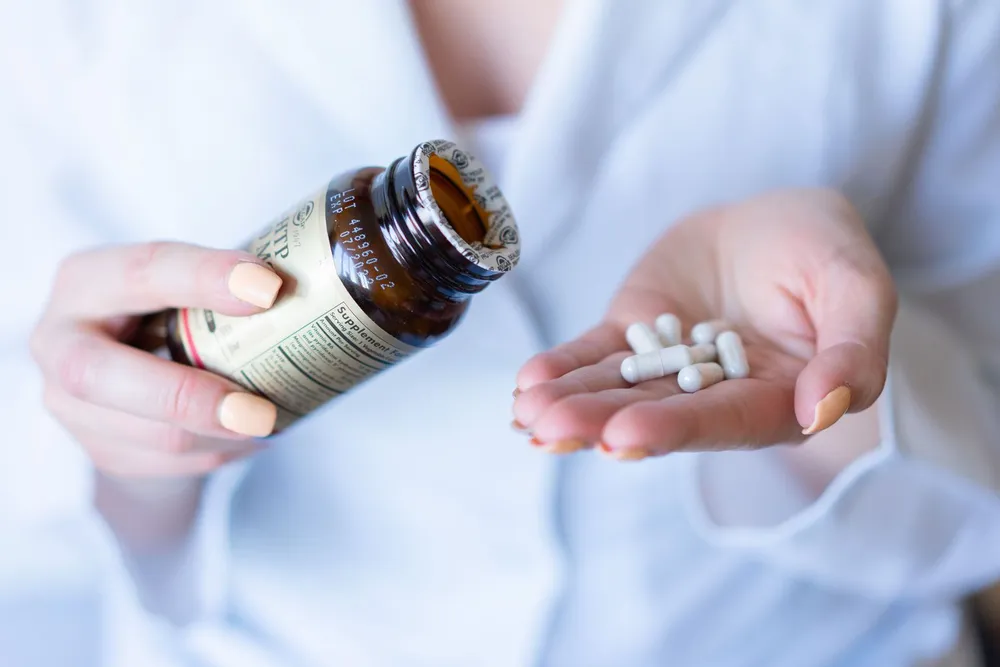
For hot flashes and night sweats, The Menopause Society's 2023 review recommended none of the supplements it assessed, from black cohosh and soy to ginseng and omega-3s, mostly because the evidence was mixed or missing. Supplements aren't FDA-approved before they're sold, and a few carry real safety warnings. Several prescription and non-drug options have stronger evidence.
The supplement aisle makes menopause look like a solved problem. There's a bottle for hot flashes, one for sleep, one for "balance," one with a woman smiling on a beach. What the labels don't tell you is whether anyone tested the product on women like you, and what they found.
So I went to the most thorough recent review I could find: the 2023 position statement on nonhormone treatments from The Menopause Society (formerly The North American Menopause Society, or NAMS), which graded the evidence for each supplement against hot flashes and night sweats. This guide walks through what it concluded, where another federal source reads the same research more kindly, the safety warnings that are easy to miss, and what has stronger evidence. Where this site has a full article on a supplement, I link to it.
Why is it so hard to know which supplements work?
Because nobody has to prove they work before they go on sale. The FDA says it does not have the authority to approve dietary supplements for safety and effectiveness, or to approve their labels, before they're sold. The companies are responsible for meeting safety standards, and the FDA's role mostly begins after a product is already on the market.
The Menopause Society describes the same gap from the research side. It says managing hot flashes with supplements is "complex and challenging" because there are few rigorous randomized trials and "a lack of government regulation to ensure their purity and safety." It adds that these products can be marketed toward claims of relieving symptoms despite limited evidence, as long as they don't claim to treat a disease.
What did The Menopause Society conclude about supplements for hot flashes?
It recommended none of them. In its 2023 position statement, The Menopause Society reviewed over a dozen supplements and herbal products for vasomotor symptoms, the medical term for hot flashes and night sweats, and marked every one "not recommended." It grades evidence from Level I (good and consistent) to Level III (expert opinion), and the reasons varied.
Some failed in good trials. Others had only one small study, studies paid for by the manufacturer, or results too mixed to call. Here is how it summarized the main ones, in its own terms. Note what the review was asking: whether these products relieve hot flashes and night sweats, not whether they help sleep, mood or bones.
| Supplement | What the 2023 review found for hot flashes | Grade |
|---|---|---|
| Black cohosh | A 2012 Cochrane review (16 trials, 2,027 women in total) found no significant difference from placebo in hot flash frequency; "insufficient evidence" | Level I, not recommended |
| Ginseng | Several trials, including one of 384 postmenopausal women, found no greater benefit than placebo | Level I, not recommended |
| Vitamin E | "Very little evidence" of significant benefit | Level I, not recommended |
| Soy foods, soy extracts, equol | Mixed results from widely varying studies with significant limitations | Level II, not recommended |
| Omega-3s | One small trial positive, a larger 12-week trial found no difference; "mixed and inconclusive" | Levels I–II, not recommended |
| Pollen extract | One small trial and two single-arm studies; based on expert opinion and limited research | Level III, not recommended |
| Ammonium succinate | Positive results, but limited and from manufacturer-sponsored trials | Level II, not recommended |
| Siberian rhubarb extract | Positive trial, but only 7 of 55 women on placebo completed it | Level II, not recommended |
| Dong quai, evening primrose, maca, chasteberry, milk thistle, wild yam | No benefit, too few studies, or products tested in mixtures | Level II, not recommended |
| Cannabinoids | Only three small studies; "cannot be recommended" | Level II, not recommended |
Its overall conclusion was blunt: given "the lack of rigorous, evidence-based scientific research supporting the use of any over-the-counter supplements and herbal therapies" for hot flashes, it does not recommend them. In my reading, that's not the same as proving every one of them useless. It means none has cleared the bar.
Does black cohosh work for menopause?
It depends on which review you read. The Menopause Society calls it the most purchased botanical for menopause symptoms and, based on a 2012 Cochrane review (16 trials, 2,027 women in total), found no significant difference from placebo in hot flash frequency. It concluded there's insufficient evidence to support it.
The National Center for Complementary and Integrative Health (NCCIH), part of the NIH, reads a different set of reviews more generously, in a summary dated February 2021. It cites a 2017 meta-analysis of 47 trials in 8,326 women that found black cohosh more effective than placebo for hot flashes, alongside a 2016 review that found no high-quality, consistent evidence of benefit. It notes that most research has been on one extract, Remifemin, and that results for other products have been inconsistent.
In my reading, the honest summary is that the evidence points in different directions depending on which trials are pooled, and the specialist society's statement is the newer document, but the black cohosh review it relied on (Cochrane, 2012) is older than the 2017 meta-analysis cited in the NCCIH's 2021 summary for health providers. Our full article on black cohosh goes through the trials, and the liver warning is covered below.
What about soy, red clover and other plant estrogens?
The picture is mixed rather than empty. The Menopause Society says soy trials since 2015 are hard to summarize because the products and doses varied so widely, with some showing benefit and others none, and it doesn't recommend soy foods, soy extracts or equol for hot flashes.
It also notes that most of those trials measured results after about 12 weeks, while meta-analyses suggest longer is needed to see the full effect.
The detail I find most useful is about equol, a compound some people make from soy in the gut. The Menopause Society says only 35% of North American women can convert a soy isoflavone into equol, that women who can't make equol don't benefit from soy but would be expected to benefit from equol itself, and that tests to find out aren't commercially available. Our soy isoflavones guide covers this in depth.
The NCCIH is again a little more positive: it cites a 2016 meta-analysis of 62 studies that linked some plant-estrogen supplements, such as soy isoflavones, with modest reductions in hot flash frequency, though not in night sweats, and many of the studies were of low quality. For red clover, it describes inconsistent results. Our red clover article covers that evidence.
Which menopause supplements carry real safety warnings?
A few do, and "natural" doesn't settle it. The FDA warns that many supplements contain ingredients with strong effects in the body, that some can interact with medications, interfere with lab tests or have dangerous effects during surgery, and that you shouldn't assume the word "natural" means a product is safe.
Black cohosh and the liver. The Menopause Society says reports of possible liver toxicity started appearing after 2000, and that the US Pharmacopeial Convention's botanical experts found 30 reports possibly related to black cohosh. Their committee directed that black cohosh products carry this warning: "Discontinue use and consult a healthcare practitioner if you have a liver disorder or develop symptoms of liver trouble, such as abdominal pain, dark urine, or jaundice." The NCCIH says cases of liver damage, some very serious, have been reported; it calls them rare and says it's uncertain whether black cohosh was responsible.
Other warnings from the same sources are worth knowing before you buy:
- Wild yam creams: The Menopause Society says tested yam creams often contain no yam extract, and many have been adulterated with undisclosed hormones, including estrogens and progestins. Our progesterone cream guide explains why the body can't turn wild yam into progesterone.
- Dong quai: it lists possible sensitivity to sunlight, effects on blood clotting and possible cancer-causing effects among its safety concerns.
- The wrong herb: the NCCIH says some commercial black cohosh products have contained the wrong herb, or mixtures of herbs not listed on the label.
- Long-term soy extracts: the NCCIH says long-term use has been associated with thickening of the lining of the uterus, and that it's uncertain whether soy isoflavone supplements are safe for women who have had or are at risk of breast cancer.
If you take more than one product, our guide to combining menopause sleep supplements covers the overlaps that are easy to miss.
Do calcium and vitamin D supplements prevent fractures after menopause?
At low doses, the US Preventive Services Task Force says they don't. Its 2018 recommendation advises against daily supplements of 400 IU or less of vitamin D and 1,000 mg or less of calcium to prevent fractures in postmenopausal women in the community. It found, with moderate certainty, no net benefit at these doses, partly because they increase kidney stones.
For higher doses, it found the evidence insufficient to say either way. Two limits matter here. The recommendation is about preventing a first fracture in women without known problems: it does not apply to women with a history of osteoporotic fractures, an increased risk of falls, or a diagnosis of osteoporosis or vitamin D deficiency. And the large Women's Health Initiative trial behind it tested 400 IU of vitamin D with 1,000 mg of calcium and found no significant reduction in any fracture. The USPSTF notes that this topic is being updated.
In my reading, that makes this a conversation to have with your doctor, especially if you have osteoporosis or low vitamin D, rather than a bottle to add on your own. Our guides on menopause and osteoporosis and on vitamin D and sleep go further.
What about supplements for menopause sleep?
That's a different question from hot flashes, and The Menopause Society's 2023 statement wasn't answering it. Sleep is the focus of this site, so we've gone through the main sleep supplements one at a time, each with its own trials and caveats.
Start with the one you're considering: magnesium, melatonin, valerian, ashwagandha, L-theanine, glycine, saffron or CBD. Our overview of herbal supplements for menopause sleep compares them side by side.
Other popular menopause supplements have their own pages too: probiotics, collagen, creatine and DHEA.
What has stronger evidence than supplements for hot flashes?
Several options do. The Menopause Society's 2023 statement says hormone therapy remains the most effective treatment for hot flashes and should be considered in women under 60, within 10 years of their final period, who have no reason not to take it. For women who can't or won't take hormones, it recommends several nonhormone options with Level I evidence.
- Talking and mind-body therapies: cognitive-behavioral therapy (CBT) and clinical hypnosis.
- Prescription medicines: SSRIs and SNRIs, such as paroxetine and venlafaxine, gabapentin, and fezolinetant (Veozah).
- Others with lower grades: oxybutynin (Levels I–II), and weight loss and stellate ganglion block (Levels II–III).
Our hot flashes guide walks through each of these, and our HRT guide covers the benefits and the risks of hormone therapy.
If you still want to try a supplement, how do you do it safely?
Start with a conversation, not the checkout. The FDA advises talking with a health care professional, such as your doctor, nurse, dietitian or pharmacist, before buying or taking a supplement, taking it only as described on the label, and never using it in place of a prescription medicine.
It also says to be wary of hype and of claims that sound too good to be true.
- Tell your prescriber and pharmacist about everything you take, including before surgery, since the FDA notes some supplements can have dangerous effects during surgery.
- Try one at a time. In my reading, if you start two products together and feel different, you can't tell which one did it, or which one caused a side effect.
- Give it a fair trial, and set an end date. The Menopause Society notes that, for soy, meta-analyses suggest more than 13 weeks may be needed to see half of the expected effect, longer than many trials ran.
- Stop and report problems. If you have a bad reaction, the FDA says to immediately stop the supplement, seek medical care or advice, and report it to the FDA.
Where to go from here
If hot flashes are what you're trying to fix, our hot flashes guide is the best next stop, because it covers the treatments with stronger evidence. If it's sleep, start with our herbal supplements overview. And if you're weighing hormones, read our HRT guide.
For how all of this connects to rest and recovery at night, start at the complete perimenopause and menopause sleep guide.
Key takeaways
- None cleared the bar for hot flashes: The Menopause Society's 2023 review marked every supplement it assessed "not recommended" for hot flashes and night sweats.
- No approval before sale: the FDA doesn't approve supplements for safety or effectiveness before they're sold.
- Sources disagree on black cohosh and soy: the NIH's NCCIH cites more positive meta-analyses than The Menopause Society relied on.
- Some carry real warnings: black cohosh and the liver, adulterated wild yam creams, and dong quai's safety concerns.
- Low-dose calcium and vitamin D don't prevent fractures: the USPSTF advises against them for that purpose in postmenopausal women living in the community without osteoporosis, a past fracture, an increased fall risk or vitamin D deficiency.
- Better-evidenced options exist: hormone therapy, CBT, clinical hypnosis, SSRIs/SNRIs, gabapentin and fezolinetant.
Frequently asked questions
What is the best supplement for menopause?
For hot flashes and night sweats, no supplement has strong evidence: The Menopause Society's 2023 review recommended none of the supplements it assessed, including black cohosh, soy, ginseng and omega-3s. Its recommended options are hormone therapy and several nonhormone treatments, such as CBT, clinical hypnosis, SSRIs/SNRIs, gabapentin and fezolinetant.
Does black cohosh work for hot flashes?
The evidence is mixed. The Menopause Society cites a 2012 Cochrane review of 16 trials that found no significant difference from placebo and does not recommend it. The NIH's NCCIH cites a 2017 meta-analysis of 47 trials that found it more effective than placebo, alongside another review that found no consistent benefit.
Are menopause supplements safe?
Not automatically. The FDA does not approve supplements for safety or effectiveness before they are sold, and warns that some interact with medications or cause problems during surgery. US Pharmacopeia experts directed that black cohosh products carry a liver warning, and The Menopause Society says some wild yam creams have been adulterated with undisclosed hormones.
Should I take calcium and vitamin D after menopause?
Talk to your doctor. The USPSTF recommends against daily supplements of 400 IU or less of vitamin D and 1,000 mg or less of calcium to prevent fractures in postmenopausal women living in the community, and found the evidence for higher doses insufficient. This does not apply to women with osteoporosis, a past osteoporotic fracture, an increased risk of falls or vitamin D deficiency.
Is soy good for menopause symptoms?
The evidence is mixed. The Menopause Society does not recommend soy foods, soy extracts or equol for hot flashes because study results vary. It notes that only 35% of North American women can turn a soy isoflavone into equol, which may affect who benefits. The NCCIH cites a meta-analysis linking soy isoflavones to modest reductions in hot flash frequency, but not night sweats, in studies that were often of low quality.
How long should I try a menopause supplement?
Agree on a trial period with your doctor and set an end date. For soy, The Menopause Society notes meta-analyses suggesting more than 13 weeks may be needed to see half of the expected effect. If you have a bad reaction, the FDA says to stop immediately, seek medical care or advice and report it.
Sources cited
- The North American Menopause Society. The 2023 nonhormone therapy position statement of The North American Menopause Society. Menopause. 2023;30(6):573-590. menopause.org (full text, PDF)
- National Center for Complementary and Integrative Health (NIH). Menopausal Symptoms and Complementary Health Approaches: What the Science Says. February 2021. www.nccih.nih.gov
- U.S. Food and Drug Administration. FDA 101: Dietary Supplements. www.fda.gov/consumers/consumer-updates/fda-101-dietary-supplements
- US Preventive Services Task Force. Vitamin D, Calcium, or Combined Supplementation for the Primary Prevention of Fractures in Community-Dwelling Adults: Preventive Medication. Final recommendation, April 17, 2018. www.uspreventiveservicestaskforce.org
How this article was checked
The full text of The Menopause Society's 2023 nonhormone position statement, the NCCIH's summary for health providers, the FDA's consumer guide to supplements and the USPSTF recommendation were read in full. Quotes appear as written, and each grade in the table is the one the 2023 statement assigns.
Two independent fact-checks found no serious errors; they led to corrections in earlier drafts, mostly to keep populations, dates and safety wording exactly as the sources state them.
It has not been reviewed by a clinician. Ellen Hayes is a researcher and writer, not a doctor, and nothing here is a diagnosis or a substitute for being seen by one.

Ellen Hayes
Health & Wellness Writer and Researcher
Hi — I'm Ellen. I spent a long time in the supplement aisle before I read what the reviews actually concluded. I hope this saves you some of that time, and some money.
I'm not a doctor. I'm not an expert — and I'm never going to talk down to you like one. I'm a woman in the middle of perimenopause who got tired of vague answers, started reading the actual research, and writes it down here in plain English, the way I'd explain it to a friend over coffee. More about Ellen →