Glycine for Sleep in Menopause: What the Research Shows
Glycine is an amino acid that helps you fall asleep by lowering your core body temperature — it widens blood vessels in the hands and feet so heat escapes. Small trials of 3 grams before bed found faster sleep onset and less next-day sleepiness. No study has tested it in menopausal women, so it's promising and cheap, not proven.
I came at this one backwards. I'd been reading about why a warm bath helps you sleep — it's not the warmth, it's the temperature drop afterwards — and somewhere in that rabbit hole I found a compound that appears to do the same thing from the inside. That was glycine, and I'd walked past it on the shelf a hundred times assuming it was a protein powder for gym people.
What caught my attention is the mechanism, because it's unusually relevant to us. Most sleep supplements try to sedate you or nudge a hormone. This one changes your thermostat — and temperature is precisely what menopause makes unruly.
What is glycine, and how does it affect sleep?
It's the smallest amino acid your body uses, and the most abundant one in collagen. You already eat it daily in protein, and your body makes its own. In the brain it acts as an inhibitory neurotransmitter — a calming signal — which is the part that made researchers curious about sleep in the first place.
But the sleep effect doesn't seem to come from sedation. Studies in animals traced it to receptors in the suprachiasmatic nucleus, the master clock in the brain, where glycine triggers widening of the blood vessels near the skin. Heat leaves through your hands and feet, and your core temperature falls.
Why does the temperature effect matter in menopause?
Because falling core temperature is one of the physical signals that starts sleep — and yours is being interfered with nightly. Your body normally cools by about a degree as bedtime approaches. Hot flashes, night sweats, and a warm bedroom all push in the opposite direction, which is why staying cool at night does so much heavy lifting in midlife.
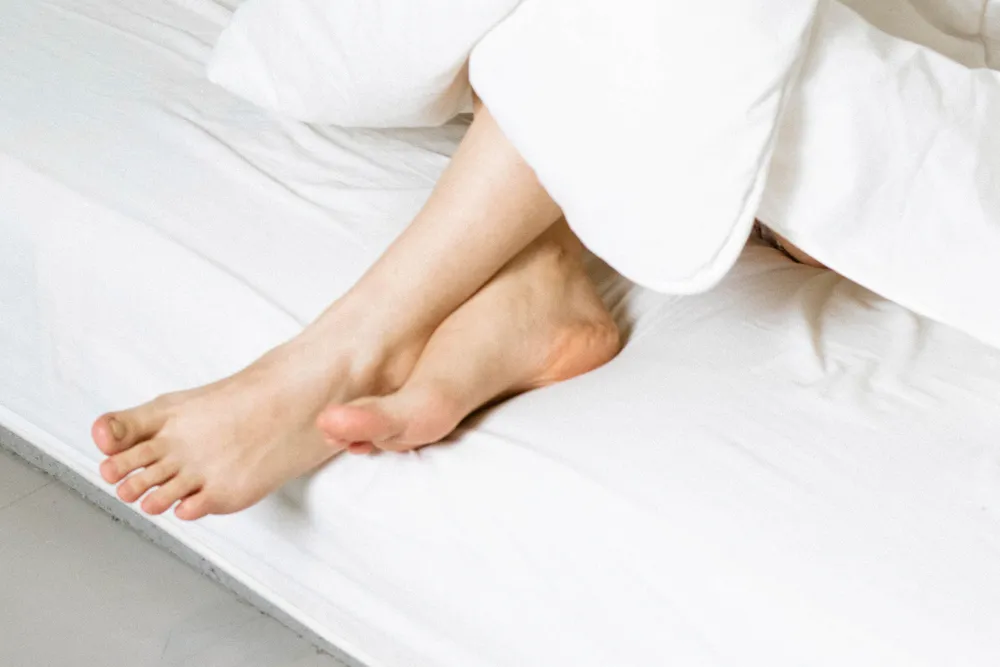
So a compound that helps you shed heat is, at least in theory, aimed at the right target. It's the same physics behind the advice to have a warm bath ninety minutes before bed, or to let your feet stick out from under the duvet: heat leaves through the extremities, and the drop is the signal.
I want to be careful here, because this is exactly where supplement marketing overreaches. No trial has tested glycine on hot flashes, night sweats, or menopausal insomnia. The mechanism is a good reason to be interested; it isn't evidence that it fixes a vasomotor problem. What it may plausibly help with is the ordinary difficulty of dropping off — not the flash that wakes you at two.
What does the research actually show?
Encouraging results from a handful of small studies, and not much more. The best-known trial gave 3 grams of glycine before bed to volunteers who were unhappy with their sleep, and measured them in a sleep lab. They fell asleep faster, reached deep sleep sooner, and reported better quality — without any change to the overall architecture of the night.
Two things keep me honest about that. First, the studies are small — dozens of people, not thousands — and mostly conducted in Japan by researchers connected to an amino acid manufacturer. That doesn't make the findings wrong, but it's a conflict worth naming, and independent replication is thin.
Second, and I'll say it again because it matters: none of this was tested in women going through menopause. The participants were adults with everyday poor sleep. Applying the result to a 51-year-old waking at 3 a.m. drenched in sweat is an extrapolation, not a finding.
How much glycine, and when?
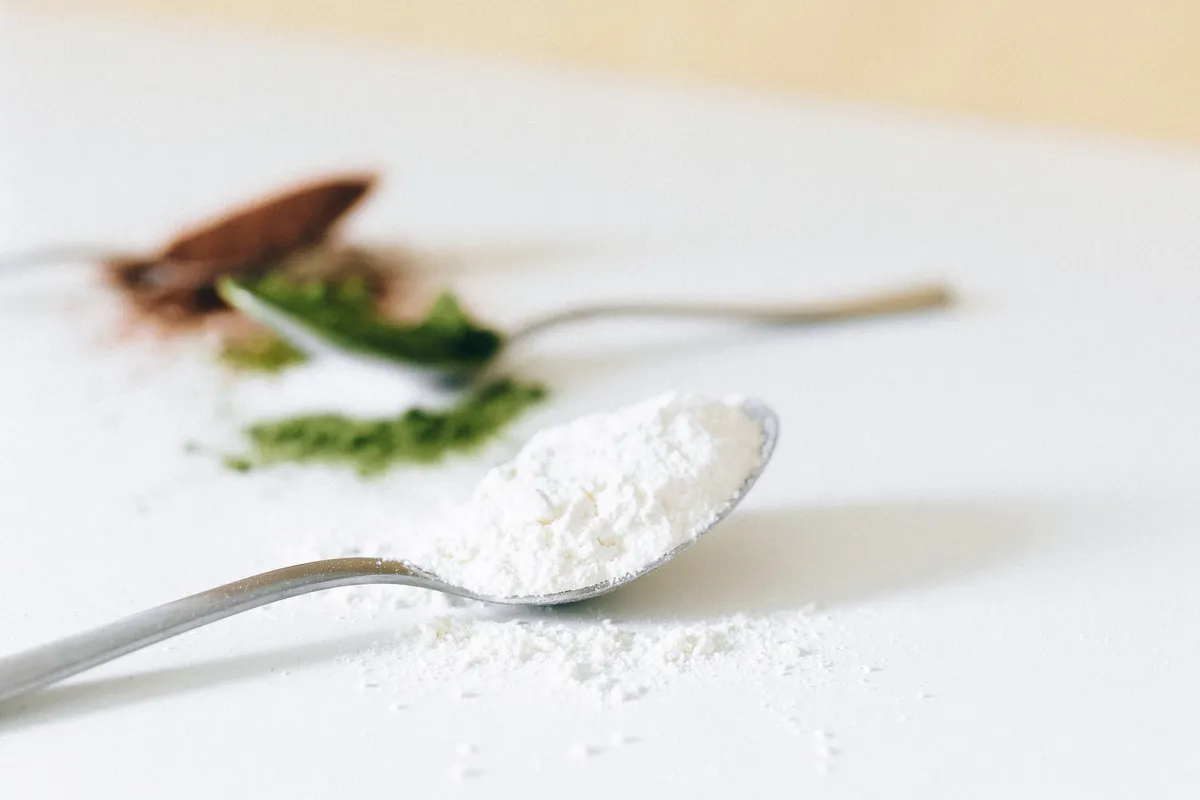
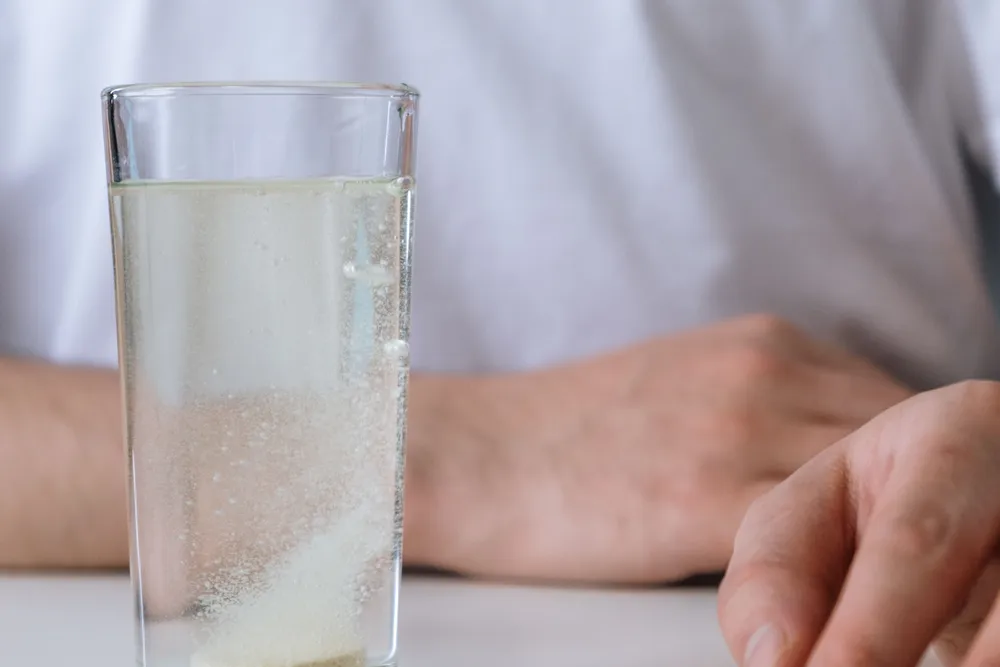
Three grams, roughly an hour before bed — that's the dose the sleep studies used, and there's no evidence that more works better. It comes as a loose powder that dissolves easily in water and tastes mildly sweet, which is far more pleasant than most supplements, or as capsules, though 3 grams means swallowing several.
A few practical notes:
- Powder is cheaper and easier at this dose. A level teaspoon is roughly 3 grams, but check the scoop that comes with it.
- Give it a couple of weeks. One night tells you whether it upsets your stomach, not whether it helps.
- Don't confuse it with magnesium glycinate. That's magnesium bound to glycine, and the glycine dose in it is far below 3 grams — it's a magnesium supplement, not a glycine one.
Does the collagen I already take count?
Partly, and it's a fair question because collagen is everywhere in midlife marketing. Roughly a third of collagen is glycine, so a standard 10 g scoop delivers around 3 g of it — which lands in the studied range almost by accident. One small trial of collagen peptides before bed found less sleep fragmentation, though it was done in physically active men, not menopausal women.
So if you're already taking collagen at night for your skin or joints, you may be getting a glycine dose without knowing it. That's a reason to avoid stacking both without thinking, and a reason not to buy two products when one may already be doing the job. This site's full look at collagen covers what the skin and joint evidence actually says beyond the sleep angle — the two claims don't hold up equally well.
Is glycine safe to take every night?
For most people, yes — it's a normal component of the protein you already eat, and 3 grams is a modest amount. Reported side effects are mild and uncommon: soft stools, a little nausea, occasionally an upset stomach if taken without water. There's no evidence of dependence or morning grogginess.
Check with your doctor or pharmacist first if you take clozapine (glycine may reduce its effectiveness), have kidney or liver disease, are pregnant or breastfeeding, or take other medication that acts on the nervous system. As with everything on this shelf, supplements aren't regulated like medicines, so choose a product with independent third-party testing.
Glycine, magnesium or melatonin — which one?
They aren't competitors so much as answers to different questions. Glycine is aimed at falling asleep and at body temperature. Magnesium is worth trying if you're low in it, or if tension and restless legs are the problem. Melatonin is a timing signal for a body clock that's drifted, not a sedative at all.
| If the problem is… | The better-matched option |
|---|---|
| Lying there warm, taking ages to drop off | Glycine — helps shed heat and shortens sleep onset |
| Muscle tension, cramps, restless legs, low dietary intake | Magnesium — especially glycinate |
| Sleepy far too late, or waking far too early | Melatonin — timing, not sedation |
| A mind that won't stop spinning | L-theanine — calm without sedation |
| Hot flashes and night sweats doing the waking | Vasomotor strategies first — no supplement here fixes that |
My honest read: glycine is one of the more interesting things on this shelf precisely because it doesn't pretend to sedate you. It nudges a physical signal your body already uses. That's a modest claim, backed by modest evidence — and modest is refreshing in this aisle.
Where to go from here
Since glycine works on temperature, the highest-value companion read is how to stay cool at night — free, and aimed at the same mechanism. Place any supplement inside the bigger picture with the complete perimenopause and menopause sleep guide, and compare the shelf honestly using what the herbal options really do. If your nights are broken rather than slow to start, CBT-I remains the treatment with the best long-term evidence.
Key takeaways
- Glycine is an amino acid found in everyday protein and abundant in collagen; it acts as a calming neurotransmitter in the brain.
- Its sleep effect appears to work through temperature: it widens blood vessels in the hands and feet so heat escapes and core temperature falls.
- A polysomnography study of 3 g before bed found faster sleep onset, quicker deep sleep, better perceived quality and less next-day sleepiness.
- The evidence is small-scale and largely from researchers tied to an amino acid manufacturer — and none of it involved menopausal women.
- The studied dose is 3 grams about an hour before bed; more is not better, and magnesium glycinate does not contain a comparable amount.
- It won't touch hot flashes. If heat is what wakes you, cooling strategies and vasomotor treatment matter far more than any powder.
Frequently asked questions
Does glycine help you sleep?
Small trials suggest it does. Three grams before bed shortened the time people took to fall asleep, improved how rested they felt, and reduced next-day sleepiness. The studies are small and none involved menopausal women, so treat it as promising and inexpensive rather than proven for this.
How does glycine make you sleepy?
Mainly by cooling you down. Glycine acts on receptors in the brain's master clock, widening blood vessels in the hands and feet so heat leaves the body and core temperature drops. That drop is one of the physical signals that tells your brain sleep is due.
How much glycine should I take for sleep?
The studied dose is 3 grams, taken about an hour before bed. It comes as a powder that dissolves in water and tastes faintly sweet, or as capsules, though 3 grams means several capsules. There is no evidence that larger doses work better for sleep.
Is glycine safe to take every night?
It is generally well tolerated at 3 grams, with occasional soft stools or mild nausea. It is a normal component of protein, not a drug. Still, check with your doctor if you take clozapine, have kidney or liver disease, or are pregnant or breastfeeding.
Glycine or magnesium for menopause sleep?
They suit different problems. Glycine targets falling asleep and works partly by lowering body temperature. Magnesium is worth trying if you are low in it or dealing with restless legs and muscle tension. Magnesium glycinate contains both, which is why it appears in so many sleep formulas.
Sources cited
- Yamadera W, Inagawa K, Chiba S, et al. Glycine ingestion improves subjective sleep quality in human volunteers, correlating with polysomnographic changes. Sleep and Biological Rhythms. 2007;5(2):126–131. onlinelibrary.wiley.com
- Bannai M, Kawai N. New therapeutic strategy for amino acid medicine: glycine improves the quality of sleep. J Pharmacol Sci. 2012;118(2):145–148. sciencedirect.com
- Kawai N, et al. The sleep-promoting and hypothermic effects of glycine are mediated by NMDA receptors in the suprachiasmatic nucleus. Neuropsychopharmacology. 2015. nature.com
- Collagen peptide supplementation before bedtime reduces sleep fragmentation and improves cognitive function in physically active males with sleep complaints. PMC. 2024. ncbi.nlm.nih.gov
- Inagawa K, et al. Subjective effects of glycine ingestion before bedtime on sleep quality. Sleep and Biological Rhythms. 2006;4(1):75–77. onlinelibrary.wiley.com
- Sleep Foundation. Body temperature and sleep. sleepfoundation.org
- Mayo Clinic. Dietary supplements: what to know before you buy. mayoclinic.org

Ellen Hayes
Health & Wellness Writer and Researcher
Hi — I'm Ellen. I found this one by accident, while trying to understand why a hot bath makes you sleepy when logic says it shouldn't. Half of what I know about midlife sleep came from following a question I didn't mean to ask.
I'm not a doctor. I'm not an expert — and I'm never going to talk down to you like one. I'm a woman in the middle of perimenopause who got tired of vague answers, started reading the actual research, and writes it down here in plain English, the way I'd explain it to a friend over coffee. More about Ellen →