Menopause Collagen: Skin Claims vs. Joint Claims
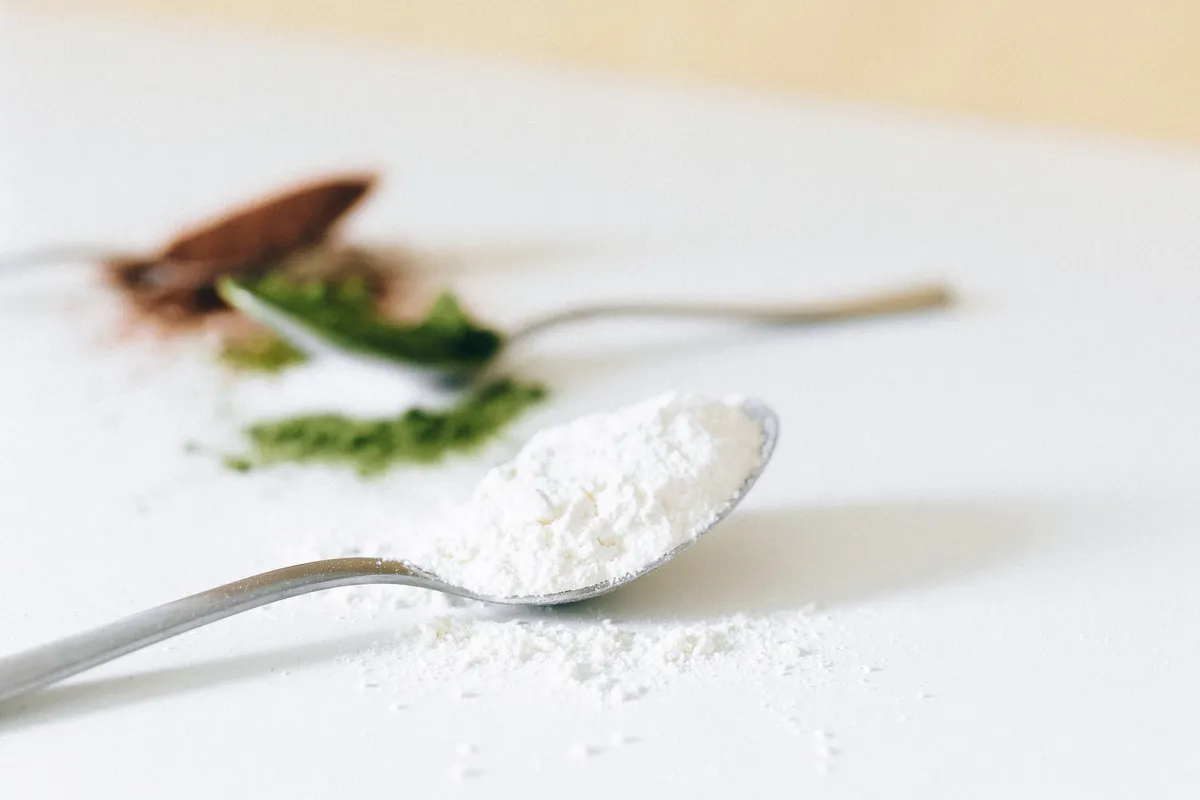
Collagen supplement evidence splits in two. For skin, the largest independent meta-analysis found no real effect once industry funding was accounted for. For joint pain, a separate large meta-analysis found a genuine, moderate benefit that held up well. Same supplement, two different verdicts — not one simple answer either way.
I went looking for this expecting a tidy "works" or "doesn't work," the way most supplement articles on this site end up. Collagen refused to cooperate. The skin research is some of the most industry-compromised I've read for anything on this site; the joint research, from a completely different field of researchers, looks genuinely solid. I'm not going to average those into one verdict, because that would misrepresent both.
This article is both halves, honestly separated, plus where the sleep claim (the one tying this to the rest of the site) actually stands.
Does collagen actually help skin?
This is where the evidence gets uncomfortable, and I'd rather show you the discomfort than smooth it over, because most collagen marketing never mentions it. The short version: the biggest, most independent analysis of skin trials found the benefit largely disappears once you separate out the studies paid for by supplement companies.
The authors' own conclusion, stated plainly: there is currently no clinical evidence to support the use of collagen supplements to prevent or treat skin aging. That's about as direct as a meta-analysis gets, and it's worth sitting with rather than rushing past — this is the kind of number most product pages for collagen simply don't cite.
A separate, smaller trial complicates the picture slightly, in the interest of not cherry-picking the negative result either.
This is a real positive result, in the exact population this site writes for. It's also a much smaller study (79 completers) than the meta-analysis above, and it illustrates exactly the pattern the meta-analysis warned about: individual trials, especially smaller ones, keep finding skin benefits that don't survive being pooled and checked for funding bias. I'm giving you both numbers rather than picking the one that tells a cleaner story.
Does collagen actually help joint pain?
Here the picture changes, and not in a small way. This is a different body of research, run largely by a different set of investigators, in a different medical field entirely, and it reaches a meaningfully different conclusion than the skin trials above — one with far less reason to doubt it.
That last phrase matters: a trial sequential meta-analysis is specifically designed to test whether a result is likely to hold up as more data comes in, or whether it's still shaky. This one says the pain-relief finding has crossed the threshold where more studies probably won't reverse it — a stronger statement than most supplement research ever earns.
Why the split might be real, not just noise. Nobody has proven exactly why collagen's evidence holds up for joints and falls apart for skin under scrutiny. The most visible difference is independence: joint trials have been run by a wider, less commercially concentrated set of researchers and the effect survives; skin trials cluster around supplement-industry funding and the effect doesn't. That's a pattern worth naming, even without a confirmed mechanism behind it.
This site's piece on hip pain at night covers the separate, well-established mechanism connecting estrogen loss to tendon resilience directly — collagen supplementation is a different question from that hormonal mechanism, not a substitute explanation for it.
What about the sleep claim?
This is the piece that connects collagen to the rest of this site, and I'm not going to re-argue it here because this site's glycine for sleep article already did the work properly, in detail, with its own sources. What follows is the short version of how collagen and glycine actually relate to each other.
Short version: collagen is roughly a third glycine by weight, and glycine itself has real, separate sleep research behind it — covered in full in that article. The one study testing collagen peptides specifically, taken before bed, found less sleep fragmentation and better next-day cognitive function. But it was conducted in physically active men, not menopausal women, which that article flags explicitly rather than quietly extending the result to a population it wasn't tested in. If you're already taking collagen at night for your skin or joints, you may be getting a meaningful glycine dose without realizing it — a reason not to stack a separate glycine supplement on top without thinking about it first.
What should you do with this?
The two verdicts above point to two different actions, not one blanket answer. If you're taking collagen mainly for your skin, the honest read is that it's probably not doing much on its own. If you're taking it for joint pain, the evidence is strong enough that it's worth keeping up, assuming it's actually helping you.
- If you're taking collagen for skin, hold your expectations loosely. The best independent evidence says it likely isn't doing much; a smaller trial in menopausal women found a real benefit, but it's the exception against a larger, more rigorous body of evidence, not the rule.
- If you're taking it for joint pain, the evidence is genuinely on your side. A moderate, real effect with high-certainty backing for function and moderate-certainty backing for pain — worth continuing if it's working for you.
- Don't expect it to treat osteoporosis or bone density specifically — the menopausal-women trial above found no bone biomarker benefit despite testing for it directly.
- If you're taking it at night and also curious about sleep, read the full glycine article rather than assuming collagen alone explains any sleep benefit you've noticed.
- Ask a doctor before adding it if you take other medications, and don't assume all "collagen" products are equivalent — source, dose and type (peptides vs. undenatured type II, for instance) varied across the trials cited here.
What I'd want a friend to take from this. Not "collagen is a scam" and not "collagen is proven" — neither is honest. The more useful version: the skin claims are the ones most heavily marketed to women our age, and they're also the ones with the weakest independent evidence. The joint claims get far less marketing attention and have the stronger case. If you only trust one use for your collagen jar, let it be your knees, not your wrinkles.
Where to go from here
For the sleep mechanism behind collagen's glycine content, read glycine for sleep in menopause in full. For the hormonal mechanism behind joint and tendon changes at this age, hip pain at night covers it directly. For the skin-specific estrogen-collagen mechanism this article didn't re-cover, crawling, itchy skin at night and menopause dry skin go deeper.
For how all of this fits into the bigger picture of midlife sleep, start at the complete perimenopause and menopause sleep guide.
Key takeaways
- For skin, the largest independent meta-analysis (23 trials, 1,474 people) found no effect once industry funding was accounted for — the authors concluded there's currently no clinical evidence supporting collagen for skin aging.
- A smaller trial in 79 menopausal women did find a real skin-elasticity and hydration benefit — a genuine positive result, but an exception against the larger, more rigorous body of evidence, not the rule.
- For joint pain, a 2024 meta-analysis (25 trials, 2,856 people with osteoarthritis) found a real, moderate-to-high-certainty benefit for both pain and function — and its trial sequential analysis found the pain result had already reached the statistical power needed for a firm conclusion.
- Bone density showed no benefit in the menopausal-women trial, despite being part of the study's own title and design.
- Collagen is roughly a third glycine, and the one sleep-specific trial (collagen peptides before bed) was conducted in physically active men, not menopausal women — see this site's glycine article for the fuller sleep evidence.
- Safety looks fine in the joint-pain trials (no increase in withdrawals or adverse events vs. placebo), but check with a doctor if you take other medications.
Frequently asked questions
Does collagen supplementation actually improve skin?
The most recent, largest meta-analysis (23 trials, 1,474 people) found that studies funded by supplement companies showed a benefit, while independently funded studies did not. The authors concluded there is currently no clinical evidence to support collagen supplements for skin aging. A separate small trial in menopausal women did find a skin benefit, but it was industry-adjacent and far smaller.
Does collagen supplementation help joint pain?
This is on firmer ground. A 2024 meta-analysis of 25 trials and 2,856 people with osteoarthritis found collagen derivatives produced a real, moderate-to-high-certainty improvement in both pain and function, with a safety profile no worse than placebo. Its trial sequential analysis — a check for whether a result is likely to hold up as more studies come in — found the pain result had already reached the statistical power needed for a firm conclusion.
Why does collagen help joints but not skin, if it's the same supplement?
The research hasn't settled why, but the quality and independence of the trials is the biggest visible difference: joint trials have been run more independently and still show an effect, while skin trials lose their effect once industry funding is accounted for. Different tissues and different outcome measures may also simply respond differently to the same ingredient.
Does the glycine in collagen help you sleep?
Partly, in theory — collagen is roughly a third glycine, and glycine itself has real sleep research behind it. But the one study testing collagen peptides specifically before bed was done in physically active men, not menopausal women, so it's an indirect answer at best. This site's dedicated glycine article covers that research in full.
Is oral collagen the same as what my body loses after menopause?
No, and that's part of why the skin evidence is weak. Oral collagen is digested into amino acids and peptide fragments before absorption; it doesn't travel to your skin and get installed as collagen. Any benefit would have to come from those fragments signaling your own cells to produce more collagen, not from direct replacement.
Is collagen supplementation safe?
The joint-pain meta-analysis found collagen derivatives did not increase withdrawal or adverse events compared with placebo, which is reassuring on basic safety. As with any supplement, check with a doctor about interactions if you take other medications, and be aware that "collagen" products vary widely in source, dose and type.
Sources cited
- Myung SK, Park Y. Effects of Collagen Supplements on Skin Aging: A Systematic Review and Meta-Analysis of Randomized Controlled Trials. Am J Med. 2025;138(9):1264–1277. doi:10.1016/j.amjmed.2025.04.034.
- Duangjai A, Srivilai J, Nangola S, Amornlerdpison D. Calcium and Vitamin D Supplementation with and Without Collagen on Bone Density and Skin Elasticity in Menopausal Women — A Randomized Controlled Study. Clin Pract. 2025;15(9):168. pmc.ncbi.nlm.nih.gov
- Liang CW, Cheng HY, Lee YH, Liao CD, Huang SW. Efficacy and safety of collagen derivatives for osteoarthritis: a trial sequential meta-analysis. Osteoarthritis Cartilage. 2024;32(5):574–584. doi:10.1016/j.joca.2023.12.010.

Ellen Hayes
Health & Wellness Writer and Researcher
Hi — I'm Ellen. I wanted a clean verdict on my own collagen jar and got two different ones instead — which, annoyingly, turned out to be the honest answer.
I'm not a doctor. I'm not an expert — and I'm never going to talk down to you like one. I'm a woman in the middle of perimenopause who got tired of vague answers, started reading the actual research, and writes it down here in plain English, the way I'd explain it to a friend over coffee. More about Ellen →