Does HRT Help With Menopause Insomnia? An Honest Look

Often, yes — but mostly indirectly. HRT is the most effective treatment for hot flashes and night sweats, and by calming those it usually restores the sleep they were shattering. Micronized progesterone at bedtime may also help more directly. It isn't a sleeping pill, and whether it suits you is a decision to weigh with your doctor.
For a long time, "HRT" was a word I associated with warnings — something my mother's generation was told to fear. So when my own night sweats started soaking the sheets and my sleep fell apart with them, I assumed hormone therapy was off the table before I'd even asked. I was working from headlines two decades out of date.
The real picture is more nuanced, and more hopeful, than the scare stories — and also more personal than any blog can decide for you. So let me lay it out honestly: how HRT actually affects sleep, why the type and timing matter so much, what the genuine risks are, and how to have a clear-eyed conversation with your doctor. I'm not here to sell it or scare you off it. I'm here so you walk in informed.
Does HRT actually help you sleep?
Yes, for many women — but usually by fixing the thing that's waking you, not by sedating you. HRT is the single most effective treatment for hot flashes and night sweats, and those are often what's fragmenting midlife sleep. Quiet the sweats, and the nights they were destroying tend to settle on their own.
That distinction matters. HRT isn't a sleeping pill you take to knock yourself out. It's a treatment for the hormonal symptoms — the 3 a.m. drench, the sudden heat that jolts you awake — that happen to wreck sleep as a side effect. If night sweats are your main sleep thief, treating them at the source can be genuinely transformative. If they aren't, HRT's effect on your sleep is much smaller.
How does HRT improve menopause sleep?
Through three overlapping routes. Most powerfully, estrogen calms the hot flashes and night sweats that jolt you awake. Estrogen also has some direct effects on sleep-regulating brain systems. And the progesterone that many women take alongside it has a mild calming quality of its own.
That last piece is worth knowing about. Women who still have a uterus need a progestogen alongside estrogen to protect the womb lining — and one form, micronized progesterone, is mildly sedating. Taken at bedtime, it can nudge you toward sleep, which is why doctors often time that dose for night. So HRT can help sleep on two fronts at once: fewer sweats, plus a gentle evening calm.
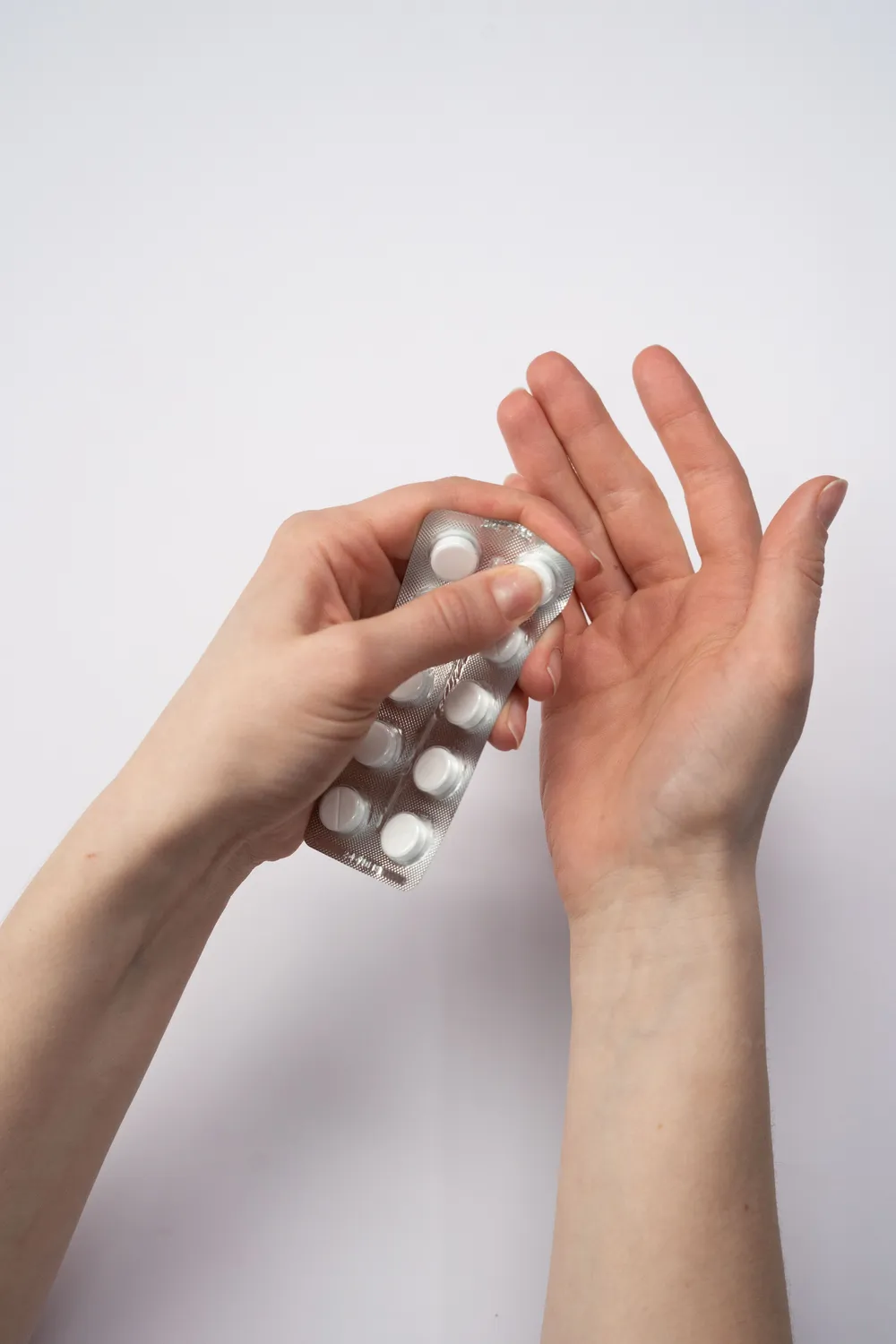
What types of HRT are there, and does the type matter for sleep?
Yes, the type matters — both for how it might help sleep and for its risk profile. HRT isn't one drug; it's a family of estrogen and progestogen options in different forms and routes. Here's the plain-English version of the choices that come up most:
| Type / form | What it is | Why it matters for sleep |
|---|---|---|
| Transdermal estrogen (patch, gel, spray) | Estrogen absorbed through the skin | Treats night sweats; lower clot risk than tablets, so often preferred |
| Oral estrogen (tablet) | Estrogen taken by mouth | Also treats sweats; slightly higher clot risk than the patch |
| Micronized progesterone | Body-identical progestogen, protects the uterus | Mildly calming — often taken at night to aid sleep |
| Combined / other progestogens | Estrogen plus a synthetic progestogen | Protect the uterus; less sedating than micronized progesterone |
The headline for sleep: if you need a progestogen, micronized progesterone at bedtime is the form most likely to help your nights, and a transdermal estrogen keeps the clot risk lower. None of this is a decision to make alone — but knowing the vocabulary lets you ask sharper questions.
Is HRT right for you?
For many healthy women under 60, or within ten years of their last period, the benefits of HRT can outweigh the risks — especially when hot flashes and night sweats are hurting quality of life. This "timing" idea matters: starting HRT near menopause has a more favorable balance than starting it many years later.
But it's genuinely individual. Your personal and family history — of breast cancer, blood clots, stroke, heart disease, or liver problems — all shape the picture, and some conditions make HRT unsuitable. This is exactly why it's a conversation, not a checklist. A clinician weighs your symptoms, your age, your history, and your preferences together. The point of this article isn't to tell you the answer; it's to help you ask.
What are the real risks and side effects?
Honesty matters here, because both the fear and the hype are overblown. For most women starting near menopause, serious risks are small — but they're not zero, and they depend heavily on type, dose, route, and your own history. Here's the balanced version:
- Blood clots: a small increased risk with oral estrogen; transdermal (patch/gel) does not appear to raise it meaningfully, which is why it's often chosen.
- Breast cancer: combined estrogen-plus-progestogen carries a small increase in risk that grows with longer use; estrogen alone (for women without a uterus) carries little to none.
- Early side effects: breast tenderness, bloating, spotting, or headaches are common at first and often settle as your body adjusts or the dose is tuned.
- Timing: starting many years after menopause, or over 60, shifts the risk-benefit balance and needs careful individual discussion.
The older scare stories came largely from one big study that, for years, was read too broadly — it studied older women on specific formulations, and its findings were over-generalized to all women and all types of HRT. Today's guidance is far more individualized. That doesn't make HRT risk-free; it makes the decision worth doing carefully, with a professional, using your numbers.
HRT or CBT-I first — which should you try?
It depends entirely on what's driving your insomnia, and the two aren't rivals. If night sweats are the thing tearing your sleep apart, HRT treats that root directly. If your sleep problem persists without hot flashes — a racing mind, dread of bed, learned wakefulness — then CBT-I is the first-line treatment, hormones or not.
In real life, many women do both. You might treat the sweats with HRT and rebuild your sleep habits with CBT-I at the same time — one fixes the biology, the other undoes the anxious patterns that grew up around months of bad nights. The best way to know which mix you need is to arrive at your appointment already knowing your pattern, which is where two weeks of a simple sleep log earns its keep.
How do you talk to your doctor about HRT and sleep?
Go in specific and prepared. Vague ("I'm not sleeping") gets vague back. Instead, bring your two-week sleep log, name your worst symptoms plainly, and say what you want to solve. A few sentences that open a good conversation:
"Night sweats are waking me two or three times a night and I'm exhausted. Given my history, is HRT a reasonable option for me? If so, would a patch plus micronized progesterone at night make sense — and what are the risks in my particular case?"
Then ask the questions that make it real: What type and route do you recommend for me, and why? What are my personal risks given my history? How long until I'd notice a difference in sleep? What would we try if it doesn't help? If your clinician isn't up to date on menopause care — some aren't — it's completely reasonable to ask for a referral to a menopause specialist. You're allowed to advocate for your own sleep.
Where to go from here
HRT is one lever among several, and it works best inside a fuller plan. If sweats are your main trigger, pair this with the cooling and non-hormonal steps in natural remedies for night sweats and insomnia. If your sleep stays broken even without flashes, the durable fix is CBT-I. And for the whole map of why midlife sleep unravels and every option to steady it, start with our complete perimenopause and menopause sleep guide.
If you've been offered "bioidentical" or custom-compounded hormones, read our guide to FDA-approved vs. compounded bioidentical hormones first — several bioidentical options are already FDA-approved, and the difference matters.
And if testosterone has come up as the next thing to add, our look at what testosterone fixes and what it won't covers the one use with evidence behind it — and the much longer list of symptoms it's marketed for.
Key takeaways
- HRT can substantially improve sleep when insomnia is driven by hot flashes and night sweats, by treating those at the source.
- It isn't prescribed for insomnia alone, but it's a legitimate option when vasomotor symptoms are wrecking your nights.
- The type, dose, and delivery — patch, gel, or pill — all matter and are tailored with your doctor.
- Risks and benefits depend on your age, health, and timing, so it's a personal conversation, not a one-size answer.
- For insomnia without hot flashes, CBT-I is often the better first step.
Frequently asked questions
Does HRT help you sleep during menopause?
Often, yes — mostly by treating the hot flashes and night sweats that fragment your sleep. When those calm down, the nights they were wrecking tend to settle too. Micronized progesterone taken at bedtime may also help sleep more directly. HRT isn't a stand-alone sleeping pill, but for sweat-driven insomnia it can be genuinely effective.
Which type of HRT is best for sleep?
For women who still have a uterus and need a progestogen, micronized progesterone taken at night is often preferred, because it has a mild calming effect that can aid sleep. Transdermal estrogen (a patch or gel) carries a lower clot risk than pills. The best choice is individual and belongs in a conversation with your clinician.
Is HRT safe to take for sleep problems?
For many healthy women under 60 or within ten years of menopause, the benefits of HRT can outweigh the risks — but it depends on your personal and family history. Risks vary by type, dose, route, and timing. HRT is not usually prescribed for insomnia alone; it's considered when hot flashes and night sweats drive the sleep loss.
Should I try HRT or CBT-I first for menopause insomnia?
It depends on the cause. If night sweats are shattering your sleep, HRT treats that root directly. If your insomnia persists without hot flashes — racing mind, learned wakefulness — CBT-I is the first-line treatment. They aren't rivals: many women treat the sweats with HRT and the sleep habits with CBT-I at the same time.
How long does HRT take to improve sleep?
Hot flashes and night sweats usually ease within a few weeks of starting HRT, and sleep tends to improve as they do. Some women feel a difference sooner, others take a couple of months to find the right type and dose. If there's no change after about three months, it's worth revisiting the plan with your doctor.
Sources cited
- The Menopause Society (NAMS). The 2022 Hormone Therapy Position Statement. menopause.org
- NICE. Menopause: diagnosis and management (NG23) — HRT and symptom control. nice.org.uk
- Caufriez A, et al. Progesterone prevents sleep disturbances in postmenopausal women. J Clin Endocrinol Metab. 2011. pubmed.ncbi.nlm.nih.gov
- American College of Obstetricians and Gynecologists (ACOG). Hormone therapy for menopause. acog.org
- Mayo Clinic. Hormone therapy: Is it right for you? mayoclinic.org

Ellen Hayes
Health & Wellness Writer and Researcher
Hi — I'm Ellen. If you're reading this at some ungodly hour because your brain flipped on in the middle of the night and won't shut off… I get it. I'm right there with you. I'm somewhere in the middle of midlife, deep in perimenopause, and lately sleep and I have a complicated relationship.
I'm not a doctor. I'm not an expert — and I'm never going to talk down to you like one. I'm just a woman who got tired of vague answers ("it's just your age," "try to relax") and decided to actually read the research myself. Then I write it down here, in plain English, the way I'd explain it to a friend over coffee. More about Ellen →
How this article was checked
The figures and quotations in this article are drawn from clinical guidance and trial evidence: position statements from The Menopause Society and the American College of Obstetricians and Gynecologists, the UK NICE guideline NG23, a trial in the Journal of Clinical Endocrinology & Metabolism, and Mayo Clinic's patient guidance. All of them are listed and linked in full above, so you can check any claim here against its source.
It has not been reviewed by a clinician. Ellen Hayes is a researcher and writer, not a doctor, and nothing here is a diagnosis or a substitute for being seen by one.