Probiotics for Menopause: The Catch in the Best Study
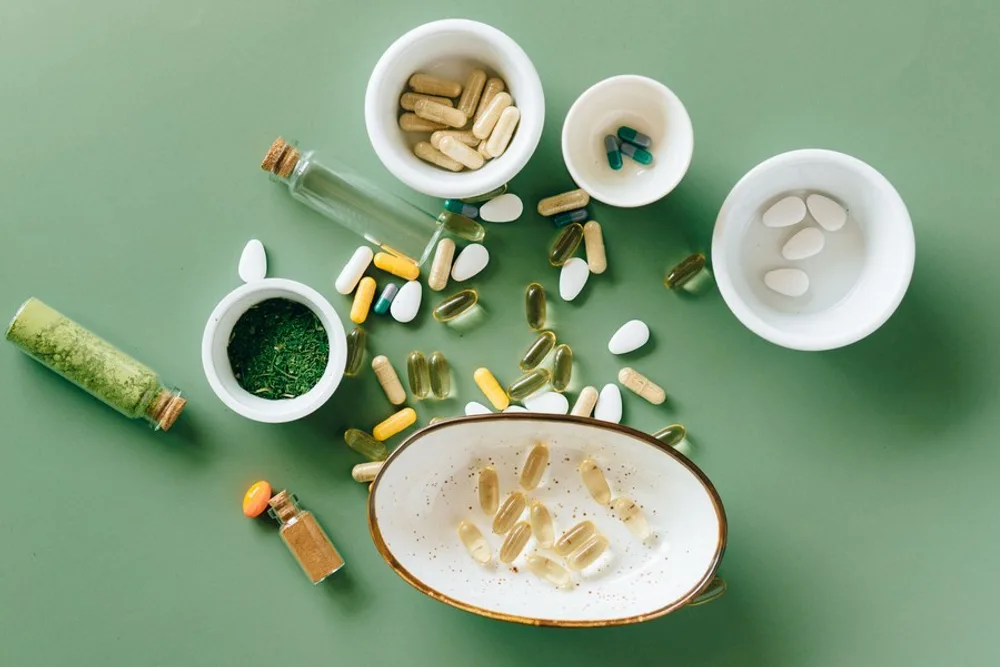
The gut-estrogen connection is real biology, and specific strains have shown real benefits in mice and one genuinely interesting human trial. But that trial tested a paraprobiotic — inactivated bacterial cells, not a living culture — and even its positive result had a catch: average scores improved, but the share of "responders" didn't significantly beat placebo.
I went looking for this one expecting either a clean "yes, probiotics help" story or a clean debunking. What I found was more specific and, I think, more useful: a real mechanism, real animal data, and exactly one solid human trial — with a detail about what was actually tested that changes how you should read the headline.
Why would gut bacteria have anything to do with menopause?
Because a specific set of gut bacteria directly handles estrogen your body has already tagged for disposal, and can send some of it back into circulation instead. Your liver attaches a marker to used estrogen so it can be excreted, but certain gut bacteria carry an enzyme that strips that marker back off, reactivating the hormone.
That's the real mechanism behind the "gut-estrogen connection" you may have seen mentioned online. It's a legitimate, biologically plausible pathway — and it's also exactly the kind of finding that tends to get stretched much further in marketing than the actual research currently supports.
What does the animal research actually show?
Specific, named strains producing measurable benefits — but in ovariectomized mice and rats, a surgical model of estrogen loss, not in menopausal women. This distinction matters because animal models can point toward a real mechanism without yet proving it works the same way in people.
Those are genuinely striking results on paper. They're also, as the review's own authors put it, limited by evidence that "remains limited regarding the specific underlying mechanisms" — a direct acknowledgment that the field hasn't yet connected these rodent findings to confirmed human outcomes.
So what does the human evidence actually show?
Two real randomized trials exist, and the more clinically relevant one comes with a detail worth knowing before you read its result as a simple win. Both are small, strain-specific, and worth reading for exactly what they measured rather than the broader headline either one has generated online.
That trial measured hormone levels, not symptoms — a real, hormone-level finding, but not yet proof that it translates into less hot flashes or better sleep. The second trial measured symptoms directly, and this is the one worth reading closely.
Why "paraprobiotic" is worth knowing, specifically. A paraprobiotic is made of inactivated (non-living) bacterial cells or their components, not a culture of live organisms the way most "probiotic" supplements are marketed. The trial's real, measured benefit is for this specific inactivated preparation — it doesn't automatically tell you anything about whether a live-culture probiotic capsule would do the same thing.
The result itself is genuinely mixed, and worth reading at the level of detail the researchers reported it. CP2305 produced significantly better scores than placebo on both the Simplified Menopausal Index and the Greene Climacteric Scale — validated questionnaires used in menopause research. But when the researchers looked at how many individual women counted as meaningfully improved, 75% in the CP2305 group versus 55% on placebo, that difference did not reach statistical significance (P = 0.059).
Two things can both be true. The average symptom score improved more with CP2305 than placebo, in a way that reached statistical significance. The share of individual women who counted as clear responders did not significantly differ between groups. That's a real, if modest, signal — not the same thing as "this works for most women who take it."
One more detail worth naming plainly: this trial was run by researchers at Asahi Quality & Innovations, a company with a commercial interest in CP2305 products. That doesn't make the result false, but it's the kind of disclosure worth knowing before treating any single trial as the final word.
Does menopause itself actually change gut health?
Yes, and this part has real human cohort data behind it, independent of any supplement question. The same review cites findings from the Study of Women's Health Across the Nation (SWAN), a long-running US cohort already used elsewhere on this site.
What's worth knowing before buying a "menopause probiotic"?
That strain specificity is everything in this research, and most retail products don't match it. The real findings above are tied to particular, named strains and preparations — not to "probiotics" as a broad category, and not necessarily to whatever blend happens to be on a shelf labeled for menopause.
- Check for the actual strain (like CP2305 or KABP052), not just the genus (Lactobacillus) — the research doesn't support treating all strains as interchangeable
- Know whether it's live or inactivated — the clearest human symptom trial used an inactivated paraprobiotic, not a standard live-culture capsule
- Check who funded the study behind any specific product claim, and weigh manufacturer-funded research accordingly
- Don't expect a bone or hot-flash cure — the bone evidence is rodent-only so far, and the human symptom trial's effect was real but modest
Where to go from here
For the broader gut-symptom picture during menopause, see our articles on menopause bloating and menopause constipation, both covering mechanisms independent of any probiotic question. If you're considering stacking a probiotic with anything else, our guide to combining supplements safely is worth reading first. And for the broader dietary picture, our Mediterranean diet article covers a well-evidenced, food-first approach to gut and metabolic health.
For how all of this fits into the bigger picture of midlife sleep, start at the complete perimenopause and menopause sleep guide.
Key takeaways
- The gut-estrogen mechanism (the "estrobolome") is real biology: specific gut bacteria can reactivate processed estrogen, allowing roughly half of it to potentially re-enter circulation instead of being excreted.
- The clearest benefits so far are in ovariectomized mice and rats — specific Lactobacillus strains improved bone density and other measures in rodent models, not yet confirmed the same way in women.
- One human trial found a probiotic blend raised estradiol and estrone levels in peri- and postmenopausal women — a hormone-level finding, not yet a proven symptom benefit.
- The best human symptom trial used a paraprobiotic (inactivated bacteria), not a live probiotic — in women aged 40-60 with normal estrogen and regular cycles, not full menopause.
- That trial's result was genuinely mixed: average symptom scores improved significantly, but the percentage of women who counted as clear responders did not significantly differ from placebo.
- Menopause itself may increase gut permeability and inflammation, per SWAN cohort data — a real, independent reason gut health matters here, separate from any specific product claim.
- Strain specificity, live-vs-inactivated status, and funding source all matter more than the broad word "probiotic" when evaluating any menopause-specific product claim.
Frequently asked questions
Can probiotics actually help with menopause symptoms?
There's one real human trial with promising results, but it tested a paraprobiotic (inactivated bacterial cells), not a live probiotic. Women taking it for 6 menstrual cycles showed significantly better menopause symptom scores than placebo, though the percentage who counted as meaningfully improved wasn't statistically different from placebo.
What is the gut-estrogen connection (the "estrobolome")?
Certain gut bacteria produce an enzyme that reactivates estrogen your liver has already processed for disposal, allowing some of it to re-enter circulation. This collection of bacterial genes is called the estrobolome. Roughly half of processed estrogen is excreted this way, so changes in gut bacteria could plausibly affect how much estrogen is recycled.
Is there real evidence probiotics help bone density after menopause?
The strongest evidence is in ovariectomized mice and rats, where specific Lactobacillus strains improved bone density and bone microarchitecture. A reviewing paper found no adequately powered human trial testing bone outcomes from probiotic supplementation, so this remains an animal-stage finding, not a proven human benefit yet.
Does menopause itself change gut health?
Yes, there's real human evidence for this part. Data from the SWAN cohort found gut permeability increases during the menopause transition and is linked to higher inflammation, giving a plausible reason gut health might shift even before symptoms appear.
Should I buy a probiotic marketed specifically for menopause?
Be skeptical of broad claims. The specific strains with real trial data (CP2305, KABP052) are not interchangeable with "any probiotic," the clearest human trial involved a paraprobiotic rather than a live culture, and some of the human research in this area has been funded by the companies selling the product tested.
Sources cited
- Liaquat I, Minihane AM, Vauzour D, Pontifex MG. The gut microbiota in menopause: Is there a role for prebiotic and probiotic solutions? Post Reprod Health. 2025;31(2):105-114.
- Sawada D, et al. Effects of Lactobacillus gasseri CP2305 on Mild Menopausal Symptoms in Middle-Aged Women. Nutrients. 2022;14(9):1695.
How this article was checked
Both sources were read directly in full. The Sawada trial's "paraprobiotic" classification, its exact responder percentages (75.0% vs. 55.0%, P = 0.059), and the participants' baseline criteria (normal E2, regular cycles) were confirmed against the primary paper itself, not inferred from the review's summary table alone. Several commercial sources claimed strong hot-flash and bone-turnover benefits for specific probiotic products; those claims could not be traced to independent, peer-reviewed trial data and were left out rather than cited from marketing material.
It has not been reviewed by a clinician. Ellen Hayes is a researcher and writer, not a doctor, and nothing here is a diagnosis or a substitute for being seen by one.

Ellen Hayes
Health & Wellness Writer and Researcher
Hi — I'm Ellen. I almost missed the detail that mattered most here: the best human trial wasn't even testing a live probiotic. That's exactly the kind of fine print that changes what a headline actually means, and I'd rather slow down and catch it than hand you a tidy "probiotics help menopause" sentence that isn't quite true.
I'm not a doctor. I'm not an expert — and I'm never going to talk down to you like one. I'm a woman in the middle of perimenopause who got tired of vague answers, started reading the actual research, and writes it down here in plain English, the way I'd explain it to a friend over coffee. More about Ellen →