Temazepam (Restoril) for Menopause Insomnia: Label Facts
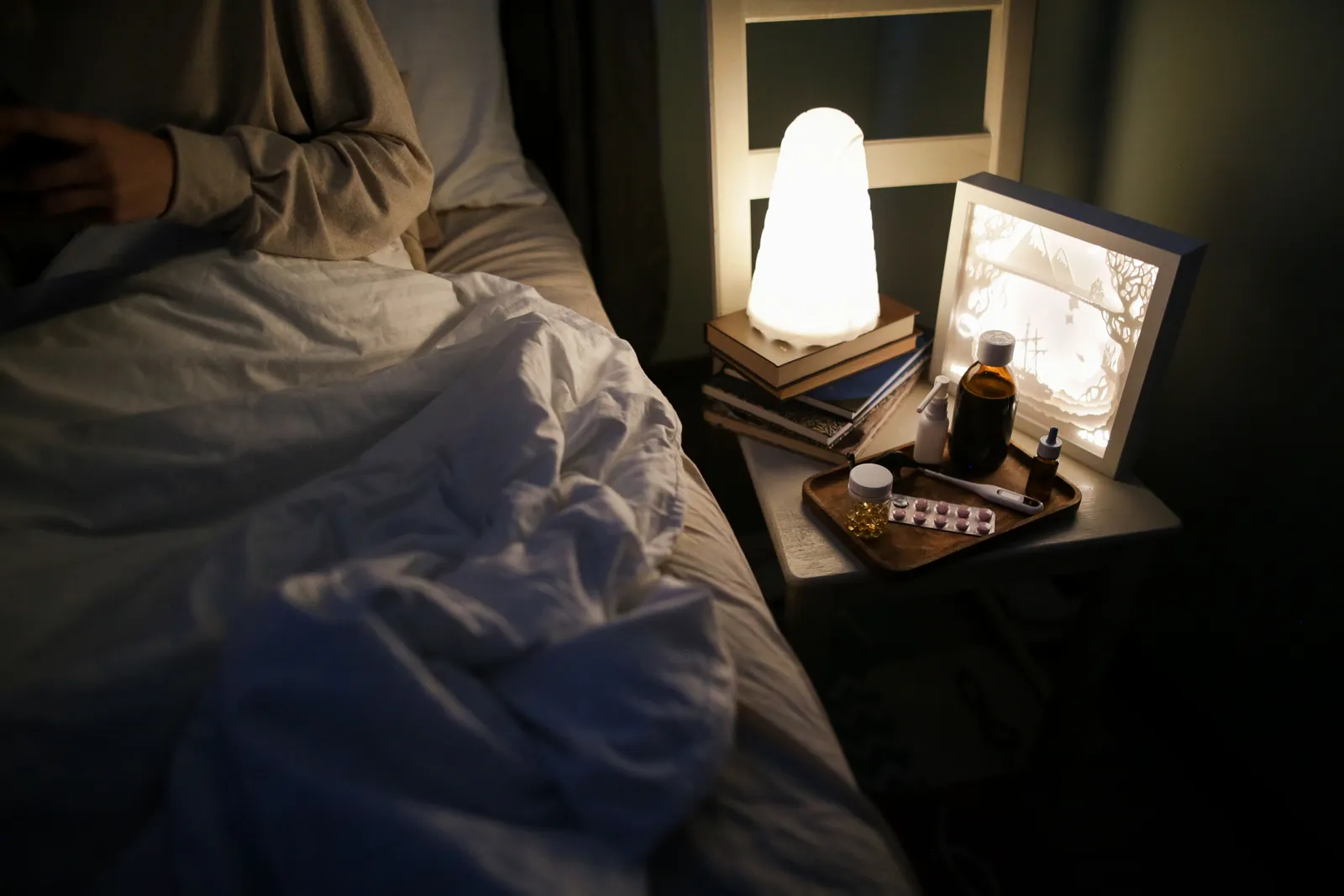
You may have been offered temazepam, or found the name on a bottle, because nothing else has given you a full night in months. When 3 a.m. wake-ups have gone on long enough, a capsule that has been around for decades can sound like relief.
I'm not a doctor. I read the current Restoril label and Medication Guide, the MedlinePlus drug page, the sleep medicine guideline and the geriatrics guidance to see what a menopausal woman should know before the first capsule. The cautions are not small.
Temazepam, sold as Restoril, is a prescription benzodiazepine for short-term insomnia, generally 7 to 10 days. It can help people fall asleep, but its label carries a boxed warning about opioids, abuse and dependence, and I found no trial in menopausal women. Plan on a full night's sleep, no alcohol, and a doctor's guidance.
What is temazepam, and how does it work?
Temazepam is a benzodiazepine hypnotic, a prescription sedative sold under the brand name Restoril. MedlinePlus says it works by slowing activity in the brain to allow sleep. It comes as a capsule taken at bedtime, and it is a federally controlled substance (Schedule IV) because it can be abused or lead to dependence.
It is a different drug family from Ambien, Lunesta and Sonata, although they act on the same calming brain system. The label gives these timing facts, which explain why the morning after can feel different from the night itself:
- Onset: in the label's study, blood levels were measurable 10 to 20 minutes after a 30 mg capsule, and peaked at about 1.5 hours.
- Half-life: the terminal half-life ranged from 3.5 to 18.4 hours, with a mean of 8.8 hours, depending on the study and method.
- Why that matters: the label says that when a sleeping pill lingers, it can be associated with impaired thinking or movement the next day.
What does the FDA label say about dose and how long to take it?
The Restoril label approves it for the short-term treatment of insomnia, generally 7 to 10 days. The usual adult dose is 15 mg before going to bed, though 7.5 mg may be enough for some people and others may need 30 mg. Anyone elderly or debilitated is started at 7.5 mg.
The label also says the trials behind its approval lasted two weeks, and the Medication Guide says it isn't known if Restoril is safe and effective for longer than that. MedlinePlus puts the same limit in plain words: your sleep problems should improve within 7 to 10 days, and you should call your doctor if they don't.
| What the label says | Detail |
|---|---|
| Approved use | Short-term treatment of insomnia (generally 7 to 10 days) |
| Usual adult dose | 15 mg before retiring; 7.5 mg may be enough, and some need 30 mg |
| Aged 65 and over, or debilitated | Start at 7.5 mg |
| Timing | Before retiring (label); MedlinePlus: go to bed right away and allow 7 to 8 hours |
| Stopping | Gradual taper, not abruptly, after continued use |

MedlinePlus says to plan to go to bed right after you take it and stay in bed for 7 to 8 hours. It also says not to take it if you cannot stay asleep that long. That is the practical answer to the 3 a.m. question: a capsule at 3 a.m. leaves too few hours.
What is the boxed warning on temazepam?
The boxed warning, the FDA's most prominent kind, covers three risks of benzodiazepines: combining them with opioids, abuse, misuse and addiction, and dependence with withdrawal reactions. It says the dependence and withdrawal risks increase with longer treatment and a higher daily dose, and that withdrawal can be life-threatening.
The label says abuse and misuse often, but not always, involve doses above the maximum, and commonly involve other medicines, alcohol or street drugs. The Medication Guide adds that you can develop an addiction even if you take Restoril exactly as prescribed. Physical dependence is not the same as addiction, but both are on the label.
Check what is in your medicine cabinet before the first dose. MedlinePlus asks you to tell your doctor if you take or plan to take medicines for cough or for pain, because the combination can cause serious or life-threatening breathing problems, sedation or coma.
Does temazepam work for menopause insomnia?
Temazepam does help some adults fall asleep and sleep longer, but I found no trial of it in menopausal women. The American Academy of Sleep Medicine suggests it for adults with chronic insomnia, a weak recommendation based on small studies of 15 mg. Evidence specific to midlife women is thin.
The 2017 AASM guideline looked at three randomized trials of temazepam in chronic insomnia, with 19, 20 and 34 people. It judged the evidence moderate in quality but limited. At 15 mg, people reported falling asleep faster and sleeping longer, by amounts that met the guideline's threshold for clinical significance. The guideline's temazepam recommendation reads: "We suggest that clinicians use temazepam as a treatment for sleep onset and sleep maintenance insomnia." It is labeled weak. The label's own sleep-lab studies were more modest: at two weeks, only the 30 mg dose shortened the time to fall asleep, while 15 mg and 30 mg increased total sleep time.
Two limits are worth knowing. These were not menopause trials, and the guideline says the recommendation is based on 15 mg trials. I also searched Europe PMC for trials of temazepam in peri- or postmenopausal women with insomnia and found none. A 2026 review of menopausal sleep disturbance says non-benzodiazepine hypnotics such as zolpidem and eszopiclone have shown efficacy in peri- and postmenopausal women; it does not discuss temazepam.
What this does and doesn't mean: temazepam isn't shown to be useless in menopause, but nobody has tested it there. It treats the sleep, not the hot flashes or hormone shifts behind it. Compare it with treatments aimed at the cause in our HRT and insomnia guide.
Can temazepam affect memory and cause falls after 45?
Yes, temazepam can affect memory and balance. The label says it can cause drowsiness and a decreased level of consciousness, which raises the risk of falls, particularly in older people. Amnesia and other neuro-psychiatric symptoms may occur unpredictably. The label's trials did not include enough people over 65 to compare them with younger adults.
Here is what the label and MedlinePlus say in practice:
- Memory: MedlinePlus says that if you get up too soon after taking temazepam, you may have memory problems. In the label's trials, confusion was reported by 1.3% of people on Restoril versus 0.5% on placebo.
- Falls: MedlinePlus says to take extra care not to fall, especially if you get out of bed in the middle of the night, and notes it may decrease mental alertness.
- The next morning: "hangover" (grogginess the day after) was reported by 2.5% of people on Restoril versus 1.1% on placebo.
- Dose in older adults: the label recommends starting at 7.5 mg at age 65 and older, because the risk of oversedation, dizziness, confusion, ataxia and falls rises with larger doses.
For people 65 and older, the 2023 American Geriatrics Society Beers Criteria list all benzodiazepines, temazepam included, as medicines to avoid, with a strong recommendation. The panel says they increase the risk of cognitive impairment, delirium, falls, fractures and motor vehicle crashes. The Beers list is aimed at 65 and over, and I found no equivalent figures for women in their late 40s and 50s.

The Beers panel lists fractures among those risks, and NIAMS says osteoporosis is the major cause of fractures in postmenopausal women, so a fall can carry higher stakes. Our menopause and osteoporosis guide covers that part. If you wake at night and need the bathroom, our article on waking up to pee covers why it happens and how to make those trips safer.
Is it safe to drink alcohol or take other sedatives with temazepam?
No, not without your doctor's say-so. The Medication Guide says not to drink alcohol or take other drugs that make you sleepy or dizzy while taking Restoril without first talking to your healthcare provider. Together they can make sleepiness and dizziness much worse. The boxed warning notes that benzodiazepine misuse commonly involves alcohol and other medicines.
The label's interaction section says benzodiazepines, including temazepam, add to the effect of other central nervous system depressants. It lists alcohol, barbiturates, antipsychotics, other sleep medicines, anxiety medicines, antidepressants, narcotic pain medicines, sedating antihistamines, seizure medicines and anesthetics.
- Opioids: the label advises that the lowest doses and shortest durations be used if both are needed, with close monitoring for slowed breathing.
- Antihistamines: MedlinePlus lists diphenhydramine, loratadine, fexofenadine, chlorpheniramine and cetirizine as non-prescription products that may interact. The label notes a possible synergistic effect with diphenhydramine. Our Benadryl for sleep article covers that drug.
- Sleep-driving: the label says alcohol and other sedatives appear to raise the risk of complex sleep behaviors on temazepam.
If alcohol is already part of how you wind down, our article on alcohol and menopause sleep explains why it tends to wreck the second half of the night.
Who should not take temazepam, or should be especially careful?
You should not take temazepam if you are allergic to it or its ingredients, and some groups need particular care. The Medication Guide asks you to tell your prescriber about depression, past drug or alcohol problems, lung disease or breathing problems, and pregnancy or breastfeeding. Older adults and people with liver or kidney problems are also flagged.
- Allergy: rare cases of swelling of the tongue or throat have occurred after a first or later dose. The label says anyone who develops it should not be given the drug again. Get emergency help for swelling or trouble breathing.
- Depression or suicidal thoughts: the label says it should be used with caution in severely depressed people, and that worsening depression, including suicidal thinking, has been reported with sedative-hypnotics. Our menopause and depression guide covers this overlap.
- Substance use history: the label says abuse risk should be assessed before and during treatment. Tell your doctor about any past problems with alcohol, prescription medicines or street drugs.
- Lung and breathing problems: the label advises usual precautions in chronic pulmonary insufficiency, and the Medication Guide lists breathing problems among things to tell your prescriber. Our sleep apnea guide explains a common, often-missed breathing cause of poor sleep after menopause.
- Pregnancy: the label says benzodiazepines cross the placenta, and use late in pregnancy can cause sedation and withdrawal symptoms in the newborn. MedlinePlus says temazepam may harm the fetus and to call your doctor if you become pregnant. Pregnancy is still possible in perimenopause; see our perimenopause pregnancy guide.
- Breastfeeding: temazepam is present in breast milk, and the label reports sedation, poor feeding and poor weight gain in exposed infants.
What are the side effects of temazepam?
The most common side effects in the label's trials were drowsiness, headache, fatigue, nervousness, lethargy and dizziness. The label calls them usually mild and transient. Several were no more common than on placebo, but drowsiness, dizziness, hangover and confusion were reported more often on Restoril. These come from 1,076 people on Restoril and 783 on placebo.
| Side effect (controlled trials) | Restoril | Placebo |
|---|---|---|
| Drowsiness | 9.1% | 5.6% |
| Headache | 8.5% | 9.1% |
| Fatigue | 4.8% | 4.7% |
| Nervousness | 4.6% | 8.2% |
| Lethargy | 4.5% | 3.4% |
| Dizziness | 4.5% | 3.3% |
| Nausea | 3.1% | 3.8% |
| Hangover | 2.5% | 1.1% |
| Euphoria | 1.5% | 0.4% |
| Confusion | 1.3% | 0.5% |
Rarer events (under 0.5%) included amnesia, hallucinations and paradoxical reactions such as restlessness, overstimulation and agitation. The label also warns of changes in thinking and behavior: out-of-character aggression, bizarre behavior, agitation, hallucinations and depersonalization. Report any new change in mood or behavior promptly.
Complex sleep behaviors: the label says people have driven, prepared and eaten food, made phone calls or had sex while not fully awake after a sedative-hypnotic, usually with no memory of it. The label says discontinuation should be strongly considered after a sleep-driving episode. Call your doctor right away if someone tells you this happened.
Can you become dependent on temazepam, and how do you stop?
Yes. The label says continued use of benzodiazepines, including Restoril, may lead to clinically significant physical dependence, and that the risk grows with longer use and higher doses. Stopping suddenly or cutting the dose quickly can cause withdrawal reactions, which can be life-threatening. The label's answer is a gradual, patient-specific taper.
The Medication Guide lists what abrupt stopping can cause: unusual movements, seizures, severe mental or nervous system changes, depression, seeing or hearing things that aren't there, and suicidal thoughts. In some people, symptoms called protracted withdrawal can last from several weeks to more than 12 months, including anxiety, trouble remembering or concentrating, and sleep problems.
That last point matters for insomnia in particular. Trouble sleeping is itself on the list of withdrawal symptoms, so a rough night after stopping isn't necessarily proof the pill was needed. Never stop on your own; MedlinePlus says not to stop or take fewer doses without talking to your doctor.
The label also says that if insomnia hasn't gone away after 7 to 10 days, there may be an underlying physical or psychiatric illness to evaluate. In midlife, that can include sleep apnea, anxiety and restless legs.
How does temazepam compare with Ambien, Lunesta and Sonata?
Temazepam is a benzodiazepine, while Ambien (zolpidem), Lunesta (eszopiclone) and Sonata (zaleplon) are non-benzodiazepine "Z-drugs" that act on the same brain system. The 2017 sleep medicine guideline gives all four the same weak "suggest" grade. Their labels differ in timing, boxed warnings and approved length of use.
| Medicine | Approved for (label) | Boxed warning | Half-life (label) | AASM 2017 |
|---|---|---|---|---|
| Temazepam (Restoril) | Short-term insomnia, generally 7 to 10 days | Opioids; abuse, misuse, addiction; dependence and withdrawal | Mean 8.8 hours (3.5 to 18.4) | Weak: sleep onset and maintenance |
| Zolpidem (Ambien) | Short-term insomnia | Complex sleep behaviors | About 2.5 hours | Weak: sleep onset and maintenance |
| Eszopiclone (Lunesta) | Insomnia (trials up to 6 months) | Complex sleep behaviors | About 6 hours | Weak: sleep onset and maintenance |
| Zaleplon (Sonata) | Short-term insomnia | Complex sleep behaviors | About 1 hour | Weak: sleep onset only |
The Z-drug labels carry the complex sleep behaviors box. Temazepam's label describes the same sleep-driving risks in its Warnings section, with a box about opioids, abuse and dependence. For details, see our articles on Ambien, Lunesta and Sonata.
The Beers Criteria, for people 65 and older, tell prescribers to avoid both benzodiazepines and Z-drugs, saying the Z-drugs have adverse events similar to benzodiazepines. Deciding between them is a conversation for your doctor, since your other medicines, breathing, and whether you have trouble falling or staying asleep all matter.
What should you try before or alongside temazepam?
Sleep doctors put cognitive behavioral therapy for insomnia (CBT-I) first. The American Academy of Sleep Medicine's 2017 guideline says all patients with chronic insomnia should receive CBT-I as a primary intervention, and that medicines should be considered mainly for people who can't take part in CBT-I or who haven't responded to it.
A 2026 joint position statement from Australian sleep and primary-care groups reaches a similar view: CBT-I is first-line, and medicines are second-line. It says that, if used, specific benzodiazepines and Z-drugs may be indicated for 2 to 4 weeks at the lowest effective dose. It says these medicines should be used for a maximum of 2 to 4 weeks.
Our CBT-I guide explains how to start. Our article on sleeping pills for menopause insomnia compares the whole group, and trazodone is another prescription your doctor may weigh. If hot flashes are what wake you, HRT treats that cause.
When should you talk to your doctor about temazepam?
Talk to your doctor before starting, and again if anything changes while you take it. Call your doctor if your sleep hasn't improved within 7 to 10 days, if it gets worse, or if you notice changes in thoughts or behavior. MedlinePlus lists these as reasons to call, along with the warning signs below.
Talk to your doctor if you:
- take or are prescribed an opioid, or any cough or pain medicine
- drink alcohol regularly, or have had problems with alcohol, prescription medicines or street drugs
- have depression, thoughts of harming yourself, breathing or lung problems, or kidney or liver disease
- are pregnant, could be pregnant, or are breastfeeding
- have been told you walked, ate, drove or made calls at night without remembering
- feel groggy or confused the next day, or have fallen or nearly fallen
- have taken it regularly and want to stop
Get emergency help for slowed or shallow breathing, extreme sleepiness, trouble waking up, or swelling of the face, tongue or throat. In case of overdose, MedlinePlus says to call poison control at 1-800-222-1222.
Where to go from here
For the full picture of midlife sleep, start with the complete perimenopause and menopause sleep guide. If you wake at 3 a.m. with a racing mind, read how to fall back asleep at 3 a.m. For other options on the prescription list, see Belsomra and the sleeping pill comparison.
Key takeaways
- It's a short-term medicine: the label approves temazepam for generally 7 to 10 days, and its trials lasted two weeks.
- The boxed warning is serious: opioids can cause profound sedation and slowed breathing, and benzodiazepines carry risks of abuse, misuse, addiction, dependence and withdrawal.
- Menopause evidence is missing: the guideline suggests it for adults with insomnia (weak), but I found no trial in menopausal women.
- Memory and falls count: drowsiness, confusion and amnesia are on the label; MedlinePlus says to take extra care getting out of bed at night.
- No alcohol without asking: alcohol and other sedatives add to the effect, and raise the risk of sleep-driving.
- Don't stop abruptly: after regular use, the label calls for a gradual taper. CBT-I is the first-line treatment.
Frequently asked questions
Is temazepam the same as Restoril?
Yes. Restoril is the brand name, and temazepam is the generic drug inside it. It is a benzodiazepine sleep medicine taken as a capsule; the Restoril label lists 7.5, 15, 22.5 and 30 mg strengths. The warnings in this article come from that label and apply to the drug itself, however your pharmacy labels it.
Is temazepam safe to take every night?
The label approves it only for short-term insomnia, "generally 7 to 10 days." Its trials ran two weeks, and the Medication Guide says it isn't known whether Restoril is safe and effective for longer. Dependence and withdrawal risks rise with longer use, so any longer plan is one to settle with your doctor.
Does temazepam work for menopause insomnia?
It helps some people sleep, but I found no trial of temazepam in menopausal women specifically. The sleep medicine guideline suggests it for adults with insomnia, a weak recommendation based on three small trials. A 2026 review of menopause sleep treatment cites trials of non-benzodiazepine sleeping pills, not temazepam, in midlife women.
Can I drink alcohol with temazepam?
The Medication Guide says not to drink alcohol while taking Restoril without first talking to your healthcare provider, because alcohol can make sleepiness and dizziness much worse. The label adds that alcohol raises the risk of sleep-driving, and the boxed warning says benzodiazepine misuse commonly involves alcohol. Ask your doctor or pharmacist before even an occasional glass.
Can temazepam be taken with an opioid pain medicine?
The boxed warning says combining a benzodiazepine with an opioid can cause profound sedation, slowed breathing, coma and death. Prescribers are told to reserve the combination for people who have no adequate alternative, and to use the lowest doses for the shortest time. MedlinePlus tells you to report any cough or pain medicine you take.
Can I stop temazepam suddenly?
Not if you have been taking it regularly. The label warns that stopping abruptly or cutting the dose quickly after continued use can cause withdrawal reactions that can be life-threatening, including seizures. It says to use a gradual taper with a plan made for you. Talk to your prescriber before you change anything.
Sources cited
- Restoril (temazepam) capsules, prescribing information and Medication Guide. SpecGx LLC (openFDA; version effective June 9, 2026). dailymed.nlm.nih.gov
- Temazepam. MedlinePlus Drug Information, National Library of Medicine. medlineplus.gov
- Sateia MJ, Buysse DJ, Krystal AD, Neubauer DN, Heald JL. Clinical practice guideline for the pharmacologic treatment of chronic insomnia in adults: an American Academy of Sleep Medicine clinical practice guideline. J Clin Sleep Med. 2017;13(2):307-349. pmc.ncbi.nlm.nih.gov
- 2023 American Geriatrics Society Beers Criteria Update Expert Panel. American Geriatrics Society 2023 updated AGS Beers Criteria for potentially inappropriate medication use in older adults. J Am Geriatr Soc. 2023;71(7):2052-2081. pmc.ncbi.nlm.nih.gov
- Terauchi M. Sleep disturbances during menopause: mechanisms and management approaches. J Menopausal Med. 2026;32(1):12-17. pmc.ncbi.nlm.nih.gov
- Sweetman A, Putland S, Meaklim H, et al. Management of adult insomnia in Australia: a joint position statement. Sleep Adv. 2026;7(3):zpag086. pmc.ncbi.nlm.nih.gov
- Ambien (zolpidem tartrate) tablets, prescribing information. Cosette Pharmaceuticals (openFDA; version effective February 7, 2025). dailymed.nlm.nih.gov
- Lunesta (eszopiclone) tablets, prescribing information (openFDA; version effective January 8, 2025). dailymed.nlm.nih.gov
- Zaleplon capsules, prescribing information (openFDA; version effective October 16, 2025). dailymed.nlm.nih.gov
- Osteoporosis. NIAMS, National Institutes of Health. niams.nih.gov
How this article was checked
Doses, the boxed warning, side-effect rates, interactions, pregnancy and dependence statements are quoted from the current Restoril prescribing information and Medication Guide via openFDA. The practical advice attributed to MedlinePlus comes from its temazepam page. The AASM guideline and Beers Criteria entries were read in their full text; the Terauchi review was read in full; the Australian position statement was read in full. I did not find a trial of temazepam in menopausal women in a Europe PMC search.
It has not been reviewed by a clinician. Ellen Hayes is a researcher and writer, not a doctor, and nothing here is a diagnosis or a substitute for being seen by one.

Ellen Hayes
Health & Wellness Writer and Researcher
Hi — I'm Ellen. I'm not a doctor, and I don't have a prescription pad. What I do is read the labels and the research so the questions you bring to your doctor are better ones.
I'm not a doctor. I'm not an expert — and I'm never going to talk down to you like one. I'm a woman in the middle of perimenopause who got tired of vague answers, started reading the actual research, and writes it down here in plain English, the way I'd explain it to a friend over coffee. More about Ellen →