Restless Legs at Night in Menopause: Why It Flares and What Helps

Restless legs flare at night because the brain's dopamine naturally dips in the evening, and menopause can worsen it by shifting hormones and iron levels. The fix starts with a ferritin blood test, gentle movement, and cutting evening caffeine and alcohol — not with forcing yourself to lie still.
For months I thought I just couldn't get comfortable. I'd finally climb into bed, exhausted, and within minutes my legs would start up — this crawling, fidgety, get-me-out-of-here feeling that only eased when I moved them. So I'd shift, kick, get up, pace to the bathroom and back, lie down again, and start the whole thing over.
It took me an embarrassingly long time to learn that this has a name: restless legs syndrome. And that it's genuinely more common in women, tends to show up or worsen in midlife, and — the part that gave me hope — often traces back to something as fixable as low iron. Here's what's actually going on in your legs at 11 p.m., and the things that helped me settle them.
What does restless legs actually feel like — and is it really RLS?
Restless legs syndrome is an overwhelming urge to move your legs, paired with an uncomfortable sensation that eases the moment you move. People describe it as crawling, creeping, tugging, itching deep in the muscle, or a fizzy, electric restlessness. It strikes at rest, worsens in the evening, and quiets when you get up and walk.
Doctors actually diagnose it by a simple pattern rather than a scan, and it's worth knowing the four features because they separate true RLS from ordinary achy legs or a muscle cramp:
- An urge to move your legs, usually with an uncomfortable sensation underneath it.
- It starts or worsens at rest — sitting on the sofa, lying in bed.
- Movement relieves it, at least while you keep moving.
- It's worse in the evening or night than in the morning.
If all four fit, it's very likely RLS (doctors also call it Willis–Ekbom disease). Unlike a night cramp, there's no knotting or seizing of the muscle — it's a sensation and an urge, not a spasm. And unlike simple tiredness, lying still makes it worse, which is exactly why it wrecks the handoff into sleep.
Why does menopause make restless legs worse?
Menopause doesn't strictly cause RLS, but the hormonal shift can switch it on or turn up the volume. Falling estrogen changes how the brain uses dopamine and how the body manages iron — the two systems at the heart of restless legs — and the broken sleep of this stage lowers your threshold for symptoms.
A few threads tie menopause and restless legs together:
- Estrogen and dopamine. Estrogen influences dopamine signaling, the same system that controls the urge to move. As levels fall and swing, that signaling gets less steady.
- Iron shifts. Years of menstruation, and sometimes heavy perimenopausal bleeding, can quietly drain iron stores — and iron is the raw material your brain uses to make dopamine.
- Sleep loss feeds the loop. RLS fragments your sleep, and being short on sleep makes RLS worse the next night. It's a self-reinforcing cycle that midlife insomnia only tightens.
If your nights already feel unpredictable, it's worth stepping back to see the bigger picture — our complete guide to perimenopause and menopause insomnia maps how these pieces fit together, and restless legs is one more instrument in that same orchestra.
Why do the symptoms hit at night, right when you want to sleep?
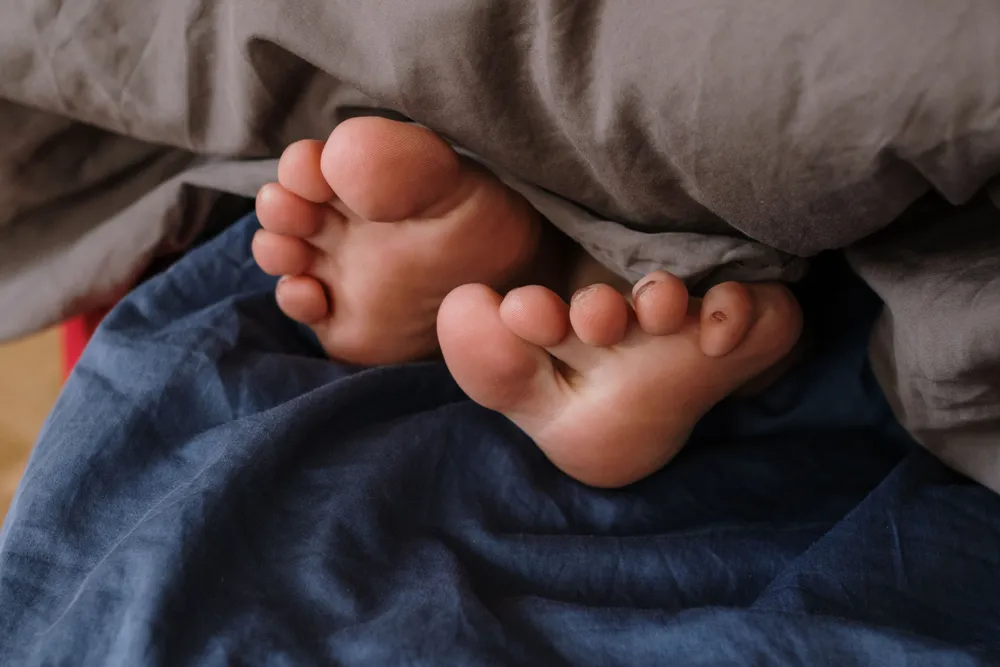
Because restless legs run on a body clock. Dopamine, the brain chemical that helps control movement, naturally falls in the evening and overnight and rises again in the morning. So symptoms peak in the hours you're trying to rest, and ease toward dawn. It's not in your head — it's your circadian rhythm working against you.
This timing is the cruel signature of RLS. During a busy day, your legs might feel completely normal; the trouble begins precisely when you sit down to relax or lie down to sleep. That's the collision of two things at once: rest removes the movement that was masking the urge, and the evening dopamine dip removes the brain's natural brake. Add a warm bed and a quiet, still body, and there's nothing left to distract you from the sensation.
Could low iron be the hidden cause?
Very possibly — low iron is one of the most common and most reversible drivers of RLS. Your brain needs iron to manufacture dopamine, so when stores run low the whole system falters, even if you're not anemic. The number that matters here is ferritin, not just hemoglobin.
This is the single most useful thing to act on, because it's measurable and treatable. Ask your doctor to check your ferritin (a marker of iron stores) and your transferrin saturation. Many restless legs specialists want to see ferritin comfortably above 75–100 ng/mL for people with symptoms — a bar that's higher than the usual "not anemic" cutoff, because the brain's needs are stricter than the blood's.
Please don't start iron on your own. Too much iron is harmful and builds up in the body, so iron supplements for RLS should only be taken after a blood test and with a doctor's guidance on dose and timing. This is one to test first, not guess.
What everyday triggers make restless legs flare?
Several common things can tip a quiet case into a loud one, and most are within your control. The usual suspects are stimulants and depressants that disturb dopamine or sleep — caffeine, alcohol, and nicotine — along with a surprising number of everyday medications. Removing your personal triggers is often the difference between an occasional flare and a nightly one.
| Common trigger | Why it can worsen restless legs |
|---|---|
| Caffeine (afternoon/evening) | A stimulant that heightens restlessness and delays sleep, giving RLS more time to build. |
| Alcohol | Fragments sleep and is widely reported to intensify evening symptoms. |
| Nicotine | A stimulant that can aggravate the urge to move. |
| Sedating antihistamines (e.g. diphenhydramine) | Older allergy and sleep aids can markedly worsen RLS — a common hidden culprit. |
| Some antidepressants | Certain SSRIs/SNRIs can aggravate symptoms; never stop a prescription — discuss alternatives with your doctor. |
| Sleep deprivation | Being short on sleep lowers your threshold, so last night's bad night feeds tonight's. |
Two of those triggers — caffeine and alcohol — are worth a closer look on their own, because they disrupt midlife sleep in more ways than one. If either is part of your evening, see how they play out in caffeine and menopause sleep and why that nightcap wrecks your rest.
What actually calms restless legs at night?
A layered approach works best: fix the fixable (iron, triggers), then use in-the-moment relief and steady daily habits. No single trick cures RLS, but stacking several genuinely quiets it for most people. Think of it as turning down the volume from several dials at once rather than hunting for one magic switch.
In the moment
- Move. Get up and walk, or stretch your calves and hamstrings — movement is the built-in off switch, at least while you keep going.
- Massage your legs or use a foam roller before bed to interrupt the sensation.
- Warm or cool the legs. A warm bath, a heating pad, or an ice pack can each help — try both temperatures and see which your legs prefer.
Daily habits that lower the baseline
- Move your body regularly, but keep it moderate — a daily walk helps, while intense late-night workouts can backfire. See exercise and sleep during menopause for the timing.
- Cut evening caffeine, alcohol, and nicotine, your three most likely triggers.
- Protect your sleep, since being rested raises your threshold for symptoms — the whole point of solid sleep habits and CBT-I.
- Ask about magnesium. Evidence is mixed, but if you're low it may ease muscle restlessness, and it's gentle to try. Here's how to choose a magnesium for sleep.

A gentle reminder: restless legs is a real neurological condition, not a failure of willpower or "just nerves." Trying harder to lie still makes it worse, not better — the relief comes from movement and from treating the cause, not from forcing yourself to endure it.
When should you see a doctor?
See a doctor if restless legs strike three or more nights a week, damage your sleep, or keep worsening. Ask specifically for a ferritin test and a review of any medications that can aggravate RLS. Persistent symptoms deserve a real workup — to check iron, rule out other causes, and, if needed, discuss treatment beyond home measures.
It's worth being seen because RLS occasionally travels with other conditions — iron deficiency, thyroid issues, kidney problems, diabetes, or nerve issues — that are worth identifying in their own right.
For moderate-to-severe cases, doctors have effective prescription options. Today's guidelines often favor a class of medicines called alpha-2-delta ligands, such as gabapentin, over the older dopamine drugs, which can paradoxically worsen RLS over time in a process called augmentation.
That same drug shows up elsewhere on this site for a completely different reason — it's also a genuine option for menopause hot flashes and the sleep they wreck. That's a conversation to have with a clinician, but it's reassuring to know real help exists if the basics aren't enough.
For years I treated my restless legs as a personality flaw — proof I "couldn't relax." It wasn't. It was a dopamine-and-iron story with my name on it, and once I understood that, I stopped blaming myself and started fixing it.
One thing worth ruling out first: if what wakes you is a sharp, painful knot in the calf rather than an urge to move, that is a leg cramp, not restless legs — two different conditions with different treatments. Night leg cramps in menopause covers how to tell them apart.
Where to go from here
Restless legs is one piece of the midlife sleep puzzle, and it rarely travels alone. Start with the complete perimenopause and menopause sleep guide for the full map. If your legs are only part of the story, you may recognize yourself in why can't I sleep at 45 or how to fall back asleep at 3 a.m. And when a restless night tips into a racing mind, breaking the insomnia-anxiety loop is the natural next read.
And if what you feel is on the skin rather than an urge to move — crawling, creeping, itching — that's a separate problem, covered in crawling, itchy skin at night in menopause.
Key takeaways
- Restless legs is an urge to move your legs, with uncomfortable sensations that ease with movement and flare at rest and at night.
- Menopause can trigger or worsen it as shifting hormones affect dopamine and iron handling.
- Symptoms peak at night because the brain's dopamine naturally dips in the evening.
- Low iron is a common, reversible cause — ask for a ferritin test before taking any iron.
- Movement, warmth, cutting evening caffeine and alcohol, and treating low iron calm it; see a doctor if it's frequent.
Frequently asked questions
Does menopause cause restless legs syndrome?
Menopause doesn't strictly cause restless legs syndrome, but the hormonal shift can trigger it or make an existing case worse. Falling estrogen affects dopamine signaling and iron handling, both central to RLS, and menopausal sleep loss lowers your threshold for symptoms. Many women notice their legs act up for the first time in perimenopause.
Why do my restless legs get worse at night?
Restless legs follow a daily clock. The brain chemical dopamine, which helps control movement, naturally dips in the evening and overnight, so symptoms peak when you finally lie down and rest. That's why RLS feels worst in bed even though your legs may feel fine during a busy day.
Can low iron cause restless legs?
Yes, low iron is one of the most common reversible causes. Your brain needs iron to make dopamine, so low stores can trigger or worsen RLS even when a standard anemia test is normal. Ask your doctor to check ferritin specifically; many RLS experts aim for a level above 75 to 100.
What is the fastest way to calm restless legs at night?
In the moment, move: get up and walk, stretch your calves, or gently massage your legs, since movement relieves the urge. A warm bath or a heat or ice pack before bed helps too. For lasting relief, check your iron and cut evening caffeine and alcohol.
When should I see a doctor about restless legs?
See a doctor if symptoms hit three or more nights a week, wreck your sleep, or keep getting worse. Ask specifically about a ferritin blood test and a review of any medications that can aggravate RLS. Persistent restless legs deserve a proper workup, not just tolerating another broken night.
Sources cited
- National Institute of Neurological Disorders and Stroke (NINDS). Restless Legs Syndrome Fact Sheet. ninds.nih.gov
- Sleep Foundation. Restless Legs Syndrome (RLS). sleepfoundation.org
- Winkelman JW, Berkowski JA, DelRosso LM, et al. Treatment of restless legs syndrome and periodic limb movement disorder: an American Academy of Sleep Medicine clinical practice guideline. J Clin Sleep Med. 2025;21(1):137-152.
- The North American Menopause Society (NAMS). Sleep problems and menopause. menopause.org
How this article was checked
This article was reread and updated on October 19, 2026. The ferritin threshold was updated to cite the current, dated American Academy of Sleep Medicine clinical practice guideline (Winkelman et al., 2025) directly, replacing a generic AASM/Johns Hopkins attribution with no specific guideline named.

Ellen Hayes
Health & Wellness Writer and Researcher
Hi — I'm Ellen. If you're reading this at some ungodly hour because your legs won't quit and your brain won't either… I get it. I'm right there with you. I'm somewhere in the middle of midlife, deep in perimenopause, and lately sleep and I have a complicated relationship.
I'm not a doctor. I'm not an expert — and I'm never going to talk down to you like one. I'm just a woman who got tired of vague answers ("it's just your age," "try to relax") and decided to actually read the research myself. Then I write it down here, in plain English, the way I'd explain it to a friend over coffee. More about Ellen →