Zaleplon for Menopause Insomnia: Sonata's Sleep Target

Falling asleep can become the part of the evening you dread. By the time you find zaleplon, sometimes called Sonata, you may have read so many medicine names that they start to sound interchangeable. They are not. The useful question is what this particular prescription is intended to help.
I reviewed the prescribing information, FDA safety advice and the American Academy of Sleep Medicine's evidence review. This guide separates a sleep-onset medicine from treatment for every disturbance that happens during menopause. It also puts the safety warning beside the potential benefit, where it belongs.
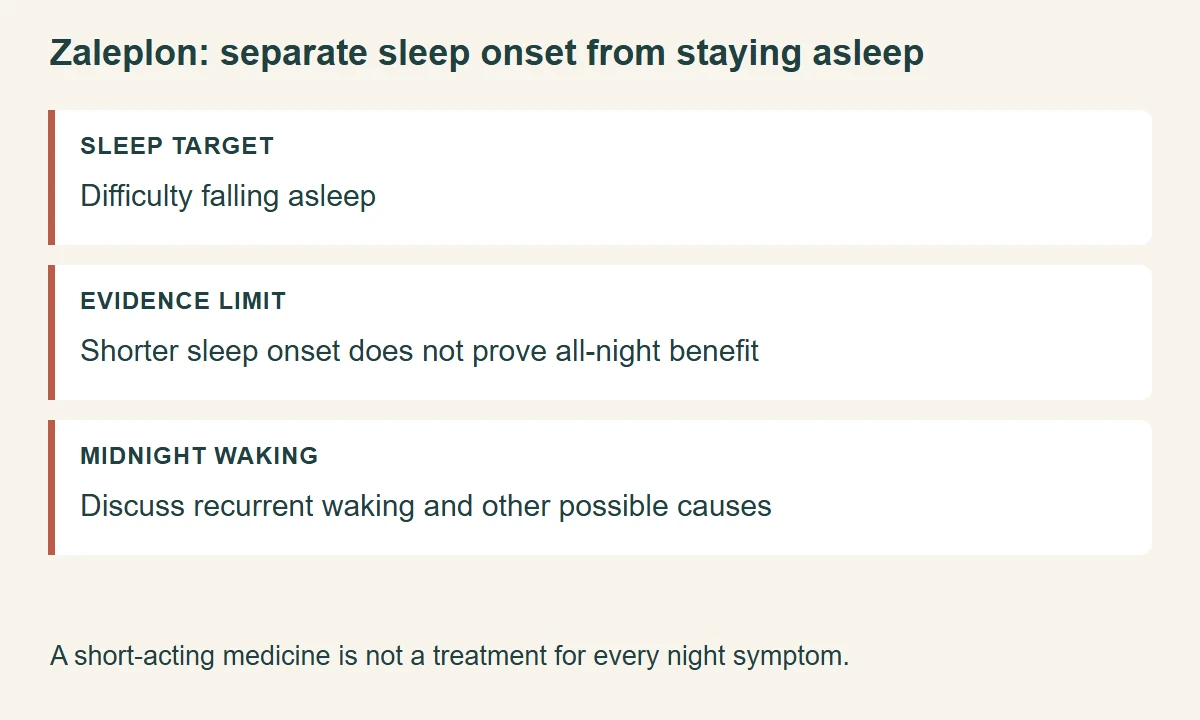
Zaleplon, known by the brand name Sonata, is a prescription medicine for short-term treatment of difficulty falling asleep. It has not been shown to reduce awakenings or increase total sleep time. It does not replace menopause care. Serious sleep behaviors, interactions and next-day impairment require a careful prescribing discussion.
Which sleep problem does zaleplon actually target?
Zaleplon targets difficulty getting to sleep, often called sleep-onset insomnia. The prescribing information does not establish longer total sleep or fewer awakenings. If your main complaint is waking repeatedly after falling asleep, say that clearly. A drug's familiar name matters less than whether its studied target matches the problem you need assessed.
The zaleplon label makes that distinction explicit. It is easy to lose it when a search result describes several medicines simply as sleeping pills. Before comparing names, write down what happens on a typical difficult night, including the part that bothers you most.
For example, "I lie awake at bedtime" is different from "I fall asleep but wake sweating several times." You may experience both, or find that one pattern changes from week to week. Tell the clinician that uncertainty rather than trying to fit your experience into the indication you have just read.
A brief record might include bedtime, your estimate of when sleep began, remembered waking and how you functioned afterward. It does not need to become an elaborate project. If looking at the time makes the night harder, describe your impression the next morning rather than repeatedly checking the clock.
Our menopause insomnia guide explains the wider assessment. A medicine-specific article can help you prepare one part of that conversation. It cannot determine from a few symptoms that this is the right prescription, or that another explanation has already been ruled out.
What does the evidence say about zaleplon and menopause?
The adult insomnia evidence supports a limited sleep-onset role for zaleplon. The 2017 American Academy of Sleep Medicine guideline makes a weak recommendation and rates the overall evidence low quality. That review is not proof of a menopause-specific effect. An insomnia result should not be presented as evidence that zaleplon treats hormonal changes or hot flashes.
The review found limited trials, reporting problems and uncertainty in the estimates. The included studies were industry sponsored. Those details help explain the cautious recommendation. They should remain visible when discussing the findings instead of being replaced by a confident claim that a medicine works for every woman with insomnia.
Dates matter, too. This guideline was published before the FDA's 2019 boxed-warning action on certain sleep medicines. Reading an older assessment of trial side effects without the later warning would leave out important information. This article uses both the evidence review and the subsequent safety guidance rather than treating either as the whole story.
During an appointment, you can ask, "Which outcome would we expect this treatment to change?" The answer can be quite specific. That is useful even if the medicine is not selected, because it makes the discussion about your sleep pattern rather than about finding the most reassuring description online.
How is Sonata different from other sleep medicines?
Sonata is a brand name associated with zaleplon, a sedative-hypnotic often grouped with the Z-drugs. It is not the same medicine as zolpidem, eszopiclone or ramelteon. Similar purposes and similar names do not make prescriptions interchangeable. Compare the exact ingredient and treatment goal with your clinician rather than borrowing another person's instructions.
| Question to bring | What to clarify | Why the answer helps |
|---|---|---|
| What is the active ingredient? | Zaleplon, rather than just the brand name | Brand familiarity can hide a different medicine. |
| Which part of my night is the target? | Difficulty falling asleep | Bedtime wakefulness and repeated waking need separate discussion. |
| What would count as useful improvement? | A benefit you can describe at follow-up | A review needs more than a vague impression. |
| What is the safety and review plan? | Warnings, interactions and a contact route | The plan should be clear before a difficult night. |
For context, our articles on Lunesta and eszopiclone and ramelteon and Rozerem explain different prescriptions. They are background reading, not a menu of products to combine or a sequence to try without professional advice.
If a pharmacy changes the appearance of a refill, confirm the name and strength rather than guessing from capsule color. Ask which information sheet applies to the product you actually received. Save the written instructions somewhere you can find them without opening several browser tabs at bedtime.
What does the boxed warning about sleep behaviors mean?
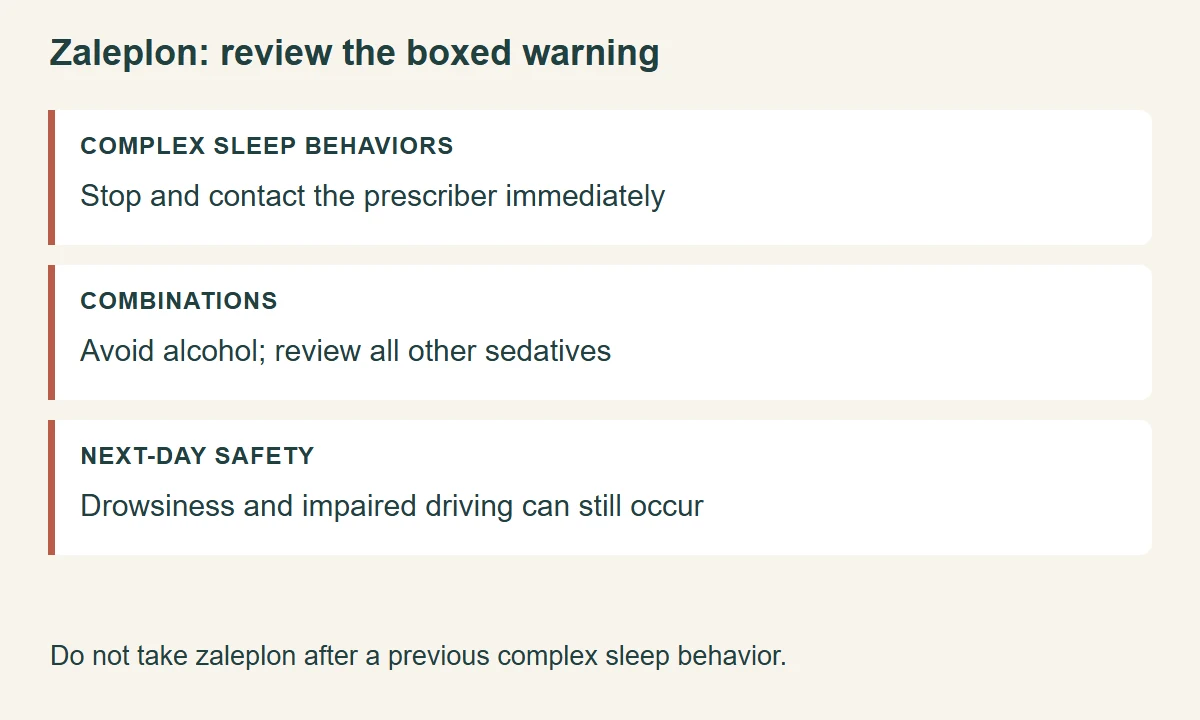
Zaleplon carries a boxed warning for activities performed while not fully awake, including sleepwalking and sleep-driving. Serious injury and death have occurred. If such an episode happens, stop the medicine and contact the prescriber immediately. These events can occur without alcohol and should never be dismissed because you cannot remember what happened.
The FDA's Z-drug safety advice describes why this warning matters. A person might hear about the event from someone else rather than remember it themselves. Make sure anyone who shares your home knows that an unusual overnight activity can be medically important.
That conversation can be straightforward: explain which medicine was prescribed, where the information sheet is kept and whom to contact if a concerning event is observed. You do not need to predict that something will happen. You do need a plan that does not depend entirely on your own memory the following morning.
Tell the prescriber about any previous complex sleep behavior with zaleplon or another Z-drug. The FDA's 2019 warning advises clinicians not to prescribe these medicines after a previous such reaction to any of the affected drugs. This history belongs in the assessment before another prescription is considered.
Know the action before starting: after a complex sleep behavior, stop zaleplon and contact the prescriber immediately. If there is an injury, breathing difficulty or another immediate danger, seek emergency help. Do not take another dose while waiting to see whether it happens again.
This specific stop instruction is different from a routine plan for ending treatment. A general reminder to talk with your doctor before changing a medicine must not obscure what the serious-warning instructions actually say. Ask the pharmacist to explain both situations if the distinction is unclear.
What should you clarify about bedtime, meals and morning alertness?
Read the exact prescription and ask how it fits your bedtime and planned waking time. MedlinePlus advises allowing seven to eight hours in bed after zaleplon and avoiding a heavy, high-fat meal around the dose. Do not use its short-acting reputation as permission to take it close to morning or to add another dose.
MedlinePlus patient guidance also cautions against continuing activities after taking the medicine. Get any uncertainties resolved while the pharmacy or prescribing office is available. A late-night decision about whether there is "enough time left" should not be based on advice intended for another medicine.
Ask what to do if your usual schedule changes, you miss the intended bedtime or you need to be up earlier than expected. Your individual instructions should address these practical circumstances. Do not improvise a new schedule because a particular evening is frustrating or because someone online describes a shorter sleep window.
Morning responsibilities matter in that conversation. Include driving, using equipment, caring for someone else or getting up alone in the dark. Ask the clinician to explain what would make an activity unsafe. Feeling that you are awake is not a reliable reason to disregard the next-day impairment warning.
The aim is a usable written plan, not a collection of exceptions you have to remember when exhausted. Before leaving, check that you can explain the timing, the restrictions and the contact route in your own words. If an instruction sounds inconsistent with the patient information sheet, ask for clarification rather than choosing between them yourself.
Which medicines and health conditions belong in the safety review?
Review every medicine and supplement with the prescriber and pharmacist before using zaleplon. Alcohol, other sedatives and certain interactions need particular attention. Breathing problems, liver disease, depression, pregnancy, breastfeeding and a history of substance misuse also belong in the discussion. Older or frail adults may need a different prescribing approach and closer monitoring.
The label describes additive central nervous system effects with other sedating medicines, and MedlinePlus specifically flags cimetidine and diphenhydramine among nonprescription products to report. A product used for allergy symptoms, pain or a cold may still matter to a sleep prescription. Give the full product name rather than describing it only as an occasional tablet.
Bring a list or photographs of the containers, including products you take only when a symptom flares. If two clinicians prescribe different medicines, explain that arrangement. Ask who will reconcile the whole list so the review does not depend on each professional seeing only their own part of your care.
Tell the clinician about snoring, witnessed pauses in breathing or a known sleep-apnea diagnosis. Do not assume that being given a sleep medicine settles the question of breathing during sleep. Our menopause and sleep apnea guide can help organize that separate conversation without trying to diagnose you from an article.
Discuss changes in mood openly as well. Write down anything you are worried you might minimize during the appointment, and ask how new symptoms should be reported. These details are part of choosing and reviewing care, not reasons to decide on your own that all sleep medicines are suitable or unsuitable for you.
How do you judge benefit without overlooking dependence or side effects?
A zaleplon review should address sleep onset, next-day functioning, adverse effects and the planned duration of treatment. It is a controlled medicine and can be habit-forming. Ask how treatment will be reviewed and ended. Do not increase it, extend it or create your own stopping schedule because of a difficult run of nights.
Before starting, agree on what you will bring back to the review. It might be a short description of how long falling asleep seems to take, whether you feel able to function and whether anyone has noticed unusual activity overnight. Use the same observations each time so the conversation has a consistent reference point.
Include both useful changes and difficulties. Perhaps bedtime feels easier while mornings feel less steady; perhaps one problem improved while another remained. You are not expected to interpret these observations as a dosing decision. They are information the prescribing team needs when deciding whether the plan is still appropriate.
MedlinePlus advises contacting the doctor when sleep has not improved within seven to ten days, becomes worse or is accompanied by changes in thinking or behavior. Ask how this fits the follow-up you have been offered. Serious sleep behaviors require the immediate action already described rather than waiting for that routine review.
If you want to stop because the benefit seems disappointing, contact the prescriber for an individual plan. Routine discontinuation is a different discussion from stopping immediately after a serious warned-about event. Write down which instructions apply to each situation so that a general rule does not accidentally replace a specific safety instruction.
Where does zaleplon fit within a broader menopause sleep plan?
A zaleplon discussion is one part of an insomnia assessment, not a substitute for identifying what is disturbing your nights. Ask about cognitive behavioral therapy for insomnia, menopause symptoms and other possible contributors. A treatment aimed at falling asleep does not remove the need to evaluate persistent sweating, repeated waking or daytime impairment separately.
The AASM framework places cognitive behavioral therapy for insomnia, or CBT-I, at the center of chronic insomnia care. Our CBT-I guide explains the treatment in more detail. Ask what access looks like in your situation and how it would fit with any prescription being considered.
You can bring different questions to different parts of the appointment. One concerns getting to sleep. Another concerns symptoms that wake you after that. A third concerns the morning. Keeping these questions visible helps prevent an apparently successful bedtime change from ending the discussion before the rest of your experience has been heard.
Our sleeping-pills comparison offers a way to organize medicine questions by target. Read it alongside the wider guide rather than using it to rank prescriptions for yourself. The most useful outcome of this research is a clearer conversation about a plan you understand and a review you know how to arrange.
Where to go from here
Start with the menopause insomnia guide for the wider assessment, then explore CBT-I. Our medicine comparison organizes different sleep targets. For related reading, see ramelteon and Lunesta. These pages explain treatment questions; they do not recommend combining products or choosing a prescription without professional advice.
Key takeaways
- Zaleplon, associated with the Sonata brand name, is a short-term prescription option for difficulty falling asleep.
- Its label does not establish fewer awakenings or longer total sleep; adult insomnia evidence is not proof of a menopause-specific benefit.
- Complex sleep behaviors require stopping the medicine and contacting the prescriber immediately.
- Review alcohol, other sedatives, interactions, breathing, liver health and next-day responsibilities before starting.
- Ask about CBT-I, a written prescription plan and follow-up rather than changing or combining sleep medicines yourself.
Frequently asked questions
What is zaleplon used for?
Zaleplon is a prescription medicine used for short-term treatment of difficulty falling asleep. Sonata is a brand name associated with it. The label does not establish that it increases total sleep time or reduces awakenings. Describe your actual sleep pattern so the clinician can assess whether that target fits.
Does Sonata treat menopausal hot flashes?
The sources reviewed here do not establish zaleplon as a treatment for menopausal hot flashes or hormone changes. Its insomnia role concerns falling asleep. If sweating or repeated waking is your main problem, discuss that directly instead of assuming that a sleeping-pill prescription addresses the cause of every disturbed night.
Is zaleplon the same as zolpidem or ramelteon?
No. Zaleplon, zolpidem and ramelteon are different active ingredients with different prescribing information. Similar names or a shared purpose do not make them interchangeable. Check the exact ingredient on your container and ask the pharmacist about the instructions for that product rather than applying advice written for another medicine.
What should I do after sleepwalking or sleep-driving on zaleplon?
Stop zaleplon and contact the prescriber immediately after a complex sleep behavior, such as sleepwalking, sleep-driving or doing activities while not fully awake. You may not remember the event. Do not take another dose to test whether it happens again. Seek emergency help for an injury or immediate danger.
Can I combine zaleplon with alcohol or an over-the-counter sleep aid?
Do not combine zaleplon with alcohol or another sleep medicine on your own. FDA guidance warns against these combinations, including nonprescription sleep products. Give the pharmacist your complete medicine and supplement list, including occasional products, and ask which items need to change under professional guidance before starting treatment.
When should I ask for a treatment review?
Ask for the review schedule when zaleplon is prescribed. MedlinePlus advises contacting the doctor if sleep has not improved within seven to ten days, worsens or comes with thinking or behavior changes. Report morning impairment and other concerns. Complex sleep behaviors require stopping and immediate contact rather than routine follow-up.
Sources cited
- Zaleplon prescribing information, label updated October 8, 2025; indication, warnings, precautions and medication guide read — Read source
- MedlinePlus: Zaleplon, patient guidance revised July 20, 2024; relevant sections read — Read source
- FDA: Taking Z-drugs for Insomnia? Know the Risks; consumer guidance read — Read source
- FDA: Certain Prescription Insomnia Medicines, boxed-warning safety communication, April 30, 2019; recommendations read — Read source
- Sateia et al., AASM pharmacologic guideline, 2017; zaleplon and treatment framework sections read — Read source

Ellen Hayes
Health & Wellness Writer and Researcher
I compare prescribing information and research so the differences are easier to discuss with a clinician. This article is a research summary, not a medical review or a personal treatment recommendation. About Ellen and the site.