Teeth Grinding at Night in Menopause: Why and What Helps
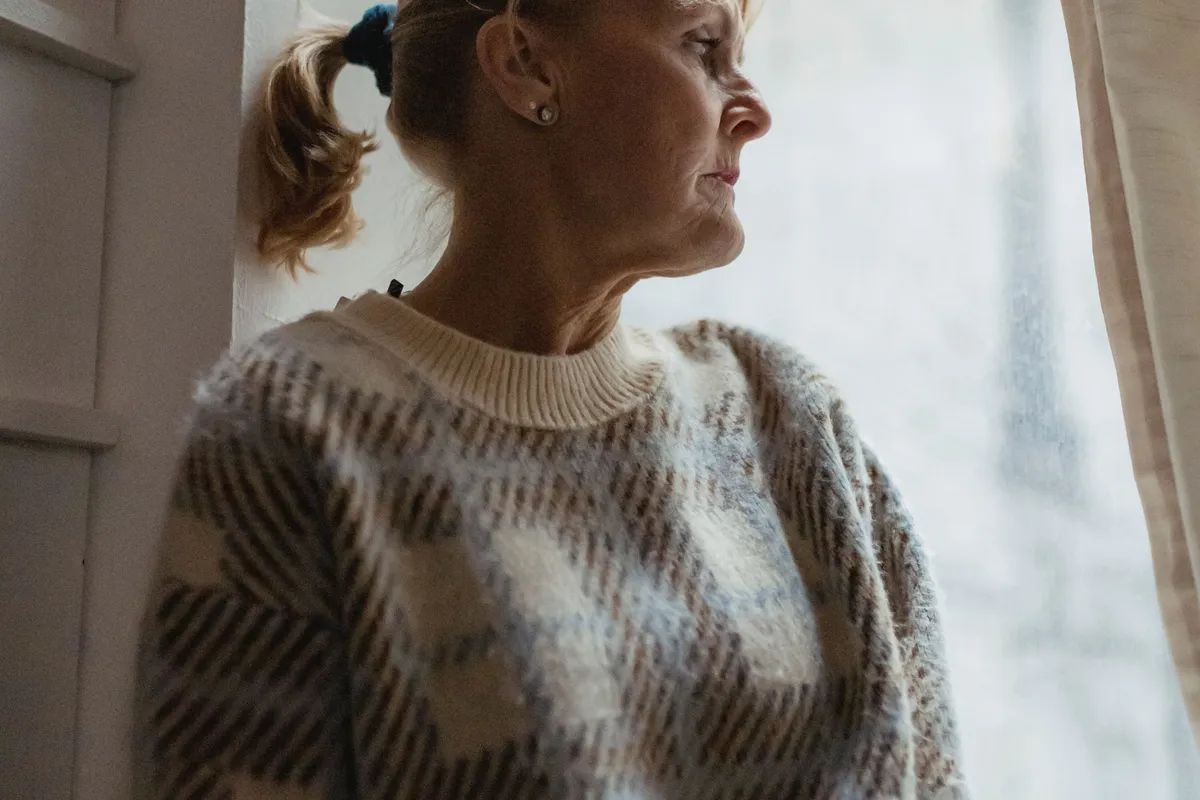
Grinding and clenching happen during the brief arousals that punctuate sleep — and menopause multiplies those arousals through hot flashes, anxiety and rising sleep apnea risk. Direct evidence that bruxism increases at menopause is missing, though. A night guard protects your teeth; treating what is fragmenting the night is what reduces the grinding.
My dentist found it before I did. I had gone in about a filling, and she spent a while looking at the back of my lower teeth before asking, carefully, whether I had been under stress lately. The edges were worn flat. I had no memory of grinding anything, ever — which, it turns out, is the normal answer.
So I went reading, and found something I did not expect: the internet is extremely confident that menopause causes teeth grinding, and the research is not. That gap is worth walking through properly, because the honest version still leaves you with plenty you can act on — just not the things most articles tell you to do first.
A note on the word: clinicians call it bruxism. It covers both grinding teeth together and clenching them — and clenching, which makes no sound at all, is the version far more of us are doing.
Why does teeth grinding get worse in menopause?
Honestly, we don't know that it does — and that's the first thing worth saying. What we do know is that grinding clusters around the micro-arousals that break up sleep, and menopause hands your brain more of those: hot flashes, night sweats, anxiety and a rising risk of sleep apnea.
That's a mechanism, not a measurement, and the difference matters. Nobody has followed a group of women through the menopause transition with jaw-muscle recordings to see whether bruxism actually climbs. Until someone does, "menopause causes teeth grinding" is a reasonable hypothesis being sold as a finding.
There's also a fact that cuts the other way, and leaving it out would be dishonest. Large population surveys put regular sleep bruxism at somewhere around eight percent of adults, and consistently find it becomes less common as people get older, with no clear difference between men and women. If age alone drove it, our forties and fifties would be the calm part.
Where menopause does have a defensible foothold is in the surrounding tissue rather than the grinding itself. Estrogen receptors sit in the temporomandibular joint, and estrogen is involved in how the face and jaw process pain — which is part of why jaw joint disorders are so much more common in women than men. Shifting hormones plausibly change how much a given amount of clenching hurts, even if the clenching hasn't changed at all.
Put those together and you get a version I can defend: menopause probably doesn't invent the habit, but it can hand you more of the arousals it rides on, and a jaw that complains more loudly about the same work.
How do you know you grind your teeth at night?
You usually don't catch yourself doing it — bruxism is diagnosed by what it leaves behind. A jaw that aches on waking, a dull headache at the temples, teeth that feel sensitive to cold, flattened or chipped edges, a tongue with scalloped sides, or a partner who has heard it.
The morning timing is the tell. Tension headaches from a stressful day build through the afternoon; the bruxism version is there when you open your eyes and fades over the first hour or two. If you consistently wake with your jaw already tired, something used it while you were asleep.
- A tired or aching jaw on waking, sometimes with a click or a catch when you open wide.
- Dull headaches at the temples in the first hour of the day.
- Teeth that have turned sensitive to cold drinks or air, as enamel thins.
- Flattened, shiny or chipped edges — what your dentist is looking at.
- Scalloped ridges along the sides of your tongue, where it presses against clenched teeth.
- Cheek ridges — a pale line on the inside of each cheek, level with your bite.
- Noise your partner has mentioned, which only picks up grinding, never silent clenching.
One caution about that last point, because it sends people away reassured when they shouldn't be. Clenching is silent. A partner who has never heard a thing tells you nothing at all about whether you are clenching your way through the night, and clenching is the form that most often shows up as jaw pain and headaches.
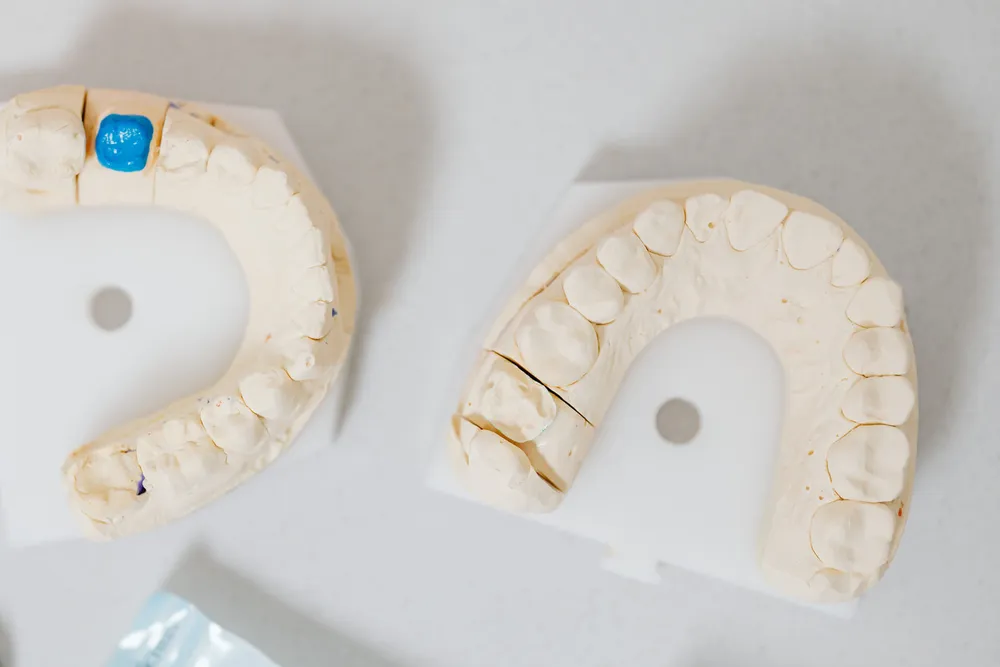
Is grinding a tooth problem or a sleep problem?
Both, but the driver sits in the sleep. Grinding episodes cluster in the seconds after a micro-arousal — a brief surfacing towards lighter sleep that you never remember. Heart rate rises, muscles tense, the jaw joins in. That is why anything fragmenting your night tends to bring the jaw with it.
This reframing is fairly recent. The 2018 international consensus on bruxism describes it as repetitive activity of the chewing muscles — clenching or grinding the teeth, or bracing the jaw — and makes a point that gets lost in most coverage: in otherwise healthy people, bruxism is better understood as a behaviour than as a disorder. It becomes a problem when it damages something, not by existing.
That is genuinely reassuring, and it also redirects the whole question. If grinding rides on arousals, the useful thing to ask isn't "how do I stop my jaw" but "what keeps waking me". In midlife the honest shortlist is short: heat, anxiety, alcohol, and breathing.
Breathing deserves its own line. Sleep bruxism is more common in people with obstructive sleep apnea, and apnea rises sharply after menopause as protective progesterone falls away — something we go into properly in menopause and sleep apnea. If you grind, snore and wake unrefreshed, those three symptoms belong in the same conversation with a doctor rather than three separate ones.
The heat side is more familiar. Every hot flash that surfaces you is an arousal, and the nights when the flashes come in waves are the nights the jaw has the most opportunities to join in. Which is why keeping the night cool belongs on a page about teeth, however strange that looks.
Does a night guard stop the grinding?
No — and that surprises most people. A guard is armour, not a cure. It puts a layer of acrylic between your teeth so the force lands on the appliance instead of your enamel, and it can reduce episodes for a while. The muscle activity generating the force largely continues underneath.
That's still worth having. Enamel does not grow back, and the difference between replacing a worn guard every couple of years and rebuilding worn-down molars is measured in thousands of dollars. But it explains why women who have worn one for years still wake with an aching jaw: the guard was never treating the jaw.
The other thing worth knowing is that the evidence doesn't crown a winner among appliance types. Reviews of splint therapy find they can lower the frequency of episodes temporarily and protect the teeth, without good evidence that one design outperforms another. Which means the deciding factors are fit, comfort, and whether you'll actually wear it.
| Type | How it's made | Worth knowing |
|---|---|---|
| Custom hard acrylic | Made by a dentist from casts of your teeth | The most durable option and the one that fits properly; also the most expensive |
| Custom soft or dual-laminate | Dentist-made, softer inner surface | More comfortable at first; some heavy grinders chew through soft material faster |
| Boil-and-bite | Softened in hot water and moulded at home | Cheap and a reasonable trial; bulkier, wears out quickly, and a poor fit can move teeth |
| Mail-order custom | You take an impression at home and post it off | Mid-priced; nobody examines your bite or catches the wear pattern or the apnea signs |
One safety point before you buy anything online. If you snore, gasp, or wake unrefreshed, get sleep apnea ruled out before you start wearing a guard. Some appliances can nudge the jaw into a position that makes breathing worse, and a guard that quietly worsens untreated apnea is a bad trade for saved enamel.
What actually reduces the grinding?
Treating whatever is breaking up your sleep, mostly. That is an unglamorous answer and it is the one the mechanism points to. If hot flashes are waking you, cooling the night helps the jaw. If apnea is the driver, treating it is the intervention. If anxiety is winding you tight, that is the lever.
The daytime half is worth taking seriously too, because awake clenching is far more common than the sleeping kind and it is the only version you can actually catch in the act. Most of us do it in front of a screen, in traffic, or reading something that annoys us — jaw locked, shoulders up, entirely unaware.
- Lips together, teeth apart. The resting position of a relaxed jaw leaves a few millimetres of space between the teeth. If yours are touching right now, that's the habit. A note stuck to your monitor beats willpower.
- Treat the drivers of the arousals. Night-time anxiety, heat, and untreated apnea are the three that actually move the needle.
- Look hard at alcohol. A nightcap is associated with more grinding, and it fragments the second half of the night regardless — the mechanism is in alcohol and menopause sleep.
- And at caffeine. Heavy intake shows up in the same association studies; the timing question is covered in when to cut off coffee.
- Warmth before bed. A warm compress along the jaw for ten minutes won't stop night-time episodes, but it does help a jaw that is already sore, and it costs nothing.
- Skip the chewing gum if your jaw is aching. You are asking an already overworked muscle to do more.
Then there's botulinum toxin, which comes up constantly and deserves a straight answer. Injected into the chewing muscles, it weakens them so the force drops, and small studies do show reduced pain and grinding intensity. It's not a first-line treatment, the effect wears off in months, and it doesn't touch the arousals underneath. It's a reasonable conversation for severe cases with a specialist, not a starting point.
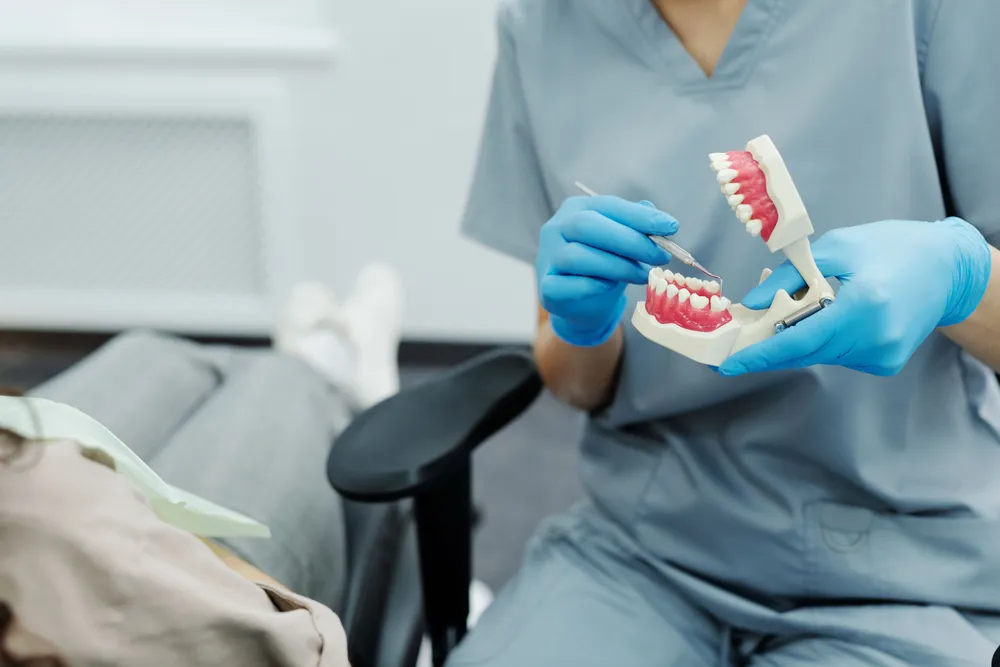
Could your medication be causing it?
This one is worth raising with whoever prescribes for you. Antidepressants that act on serotonin — the SSRIs and SNRIs — are associated with jaw clenching and grinding, usually starting within a few weeks of a new prescription. It matters here because low-dose SSRIs and SNRIs are prescribed for hot flashes.
The proposed mechanism is that raising serotonin dampens dopamine signalling in the pathways that coordinate movement, and the jaw is one of the places that shows up. Reports involve sertraline, escitalopram, venlafaxine, citalopram, paroxetine, fluoxetine and duloxetine among others, and the clenching typically settles within a few weeks of stopping or changing the drug.
Read that carefully, because it is exactly the kind of fact that gets misused. It is not a reason to stop a medication. It is a reason to mention the timing — "my jaw started aching about a month after I began this" — to the person who prescribed it, because a dose adjustment, a switch, or an added medication are all things they can consider and you can't.
If the drug is treating hot flashes, there may also be a non-hormonal or hormonal alternative worth weighing, which we cover in our honest look at HRT.
The thing that reframed this for me: my jaw wasn't the problem to solve. It was a readout of how broken up my nights had become — the one part of it that leaves physical evidence behind.
When should you see a dentist or doctor?
Sooner than most of us do. Book the dentist if your jaw locks or clicks painfully, if teeth are chipping or growing sensitive, or if morning headaches have become routine. Ask about sleep apnea too — snoring, gasping or daytime sleepiness alongside grinding is a combination worth investigating properly.
What makes the appointment useful is arriving with a pattern instead of a symptom. Two weeks of rough notes — when the jaw aches, whether you woke hot, what you drank the evening before, whether you snored — turns "I think I grind my teeth" into something a clinician can work with. Our guide to what to track for two weeks covers exactly what to write down.
- A dentist for the wear, the guard, and whether your bite is taking damage that needs restoring.
- A doctor if snoring, gasping or unrefreshing sleep suggest apnea, or if a new medication lines up with when the clenching started.
- Urgently if your jaw locks open or shut, or if the pain is severe enough to stop you eating.
Where to go from here
If the grinding comes with snoring or unrefreshing mornings, start with menopause and sleep apnea — it's the driver most worth ruling out. If heat is doing the waking, how to stay cool at night and natural remedies for night sweats are the practical reads.
If the tension is the anxious, wired kind, breaking the anxiety loop and CBT-I are where to go next. And for how all of this fits together, the complete perimenopause and menopause sleep guide puts it in order of evidence.
Key takeaways
- No study has shown bruxism rises across the menopause transition — and surveys find grinding becomes less common with age, not more.
- What menopause does supply is more of the sleep arousals that grinding clusters around: hot flashes, anxiety and a rising risk of sleep apnea.
- Clenching is silent, so a partner hearing nothing rules out very little; the reliable signs are morning jaw ache, temple headaches and tooth wear.
- A night guard protects enamel and can reduce episodes, but it doesn't stop the muscle activity underneath — and no appliance design is proven better than another.
- Rule out sleep apnea before wearing any appliance, especially if you snore, gasp or wake unrefreshed.
- SSRIs and SNRIs, including the low doses prescribed for hot flashes, are associated with jaw clenching — raise the timing with your prescriber rather than stopping anything yourself.
Frequently asked questions
Does menopause cause teeth grinding?
No study has shown that bruxism increases across the menopause transition, and large surveys find grinding becomes less common with age, not more. What menopause reliably does is multiply the sleep arousals that grinding clusters around, through hot flashes, anxiety and a rising risk of sleep apnea.
How do I know if I grind my teeth at night?
By what it leaves behind, since almost nobody catches themselves doing it. Typical signs are a jaw that aches on waking, dull headaches at the temples, teeth that turn sensitive to cold, flattened or chipped edges, scalloped ridges along the tongue, and a partner who has heard the noise.
Does a night guard stop teeth grinding?
It protects rather than cures. A guard puts acrylic between your teeth so the force lands on the appliance instead of your enamel, and it can reduce episodes for a period. The muscle activity producing the force largely continues underneath, which is why the drivers still need treating.
Can HRT help with jaw clenching in menopause?
No trial has tested hormone therapy for bruxism, so there is no honest way to recommend it for that purpose. If hot flashes are fragmenting your nights and hormone therapy quiets them, the arousals that grinding clusters around may fall as a knock-on effect, but that is reasoning, not evidence.
Can antidepressants cause teeth grinding?
Serotonergic antidepressants, including SSRIs and SNRIs, are associated with jaw clenching and grinding, often starting within a few weeks of a new prescription. This matters in midlife because low-dose SSRIs and SNRIs are also prescribed for hot flashes. Never stop a prescription yourself; raise it with your prescriber.
Sources cited
- Lobbezoo F, Ahlberg J, Raphael KG, et al. International consensus on the assessment of bruxism: report of a work in progress. J Oral Rehabil. 2018;45(11):837–844. pubmed.ncbi.nlm.nih.gov
- Khoury S, Carra MC, Huynh N, Montplaisir J, Lavigne GJ. Sleep bruxism-tooth grinding prevalence, characteristics and familial aggregation: a large cross-sectional survey and polysomnographic validation. Sleep. 2016;39(11):2049–2056. pubmed.ncbi.nlm.nih.gov
- Managements of sleep bruxism in adults: a systematic review. Journal of Prosthodontic Research. 2022. sciencedirect.com
- George S, Joy R, Roy A. Drug-induced bruxism: a comprehensive literature review. Journal of Indian Academy of Oral Medicine and Radiology. 2021. journals.sagepub.com
- Understanding the clinical management of co-occurring sleep-related bruxism and obstructive sleep apnea in adults: a narrative and critical review. 2024. pubmed.ncbi.nlm.nih.gov
- Cleveland Clinic. Bruxism (teeth grinding). clevelandclinic.org
Ellen Hayes
Health & Wellness Writer and Researcher
Hi — I'm Ellen. I found out about my own worn-down molars in a dentist's chair, from someone else, which is apparently how most people find out. This is what I went and read afterwards.
I'm not a doctor. I'm not an expert — and I'm never going to talk down to you like one. I'm a woman in the middle of perimenopause who got tired of vague answers, started reading the actual research, and writes it down here in plain English, the way I'd explain it to a friend over coffee. More about Ellen →