Menopause Joint Pain at Night: Why It Gets Worse After Dark
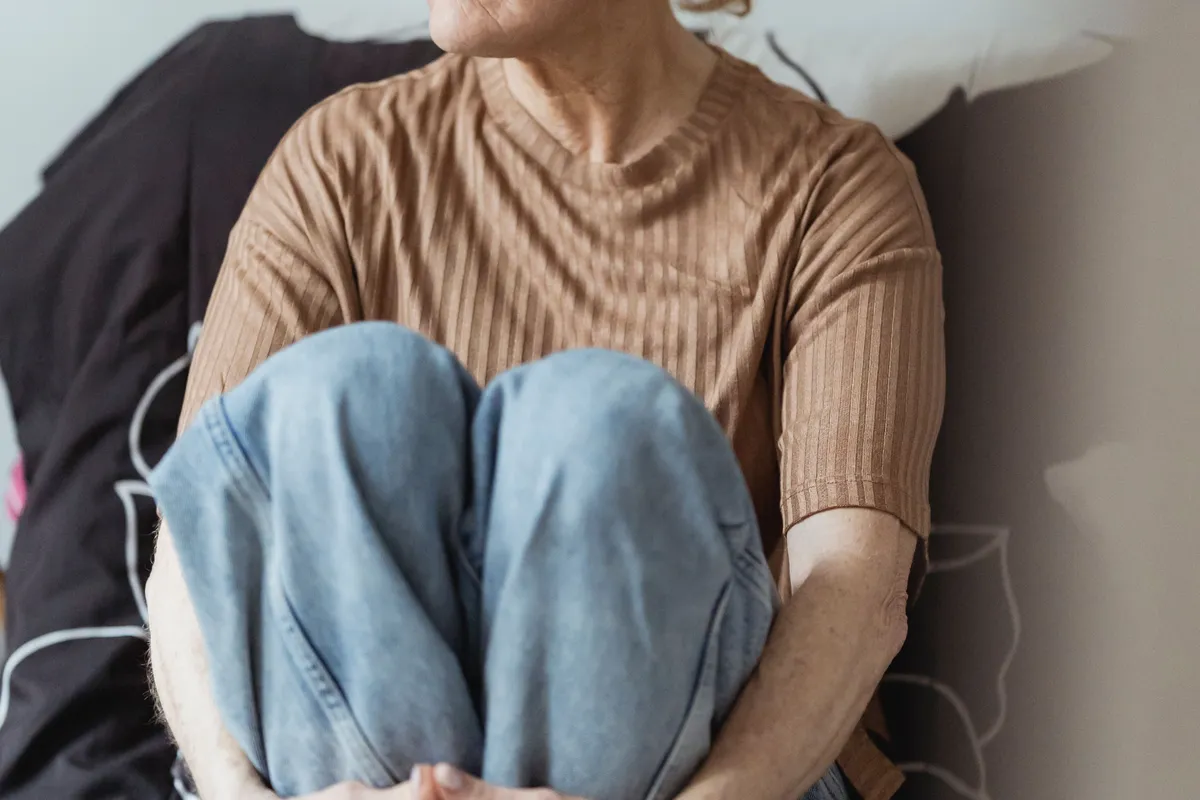
Falling estrogen affects cartilage, joint lining and tendons and lifts the brakes on inflammation, so joints ache more in midlife. At night it worsens because your natural anti-inflammatory cortisol dips, lying still stiffens joints, and nothing distracts you. Poor sleep then lowers your pain threshold, feeding the cycle.
For a long time I filed this one under "getting older." My hips complained when I turned over. My hands were stiff enough in the morning that opening a jar took two attempts. And the strangest part — it was worse at night than after a long walk, which made no sense to me at all.
What I didn't know is that there's a name for this now. In 2024, researchers writing in Climacteric proposed grouping these symptoms as the musculoskeletal syndrome of menopause — the aching joints, the stiffness, the frozen shoulder that arrives from nowhere. Giving it a name matters, because for decades women were told it was just age, just wear and tear, just life.
Can menopause really cause joint pain?
Yes — and the biology is more direct than most of us are told. Estrogen receptors sit in cartilage, in the synovium that lines your joints, and in the tendons around them. Estrogen also helps restrain inflammation and keeps connective tissue supple. When it falls, all three of those jobs are done less well.
The scale is striking once you look. A review in Maturitas concluded that more than half of women experience joint aches around the menopause transition, and noted that a similar syndrome shows up after sudden hormone withdrawal or on medications that block estrogen. That last detail is the giveaway: take estrogen away abruptly, and joints hurt.
It's also why the pain often appears in places that puzzle people — hands, wrists, shoulders, knees, and the base of the neck rather than one worn-out joint. Hormone-related aching tends to be widespread and migratory, while a mechanical problem usually stays put in the joint that was injured.
Why does joint pain get worse at night?
Three things line up after dark. Your own cortisol — a natural anti-inflammatory — falls to its daily low overnight, so inflammation is less restrained. Joints stiffen when you stay still for hours, because movement is what circulates the fluid that lubricates them. And with no distraction, pain has your full attention.
There's a fourth, less obvious factor: temperature. Cooling tissue is less pliable, and the cool bedroom that helps your hot flashes can leave stiff joints unhappy. That tension is real, and it's usually solved by keeping the room cool while keeping the joints themselves warm — more on that below.
Does bad sleep make the pain worse?
It does, and it changed how I think about this. Sleep and pain run in both directions, but research suggests the stronger arrow may point from sleep to pain: a poor night predicts more pain the next day more reliably than a painful day predicts a poor night. Your pain threshold drops when you're short on sleep.
That reframes the whole problem. If you treat only the joints, you're working on one half of a loop. Protecting sleep — even when the ache is what broke it — is treatment for the pain itself, which is a good reason to take CBT-I seriously rather than treating it as the soft option.
How do you tell menopause aches from arthritis?
Honestly, you can't be certain at home — and that's the point of this section. Menopause arrives at exactly the age when osteoarthritis and inflammatory arthritis also become more common, so "it's just my hormones" is an assumption that can delay a diagnosis which responds well to early treatment.
See a doctor promptly if you have any of these:
- Morning stiffness that lasts more than an hour
- Joints that are hot, red, or visibly swollen
- Symmetrical swelling in the small joints of both hands or feet
- Fever, night sweats with weight loss, or feeling generally unwell
- One joint suddenly severely painful and swollen
These point toward inflammatory arthritis or infection rather than hormonal aching, and early treatment changes long-term outcomes.
What tends to look hormonal instead: aching that moves around, stiffness that eases within 20 to 30 minutes of getting up and moving, symptoms that arrived alongside other menopause changes, and joints that look normal even when they hurt. Bring a symptom diary to your appointment — the pattern is what a clinician needs, and it's easy to forget in the room.
Does hormone therapy help joint pain?
Modestly, and the honest number is worth seeing. In the WHI trial, women on estrogen alone reported joint pain less often than those on placebo after a year, and the gap persisted at three years. But look closer: 76.3% versus 79.2%. That's a real difference in a huge trial, and a small one in your living room.
The same study found joint swelling was slightly more common on estrogen — a reminder that no treatment moves every outcome in the same direction. Hormone therapy isn't prescribed for joint pain alone, but if you're weighing it for hot flashes or sleep, this belongs in the conversation as a possible bonus rather than a reason on its own. Our honest look at HRT covers the wider picture, and progesterone the sleep-specific half.
What actually helps at night?
Warmth, position, and daily movement do most of the work. Heat before bed relaxes stiff tissue and eases the guarding that keeps you tense; a pillow placed between or under the knees takes strain off hips and lower back; and consistent daytime movement beats any single evening trick, because joints are lubricated by being used.
| What to try | Why it works at night |
|---|---|
| Warm bath or shower an hour before bed | Relaxes stiff tissue — and the drop in body temperature afterwards helps you fall asleep |
| Pillow between the knees (side sleeping) or under them (on your back) | Keeps hips and spine aligned, so joints aren't held at strain for hours |
| Cool room, warm joints | Lets you manage hot flashes without letting stiff joints get cold — socks, or a hot water bottle at the hip or knee |
| Daily movement plus strength work | Muscle supports the joint; strength training also protects bone as estrogen falls |
| Timing of any pain relief | Ask your doctor when to take it so cover lasts through the night rather than wearing off at 3 a.m. |
A word on supplements, since they're everywhere in this niche: the evidence for glucosamine and chondroitin in joint pain is weak and inconsistent, and neither is a menopause treatment. Omega-3 has better support for inflammatory joint pain, though not specifically for hormonal aching. If you want to try something, tell your doctor — and be more skeptical the louder the marketing gets. The same rules apply as on our herbal shelf.
The thing nobody told me: the ache and the broken sleep aren't two separate problems to solve in turn. They're one loop — and you can break into it from either side, which means a better night is also pain treatment.
Where to go from here
If the pain sits specifically on the outer point of your hip and flares when you lie on that side, that's a different, very treatable pattern — our article on hip pain at night explains why it isn't the same thing as general joint pain.
If aching joints are part of a wider picture of broken nights, start with the complete perimenopause and menopause sleep guide. If the pain wakes you and then your mind takes over, how to fall back asleep at 3 a.m. is the practical companion, and since movement is the best long-term medicine here, see exercise and sleep during menopause.
If you're also dealing with a crawling urge to move your legs, that's a different problem covered in restless legs at night.
If the crawling is on the skin itself rather than an urge to move — itchy, creeping, like something walking across your arm — that's crawling, itchy skin at night in menopause.
Key takeaways
- Estrogen acts on cartilage, joint lining and tendons and helps restrain inflammation, so falling levels can make joints ache and stiffen across midlife.
- More than half of women report joint pain around menopause; researchers proposed the term "musculoskeletal syndrome of menopause" in 2024.
- Nights are worse because anti-inflammatory cortisol dips overnight, staying still stiffens joints, and nothing distracts you from the ache.
- Sleep and pain form a loop, and poor sleep predicting next-day pain may be the stronger direction — so protecting sleep is itself pain treatment.
- Hormone therapy helps modestly: in a 10,739-woman trial, joint pain was reported by 76.3% on estrogen versus 79.2% on placebo, while swelling was slightly more common.
- Morning stiffness over an hour, hot or visibly swollen joints, symmetrical small-joint swelling, or fever mean see a doctor rather than assuming hormones.
Frequently asked questions
Can menopause cause joint pain?
Yes. Estrogen receptors sit in cartilage, the joint lining and surrounding tendons, and estrogen helps restrain inflammation. As levels fall, joints can become stiffer and more painful. More than half of women report joint aches around menopause, and researchers now group these symptoms as the musculoskeletal syndrome of menopause.
Why is menopause joint pain worse at night?
Your body's natural anti-inflammatory cortisol dips overnight, joints stiffen when you lie still for hours, and there is nothing to distract you from the ache. Poor sleep then lowers your pain threshold for the next day, which is how one bad night quietly becomes a cycle.
How do I know if it's menopause or arthritis?
You can't be sure at home, which is why a check matters. Warning signs pointing beyond hormones include morning stiffness lasting over an hour, hot, red or visibly swollen joints, symmetrical swelling in small joints, fever, or unexplained weight loss. Those warrant prompt medical assessment.
Does HRT help menopause joint pain?
Modestly. In the Women's Health Initiative trial of over 10,000 women, those taking estrogen alone reported joint pain slightly less often than the placebo group after one year, and the difference held at year three. It is a real but small effect, not a cure for aching joints.
What helps joint pain at night?
Warmth before bed relaxes stiff tissue, a pillow between or under the knees takes strain off hips and lower back, and daily movement matters more than any single evening fix. Keep the room cool for sleep but the joints warm, and discuss pain relief timing with your doctor.
Sources cited
- Chlebowski RT, Cirillo DJ, Eaton CB, et al. Estrogen alone and joint symptoms in the Women's Health Initiative randomized trial. Menopause. 2013;20(6):600–608. pubmed.ncbi.nlm.nih.gov
- Magliano M. Menopausal arthralgia: fact or fiction. Maturitas. 2010;67(1):29–33. pubmed.ncbi.nlm.nih.gov
- The musculoskeletal syndrome of menopause. Climacteric. 2024. tandfonline.com
- Finan PH, Goodin BR, Smith MT. The association of sleep and pain: an update and a path forward. J Pain. 2013;14(12):1539–1552. pubmed.ncbi.nlm.nih.gov
- Cleveland Clinic. Menopause and joint pain. clevelandclinic.org
- The Menopause Society (formerly NAMS). Menopause symptoms and musculoskeletal health. menopause.org
Ellen Hayes
Health & Wellness Writer and Researcher
Hi — I'm Ellen. I spent a good year assuming my stiff hands and complaining hips were simply the price of turning forty-something, and never once mentioned them at an appointment. That turns out to be extremely common, and not especially wise.
I'm not a doctor. I'm not an expert — and I'm never going to talk down to you like one. I'm a woman in the middle of perimenopause who got tired of vague answers, started reading the actual research, and writes it down here in plain English, the way I'd explain it to a friend over coffee. More about Ellen →