Menopause Anxiety and Insomnia: How to Break the 3 AM Loop
The nighttime anxiety-insomnia loop is driven by hormones and habit: falling estrogen and progesterone make your nervous system more reactive, and lying awake fearing you won't sleep floods you with adrenaline that keeps you awake. To break it, stop forcing sleep — get up, slow your breathing, label the thoughts as "3 a.m. brain," and address the cause by day.
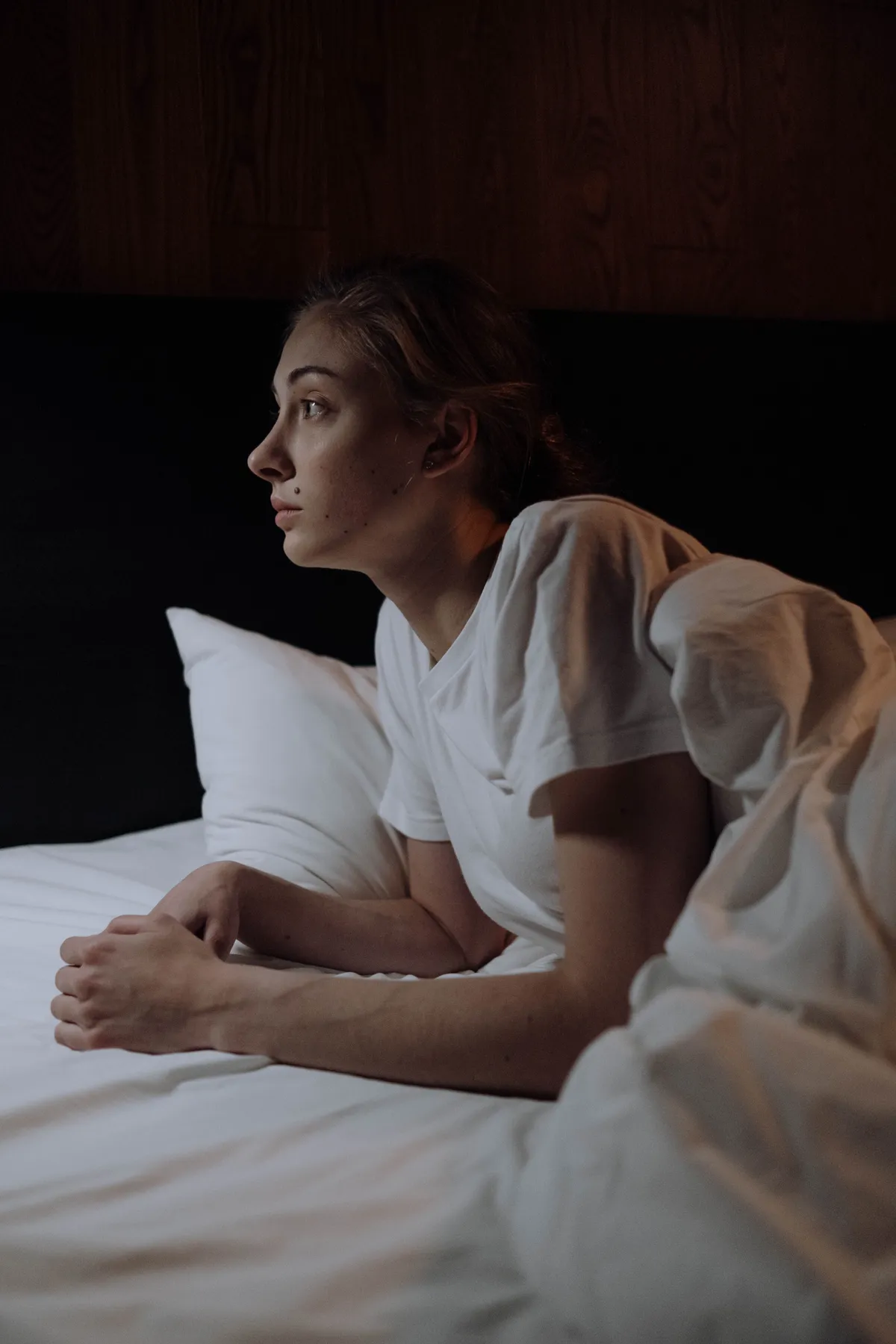
Here's the version of me almost nobody sees: 3:12 a.m., wide awake, heart going, absolutely certain that a small work email I sent was a catastrophe, that my finances were doomed, and that I would never sleep normally again. By 9 a.m. none of it felt true. That's the thing about menopausal night anxiety — at 3 a.m. it feels like clarity. It isn't.
If you recognize that, you're not losing your mind, and you're not alone. This is one of the most common and least talked-about parts of the menopause transition. Let's break down why it happens, how to interrupt the spiral in the moment, and how to make it happen less often in the first place.
Why does menopause trigger anxiety at night?
Because the hormones that steady your mood are now swinging, and night removes every distraction. Progesterone has a calming, GABA-boosting effect and estrogen supports serotonin — as both fall and fluctuate, your nervous system becomes more reactive. Add the natural pre-dawn cortisol rise and a dark, silent room, and worry has nothing to compete with.
During the day, your anxious thoughts have to fight for attention against work, people, and a hundred small tasks. In the small hours, there's no competition. Your brain's default mode — the part that ruminates — runs unopposed, and it tends to reach for whatever frightens you most. It feels like your mind is telling you the truth. Really, it's just the only channel on.
I find that number oddly comforting. It means the middle-of-the-night dread isn't a sign that something is wrong with you specifically — it's a predictable feature of a hormonal shift that millions of women are moving through right now.
What is the 3 a.m. anxiety loop, and why does it feel so intense?
The loop is a self-feeding cycle: you wake, notice you're awake, and panic about the lost sleep. That fear releases adrenaline, which makes you more alert, which makes sleep less likely, which increases the fear. Each lap tightens the spiral. The harder you try to force sleep, the further it runs from you.
This is the cruel paradox at the center of it. Sleep is the one thing that arrives only when you stop chasing it — and anxiety is, by definition, chasing. So the instinct that feels most logical at 3 a.m. (lie still, try harder, will yourself back to sleep) is exactly the thing that keeps the loop spinning. Breaking it means doing the opposite of what panic tells you to do.
What if you're mainly anxious about not sleeping?
For a lot of women, the scariest thought in the middle of the night isn't work or family — it's the sleep itself: "If I don't fall asleep now, tomorrow will be a disaster." That fear of not sleeping is its own loop, sometimes called sleep anxiety, and it can outlast the hormones that first set it off.
The trap is that sleep is the one thing effort makes worse. The more you monitor it — checking the clock, counting hours, bracing for a ruined day — the more alert you stay. Two mindset shifts help more than any trick. First, remind yourself that one rough night is survivable, because it genuinely is; your body will carry you through tomorrow and usually sleeps harder the next night.
Second, aim for rest rather than sleep — lying calmly, breathing slowly, not reaching for your phone — because deep rest restores you more than you'd expect, and chasing it less is often what lets sleep quietly return.
How do you calm an anxiety spiral at 3 a.m.?
You interrupt the loop instead of fighting it. The goal isn't to force sleep — it's to lower the adrenaline and take the "truth" out of the thoughts. Do these in order, and let your body calm down before you expect sleep to return.

- Don't check the clock, and don't fight it in bed. If you've been anxious and awake for around 20 minutes, get up and sit somewhere dim — this is stimulus control, and it stops your bed from becoming a place of dread.
- Slow your breathing, and make the exhale longer than the inhale. Try breathing in for 4 and out for 6–8, for a few minutes. A long exhale is the most direct signal you can send your nervous system to stand down.
- Ground yourself in the room. Name five things you can see, four you can feel, three you can hear. It pulls your mind out of the imagined future and back into a safe present.
- Label the thoughts, don't argue with them. "This is 3 a.m. brain, not a fact." You don't have to solve the worry — just notice it's your anxious hormones talking, not a verdict.
- Offload the worry onto paper. Keep a notepad by the bed. Write the fear down, promise yourself you'll look at it tomorrow, and let your brain stop holding it.
What daytime habits calm night-time anxiety?
What happens in the small hours is shaped by what you did in the previous 18 hours. You can lower your baseline anxiety so the nighttime spiral has less fuel. None of these are dramatic, but stacked together they change how reactive your nervous system is when you wake in the dark.

- Have a "worry window" earlier in the day. Ten minutes to write down what's on your mind, so it isn't saved up for the middle of the night.
- Get bright light in the morning and move your body. Both steady your circadian rhythm and lower baseline anxiety — some of the best-evidenced natural mood support there is.
- Watch caffeine and alcohol. Caffeine after midday and evening alcohol both raise nighttime anxiety and fragment sleep. Alcohol especially rebounds into middle-of-the-night wakefulness.
- Build a real wind-down. Dim lights, no doomscrolling, something calming for the last hour — you're signaling safety to your nervous system.
- Consider magnesium. It may gently calm a wired system; see our guide to the best magnesium for sleep during menopause.
You can't argue your way out of 3 a.m. anxiety — the thinking brain is offline. You can only lower the alarm in your body and wait for the thoughts to lose their grip. They always do by morning.
Does therapy or CBT help menopausal anxiety and insomnia?
Yes, and it's some of the strongest evidence we have. Cognitive behavioral therapy for insomnia (CBT-I) directly retrains the anxious associations that fuel the loop, and CBT for anxiety targets the catastrophic thinking behind it. Mindfulness-based approaches help too. These treat the pattern itself, not just the symptoms — and the effects last.
You don't necessarily need a long course of therapy to benefit. Many women get real relief from a structured CBT-I program (there are effective app-based and online versions), a few sessions with a therapist, or a good self-help workbook.
The National Center for Complementary and Integrative Health also notes solid evidence for mindfulness in reducing anxiety. The full menu of options, including where CBT-I fits, is in our complete perimenopause and menopause sleep guide.
When is night anxiety more than menopause?
Reach out to a professional if the anxiety is spilling into your daytime life, you're having panic attacks, or you feel persistently low, hopeless, or unlike yourself. Menopause can genuinely trigger or worsen anxiety and depression, and that deserves real care — not white-knuckling. This isn't about weakness; it's about getting the right support.
Effective help exists across the spectrum: talking therapy and CBT, and for some women, medication or hormone therapy that can improve both mood and sleep. A menopause-informed clinician — ideally a NAMS-certified practitioner — can help you sort out how much is hormonal and what will help most. If you ever feel unsafe or in crisis, contact your doctor or a local crisis line right away.
Where to go from here
If the structured 8-week program appeals to you rather than an in-the-moment trick, we looked at what the MBSR trials actually found — including the honest limits of what it does and doesn't change.
If you are drawn to something hands-on rather than another technique to practice alone, acupuncture for menopause sleep looks at what the trials found — including why the benefit appears real but does not come from the needles themselves.
Night anxiety rarely travels alone. If a physical jolt — a hot flash — is what wakes you before the worry starts, pair this with natural remedies for night sweats and insomnia. If you want the step-by-step for getting back to sleep once you're up, read how to fall back asleep at 3 a.m. And to understand the whole hormonal picture behind all of it, the complete perimenopause and menopause sleep guide ties everything together.
Key takeaways
- Menopause fuels night-time anxiety as falling estrogen and progesterone unsettle mood and the stress response.
- The 3 a.m. loop — waking anxious, then anxious about being awake — feeds itself and feels bigger in the dark.
- Anxiety about not sleeping can itself become the main thing keeping you awake.
- Slow breathing, getting out of bed, and calming daytime habits help break the spiral.
- Therapy or CBT helps, and persistent or severe anxiety deserves a doctor's attention.
Frequently asked questions
Why do I wake up at 3 a.m. with anxiety during menopause?
It's a mix of biology and quiet. Your cortisol naturally starts rising in the early hours, and falling estrogen and progesterone make your nervous system more reactive, so a normal night waking tips into worry. With no daytime distractions, your brain latches onto the nearest fear — and the alertness that follows keeps you awake.
How do I stop the 3 a.m. anxiety spiral?
Stop trying to force sleep. If you've been awake and anxious for about 20 minutes, get up and sit somewhere dim. Slow your breathing right down, especially the exhale. Label the thoughts as "3 a.m. brain," not facts. Jot any real worries on paper to deal with tomorrow, and return to bed only when drowsy.
Is anxiety a normal symptom of perimenopause?
Yes. New or worsening anxiety is a common and under-discussed part of the transition, because the same hormones that steady your mood are now fluctuating. It's real, it's not a character flaw, and it's treatable. If anxiety is spilling into your days or you're having panic attacks, tell your doctor.
Can magnesium or supplements help menopause anxiety at night?
Magnesium may take a mild edge off a wired nervous system, and some women find it helps them settle. But it's a small support, not a cure, and it won't fix an anxiety loop on its own. Use it alongside the behavioral steps here, and check with your doctor before starting any supplement.
When should I see a doctor about menopause anxiety?
See a professional if anxiety is affecting your daytime life, you're having panic attacks, or you feel persistently low or hopeless. Menopause can trigger or worsen anxiety and depression, and effective help exists — from talking therapy and CBT to, for some women, medication or hormone therapy. You don't have to just endure it.
Sources cited
- Study of Women's Health Across the Nation (SWAN); Bromberger JT, et al. Mood and anxiety during the menopause transition. swanstudy.org
- The North American Menopause Society (NAMS). Depression, Anxiety, and Menopause. menopause.org
- National Center for Complementary and Integrative Health (NCCIH). Meditation and Mindfulness. nccih.nih.gov
- American Academy of Sleep Medicine. CBT-I for chronic insomnia. aasm.org
Ellen Hayes
Health & Wellness Writer and Researcher
Hi — I'm Ellen. If you're reading this at some ungodly hour because your brain flipped on at 3 a.m. and won't shut off… I get it. I'm right there with you. I'm somewhere in the middle of midlife, deep in perimenopause, and lately sleep and I have a complicated relationship.
I'm not a doctor. I'm not an expert — and I'm never going to talk down to you like one. I'm just a woman who got tired of vague answers ("it's just your age," "try to relax") and decided to actually read the research myself. Then I write it down here, in plain English, the way I'd explain it to a friend over coffee. More about Ellen →