Crawling, Itchy Skin at Night in Menopause: Why It Happens

That creeping, itchy, ant-crawling sensation on your skin has a name — formication — and it's a recognized part of the menopause transition. Falling estrogen dries the skin, thins its barrier, and changes how nerve endings fire. At night, with the skin warmer and distractions gone, the brain turns the volume up.
The first time it happened to me I was lying in bed and became convinced something was walking across my forearm. I turned the light on. Nothing there. Twenty minutes later, the other arm. I spent a genuinely embarrassing few days checking the sheets and the mattress seam before I went looking for what was actually going on.
The word for it is formication — from the Latin for ant — and it's a real, if rarely discussed, thread of the menopause transition. It sits in the same family as the tingling, prickling "pins and needles" a lot of women get in midlife, except this version feels like movement on the skin rather than a buzz inside it.
It's also, reliably, worse at night. That part isn't your imagination either, and the reason overlaps almost exactly with why restless legs and achy joints flare after dark. Here's what the research actually says, and what's worth trying.
Quick reassurance: menopausal formication is distressing but not dangerous. It is not a sign that something is on your skin, and for most women it fades as hormone levels stabilize. The section on when to get it checked covers the handful of situations that do need a doctor's eye.
What is that crawling, itchy feeling on your skin?
Formication is the feeling of insects crawling on or just under your skin when nothing is there. It belongs to a family of nerve sensations called paresthesias, alongside tingling and numbness, and in midlife it usually arrives tangled up with plain itch and dry, tight skin that has lost its usual comfort.
It helps to separate three things that often show up together and share a single driver:
- Dry-skin itch (pruritus): the ordinary itchiness of skin that has lost water and oil — worse on the shins, forearms, and back
- Paresthesia: tingling, prickling, or "pins and needles," usually in the hands and feet
- Formication: the specific sense of something moving across the skin — crawling, creeping, sometimes described as a single hair being dragged along the arm
They overlap because menopausal skin is drier, thinner, and slower to repair itself, which lowers the threshold for every kind of skin sensation. The urge to scratch or rub is strong, and scratching tends to make the skin more reactive rather than less. The Cleveland Clinic lists formication plainly as a symptom rather than a quirk — it's a described, understood phenomenon, even if it's an under-researched one.
Why does menopause bring this on?
Estrogen keeps both skin and nerves running the way you are used to. Its receptors sit on the cells that build collagen and hold water, and it also helps steady how nerves carry sensory signals. As estrogen falls and swings through perimenopause, skin dries out and ordinary nerve traffic can start to register as crawling.
So the mechanism has two legs, and they feed each other:
- The skin side: less collagen and less water-holding capacity mean a drier surface and a weaker barrier. Dry, under-protected skin is itchier and more easily irritated by heat, friction, and sweat.
- The nerve side: estrogen has a large role in how the nervous system processes sensation. When levels fluctuate, the working theory is that ordinary sensory impulses get misread — a normal signal from the skin arrives labeled as movement or itch.
The honest caveat is that the nerve half of that explanation is proposed more than proven. There is very little research looking specifically at whether midlife paresthesia is driven by hormone changes, so the skin-dryness part is on firmer ground than the nerve-signaling part.
What's clear from experience and from menopause clinics is that the fluctuation of perimenopause seems to matter more than the eventual low, and that the sensation usually settles once hormones stop swinging.
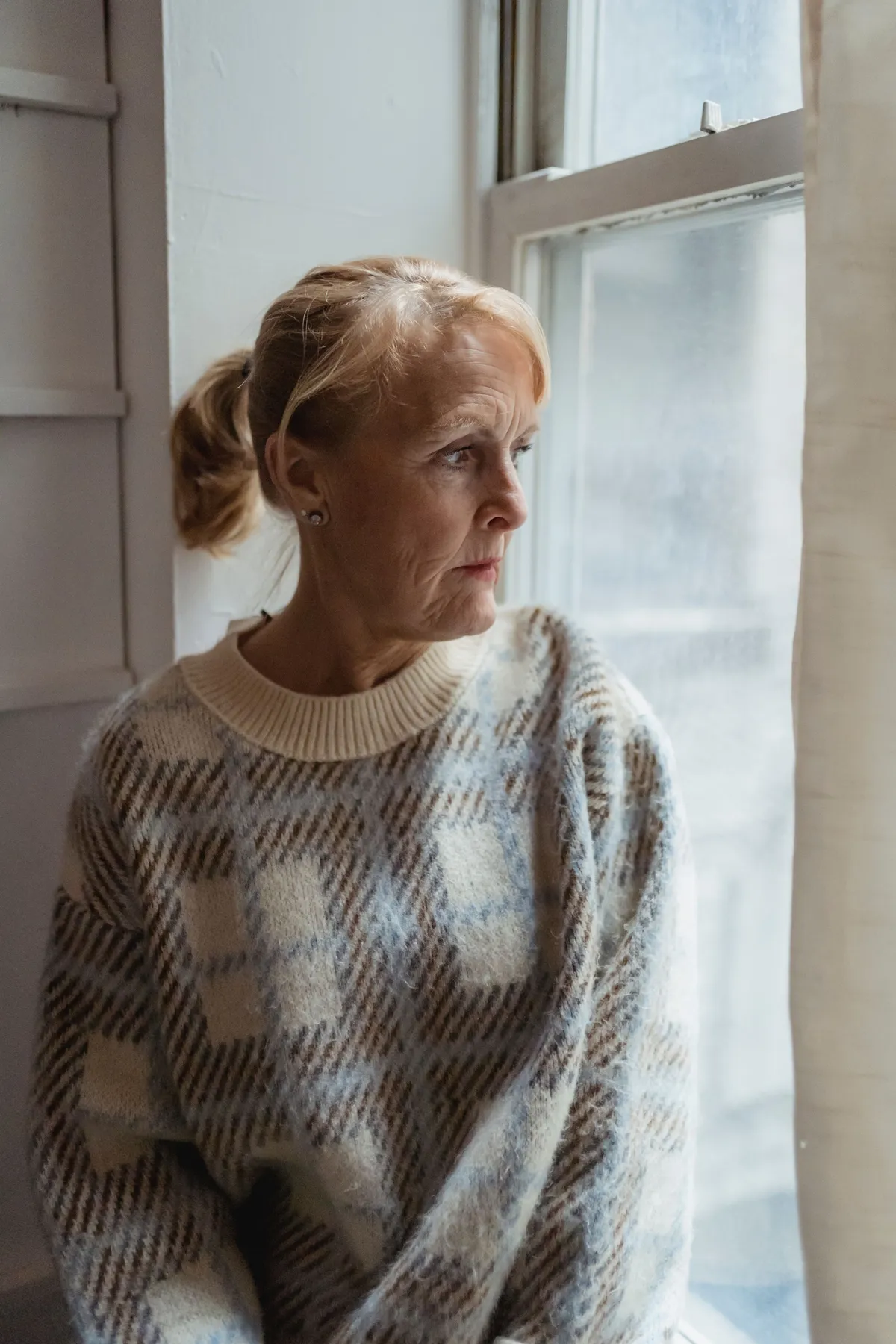
Why is it so much worse at night?
Three things line up against you after dark. Skin loses water fastest in the evening, and its surface warms as blood vessels open, which lowers the firing threshold of itch nerves. Cortisol, your own anti-inflammatory, bottoms out overnight. And once the day's noise is gone, your brain has nothing left to drown out the sensation.
Researchers who study nocturnal itch have mapped this fairly precisely. Transepidermal water loss — the rate at which skin leaks moisture — and skin temperature both peak in the late afternoon and evening, and the skin barrier is measurably more permeable at night than in the morning.
Layer on the overnight cortisol dip and the natural evening rise in itch-related immune signaling, and the deck is stacked toward itch between roughly 11 p.m. and 4 a.m.
Then there's attention. During the day, work, conversation, and movement all compete with a minor skin sensation and usually win. Lying still in a dark, quiet room, there is nothing to compete — so the same signal that you'd have shrugged off at 2 p.m. becomes the only thing you can think about at 2 a.m. This is the identical "nighttime amplification" pattern we describe for restless legs at night and joint pain after dark.
The itch–scratch–wake loop: scratching during light sleep pulls you closer to waking, the waking makes you notice the sensation more, and a short night lowers your tolerance for it the following evening. Breaking the loop at any point — cooler room, shorter nails, hands occupied — helps the whole cycle, not just one night.
A warm bed and heavy covers make all of this worse, and if you also get night sweats, the dried salt left on the skin afterward is its own irritant. Keeping the sleep environment cool does double duty here.
Is this the same thing as restless legs?
No, and the difference matters because the fixes are different. Restless legs is a deep urge to move your legs that walking or stretching relieves. Formication is a surface sensation that movement does nothing for; the reflex is to scratch or rub, not to pace. You can have both at once, but they are treated separately.
| Restless legs | Formication / crawling skin | |
|---|---|---|
| Where it feels like it's coming from | Deep inside the leg | On or just under the skin surface, anywhere |
| What relieves it | Moving — walking, stretching, flexing | Scratching or cooling the skin (briefly) |
| Common contributors | Low iron, dopamine signaling, family history | Skin dryness, low estrogen, nerve signaling |
| In common | Both flare in the evening and at night, and both fragment sleep | |
If the sensation in your legs is an urge to move rather than something on the skin, our guide to restless legs at night in menopause is the more useful read, and it covers the iron testing that's worth doing.
What actually helps the skin itself?
The most dependable lever is treating the dryness that the estrogen drop set off. A thick, fragrance-free moisturizer pressed into slightly damp skin straight after a lukewarm shower does more here than any tablet. Cooler water, a bedroom humidifier in the heating months, and soft breathable fabrics against your skin all cut how often the feeling fires.
A practical routine, roughly in order of how much it tends to help:
- Moisturize heavily and often. A cream or ointment beats a thin lotion. Apply twice a day, and always within three minutes of getting out of the shower or bath, onto skin that's still damp, to trap the water in.
- Lukewarm, shorter showers. Hot water strips the skin's oils and leaves it tighter and itchier an hour later. Pat dry rather than rubbing.
- Fragrance-free everything next to the skin — cleanser, laundry detergent, moisturizer. Fragrance is one of the most common low-grade skin irritants.
- Humidifier in the bedroom, especially with central heating running. Dry indoor air pulls moisture straight out of the skin overnight.
- Soft, breathable bedding and sleepwear — cotton, bamboo, or silk. Skip wool and rough synthetics directly against the skin.
- Keep the bedroom cool, around 65°F / 18°C. Warm skin itches more; our guide to staying cool at night has the full setup.
- Ease off evening alcohol and caffeine. Both widen skin blood vessels and flush the skin warm, which is exactly the wrong direction at bedtime.
- Manage night sweats so dried sweat isn't sitting on the skin for hours — see natural remedies for night sweats.
Over-the-counter add-ons that some women find take the edge off: colloidal oatmeal in a lukewarm bath, a menthol or pramoxine anti-itch lotion kept by the bed, and a plain cool pack pressed on the spot when it flares.
What can you do when it's keeping you awake right now?
In the moment, cool beats scratch. A cold pack or a cool damp cloth held on the spot settles the nerve faster than scratching, which only inflames the skin and wakes you further. Keep your nails short so half-asleep scratching does less harm, then give your mind something steady to hold instead.

- Cool the spot, don't scratch it. Thirty seconds of a cool cloth or cold pack usually quiets the nerve longer than a scratch does.
- Get out of the warm bed briefly. Standing on a cool floor or stepping into a cooler room resets the skin temperature that's feeding the itch.
- Occupy your hands and attention. The sensation grows in silence. A slow body-scan style of attention — the kind covered in our piece on the insomnia–anxiety loop — gives the mind a competing focus.
- Moisturize again. A second layer of cream on the affected area, even at 2 a.m., often helps more than it seems like it should.
About antihistamines: a sedating antihistamine such as diphenhydramine or hydroxyzine may help you fall back asleep, but the evidence that it does much for this kind of non-histamine itch is weak, next-day grogginess is real, and these drugs are on the list of medicines to use cautiously from midlife onward because of their anticholinergic load. Talk to a pharmacist or doctor before relying on one, and don't take it every night.
Does hormone therapy help — and what else is worth asking about?
Possibly, and indirectly. Estrogen therapy measurably raises skin collagen, thickness and hydration, and some women find their crawling skin quiets down once they start it. But skin sensations on their own are not usually a reason to begin hormone therapy, and it has never been tested against formication specifically. It is one factor in a bigger decision.
For context on the skin effect: in a randomized trial, six months of oral estrogen raised skin collagen by around 6.5%, and estrogen therapy is consistently shown to improve skin hydration and elasticity. So there's a plausible mechanism for relief.
Whether that's worth it depends entirely on the rest of the hormone-therapy picture — your symptoms, your risks, your preferences — which our honest look at HRT for menopause sleep walks through properly.
Because fluctuation seems to drive the sensation, many women also find it eases on its own as they move from perimenopause into the steadier postmenopausal years. That's not a reason to just wait it out if it's wrecking your sleep now — but it is a reason for cautious optimism.
When should you get this checked?
Most menopausal crawling skin is harmless and fades with time and steady moisturizing. See a clinician if it is constant rather than mostly nocturnal, comes with a rash, numbness, weakness or pain, spreads, or costs you sleep night after night. Several treatable conditions cause the very same feeling and are worth ruling out with a simple blood panel.
Things a doctor will usually want to exclude:
- Thyroid disease — both over- and under-active thyroid can cause itch and skin sensations, and both are common in midlife
- Iron or vitamin B12 deficiency — both cause paresthesia, and iron deficiency also drives restless legs
- Diabetes or prediabetes — through early peripheral neuropathy
- Kidney or liver problems — both can cause generalized itch
- Skin conditions — eczema, hives, or, if there genuinely is something visible, scabies
- Medication effects and alcohol — some drugs list formication or paresthesia as a side effect
- Anxiety states — and, rarely, a fixed belief that there truly is an infestation when there isn't (this is called delusional infestation and needs its own kind of care)
A basic blood test — thyroid function, full blood count, ferritin, B12, glucose, kidney and liver panels — covers most of that list in one visit.
Where to go from here
If the sensation in your legs is more of an urge to move than something on the skin, restless legs at night in menopause is the companion piece, and it covers the iron testing worth doing. If your nights are broken by aching rather than crawling, joint pain at night runs on the same after-dark amplification. If it's specifically your ears that itch, our article on menopause and itchy ears covers a related mechanism with far less research behind it, and says so honestly.
To keep the skin from firing in the first place, how to stay cool at night and natural remedies for night sweats handle the heat-and-sweat side. When a crawling sensation tips you into a racing mind, breaking the insomnia–anxiety loop is the next read. And for how all of this fits together, start at the complete perimenopause and menopause sleep guide.
Key takeaways
- The crawling, creeping skin sensation is called formication — a recognized, if under-researched, part of the menopause transition, not something on your skin.
- Falling estrogen thins and dries the skin (up to 30% of skin collagen is lost in the first five postmenopausal years) and is thought to alter how nerves carry sensation.
- It's worse at night because skin loses water and warms in the evening, cortisol bottoms out overnight, and there are no daytime distractions to compete with the feeling.
- It is not the same as restless legs: that's an urge to move relieved by movement; this is a skin sensation relieved briefly by cooling or scratching.
- The most reliable fix is aggressive, fragrance-free moisturizing onto damp skin, plus lukewarm showers, a cool humidified bedroom, and soft fabrics.
- In the moment, cool the spot rather than scratch it, keep nails short, and give your attention something else to hold.
- Sedating antihistamines are a weak and grogginess-prone option for this kind of itch — check with a pharmacist first and don't use them nightly.
- See a doctor if it's constant, spreading, comes with a rash or numbness, or keeps costing you sleep — thyroid, iron, B12, and glucose problems mimic it and are easily tested.
Frequently asked questions
Is crawling skin a real menopause symptom, or is it in my head?
It is a real, recognized symptom. Doctors call it formication, and it sits alongside the tingling and prickling many women notice in midlife. The mechanism is not fully mapped, but falling and fluctuating estrogen affects both skin and nerve signaling. It is distressing, not dangerous, and it usually eases as hormones settle.
What is formication?
Formication is the medical name for feeling insects crawling on or under your skin when there is nothing there. It comes from formica, the Latin for ant. It is a type of paresthesia, the same category as pins and needles, and it can be triggered by menopause, some medications, and a few medical conditions.
Why is it worse at night?
Your skin loses water fastest in the evening and warms slightly as surface blood vessels open, which makes itch nerves fire more easily. Overnight your cortisol, a natural anti-inflammatory, is at its lowest. And with the day's distractions gone, there is nothing competing for your attention, so the sensation feels louder.
Is it the same as restless legs syndrome?
No. Restless legs is an urge to move your legs that is relieved by moving them. Formication is a skin sensation that moving does not touch; scratching or cooling the skin is what helps briefly. They can occur together, but they have different causes and different treatments, so it is worth telling them apart.
What is the single most useful thing to try?
Aggressive moisturizing. Use a thick, fragrance-free cream or ointment twice a day, and always within a few minutes of a lukewarm shower while the skin is still damp. Most menopausal skin crawling is riding on top of dryness, and fixing the dryness is what reduces how often it happens.
When should I see a doctor about it?
See a clinician if the sensation is constant rather than mainly at night, comes with a visible rash, numbness, weakness, or pain, keeps spreading, or wrecks your sleep repeatedly. Thyroid problems, low iron or B12, diabetes, and some medications cause the same feeling, and a basic blood test can rule most of them out.
Sources cited
- Thornton MJ. Estrogens and aging skin. Dermatoendocrinology. 2013;5(2):264–270. pmc.ncbi.nlm.nih.gov
- Yosipovitch G, Xiong GL, Haus E, et al. Time-dependent variations of the skin barrier function in humans: transepidermal water loss, stratum corneum hydration, skin surface pH, and skin temperature. J Invest Dermatol. 1998;110(1):20–23. sciencedirect.com
- Lavery MJ, Stull C, Kinney MO, Yosipovitch G. Nocturnal Pruritus: The Battle for a Peaceful Night's Sleep. Int J Mol Sci. 2016;17(3):425. pmc.ncbi.nlm.nih.gov
- Cleveland Clinic. Tactile Hallucinations (Formication): Causes & Treatment. my.clevelandclinic.org
- Cleveland Clinic. Here's How Menopause Affects Your Skin and Hair. health.clevelandclinic.org

Ellen Hayes
Health & Wellness Writer and Researcher
Hi — I'm Ellen. This one embarrassed me before it made sense: I really did strip the bed looking for insects. Finding out it had a name, a mechanism, and a fix I could start that week turned it from something frightening into something ordinary and manageable.
I'm not a doctor. I'm not an expert — and I'm never going to talk down to you like one. I'm a woman in the middle of perimenopause who got tired of vague answers, started reading the actual research, and writes it down here in plain English, the way I'd explain it to a friend over coffee. More about Ellen →