Hip Pain at Night in Menopause: What Actually Helps
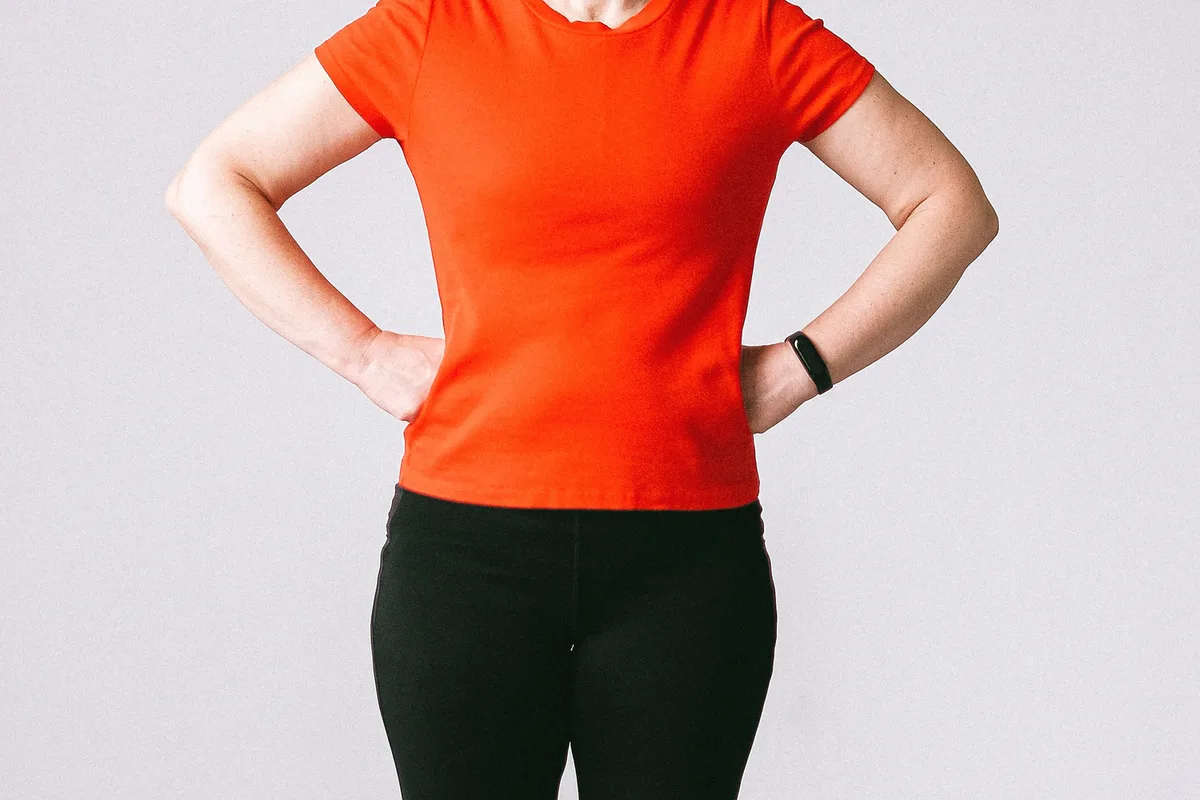
Hip pain that flares when you lie on one side at night is usually gluteal tendinopathy, not arthritis. It affects women four times more often than men, peaks between 40 and 60, and is triggered by the tendon being compressed under body weight. Structured exercise outperforms the cortisone injection most people are offered first.
I heard about this from a reader before I found it in the research, which is usually the wrong order but turned out to be useful. She'd been told three different things by three different people — arthritis, bursitis, "just getting older" — and none of the advice that followed had touched the pain.
What she had a name for, it turns out, but almost nobody uses it. The condition is common, it is specifically a midlife-women's condition, and the standard first treatment loses to a cheaper one within a year. None of that made it into what she'd been told.
A note on what this covers: this is about pain on the outer point of the hip, worse when you lie on that side. If your pain is deep in the groin and worse with walking, that's a different pattern — more likely hip joint arthritis — and the "or arthritis" section below explains how to tell them apart.
What actually causes hip pain when you lie on your side?
Most often, gluteal tendinopathy — irritation of the tendons that attach your outer hip muscles to the bony point of the hip. Lying on that side compresses those tendons directly against the bone underneath, which is exactly the position and the pressure that provokes the pain.
This is a genuinely new understanding, not a rebrand for its own sake. For decades this was called "trochanteric bursitis" — blamed on an inflamed fluid-filled cushion near the joint. Better imaging changed that. Most cases turn out to involve the tendons themselves, thickened and irritated, with the bursa affected only secondarily, if at all.
That distinction matters for how it's treated, which we'll come back to. For now, the practical point: if a doctor mentions "bursitis" for pain in this spot, that's the older name for something closer to a tendon strain than an infection or true inflammation.
Why does this affect so many more women than men?
A four-to-one ratio, and it isn't subtle. In a large population study of adults aged 50 to 79, 15% of women had it on one side, compared with a fraction of that in men. Part of the explanation is anatomy — a proportionally wider pelvis changes the angle the gluteal tendons pull at. Part appears to be hormonal.
Estrogen has receptors in tendon tissue, and it plays a real role in how collagen is made and maintained. As levels fall through perimenopause, tendons are believed to lose some resilience and become slower to recover from load — which lines up with why this condition clusters so tightly around the menopause transition rather than appearing evenly across adulthood.
That's a plausible mechanism, and it's consistent with the age pattern, but it's worth being honest that the biology isn't fully proven the way the epidemiology is. What's well established is simpler: if you're a woman in your forties or fifties with pain on the outer hip, you are in exactly the group this condition targets.
How do you tell this apart from hip arthritis?
By where it hurts and what makes it worse. Gluteal tendinopathy hurts over the bony point on the side of your hip, and direct pressure — lying on it, sitting with legs crossed, pressing on that spot — reliably provokes it. Hip osteoarthritis hurts deeper, in the groin, and is usually worse with walking or weight-bearing than with side-lying.
- Gluteal tendinopathy: pain on the outer hip point · worse lying on that side, sitting cross-legged, or standing on one leg · often normal on a standard X-ray
- Hip osteoarthritis: pain deep in the groin, sometimes down the front of the thigh · worse with walking and weight-bearing · visible joint changes on X-ray
The X-ray point is why so many women get told nothing is wrong. Tendinopathy doesn't reliably show up on the imaging doctors reach for first, so a normal X-ray gets read as "no explanation found" rather than "wrong test for this problem."
If your pain genuinely sits in the groin rather than the outer hip, this article isn't really about your pain — that pattern deserves its own workup, starting with a doctor who can examine the joint directly rather than a search engine. And if it's aching, widespread joint pain rather than one specific point, our article on menopause joint pain at night is the more likely fit.
Why is it worse specifically at night?
Because side-lying is the single most direct way to load the tendon. Your body weight presses the outer hip against the mattress, which compresses the gluteal tendons against the bone beneath them — the same mechanism that makes crossing your legs or standing on one hip painful, just sustained for hours instead of seconds.
There's a second layer specific to this stage of life. Sleep is already lighter and more fragmented in perimenopause, so a dull ache that a younger woman might sleep through is now enough to wake you — and once you're awake, a sore hip makes it harder to find a position that lets you drift back off.
The fastest thing to try tonight: lie on your back, or on the unaffected side with a firm pillow between your knees so the top leg can't drop inward and pull the hip tendons over the bone. This doesn't treat the underlying problem, but it very often reduces the 3 a.m. wake-ups while you work on the rest.
If pain on one side is only part of what's disturbing your nights, our guide to falling back asleep at 3 a.m. covers the rest of that picture once the positioning is sorted.
Does the cortisone injection most people get actually work?
Short-term, often yes. Long-term, it loses to structured exercise. In the largest trial to compare treatments head-to-head, a single corticosteroid injection helped more than doing nothing at eight weeks — but by one year, the group given education and a supervised exercise program was doing better on every measure, including pain.
This is worth sitting with, because the injection is usually what gets offered first — it's fast, it's a single appointment, and it does provide real short-term relief. The trial isn't saying it's useless. It's saying the thing that sounds slower and less dramatic, structured loading exercise, wins the year that actually matters.
A separate trial testing hormone therapy alongside exercise in postmenopausal women found something more mixed: exercise didn't clearly beat sham exercise on its own, and hormone cream only showed a benefit in women with a lower BMI. That's a more complicated, less tidy result — and I'd rather tell you that than pretend the evidence is cleaner than it is.
The honest summary: the best single trial favors structured exercise over injection at one year. A separate, smaller trial on hormone therapy plus exercise didn't confirm exercise's benefit as clearly, and found hormone cream helped only in leaner participants. Both are real findings from real trials — they don't fully agree, and that's normal for this stage of the evidence.
What does the exercise program that worked actually involve?
Load management education plus a structured strengthening program, not a stretching routine. The trial that beat the injection used education about which daily positions and habits compress the tendon (crossed legs, standing on one hip, that side-lying position) combined with progressive gluteal strengthening over eight weeks.
- Stop the compression first: avoid crossing legs while sitting, standing with weight shifted onto one hip, and sleeping directly on the painful side
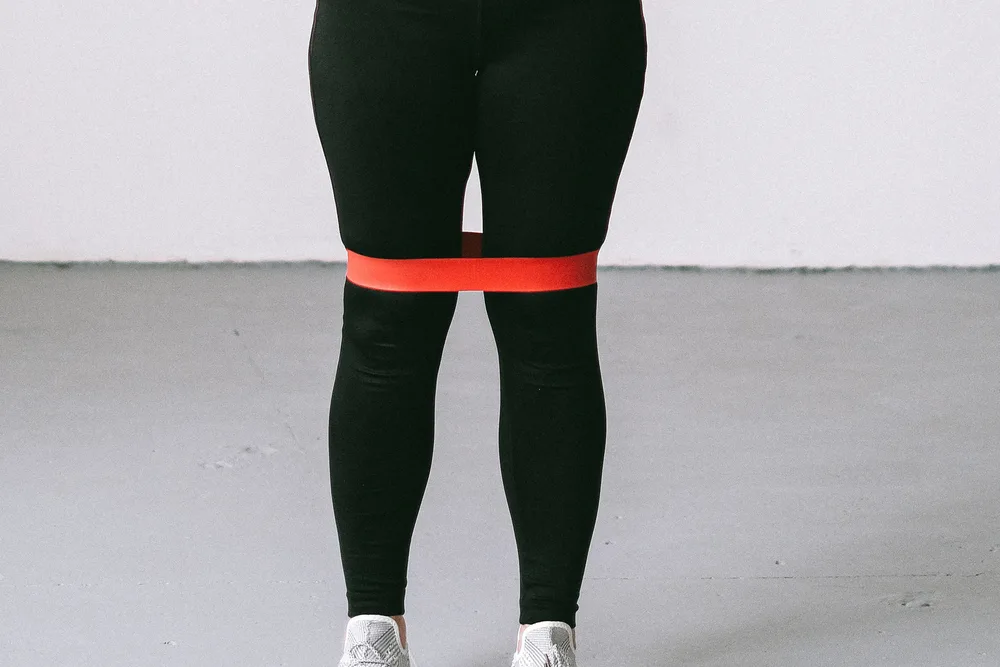
- Add gentle resisted movement: hip abduction against light resistance (a band around the thighs, as pictured above, is a common starting point) rather than stretching the outer hip, which can aggravate a compressed tendon
- Build gradually: the trial's program ran eight weeks before most participants saw major improvement — this isn't a same-week fix
- Get it checked first if pain is severe: a physiotherapist can confirm the diagnosis and the loading is right for your specific case
The stretching instinct is worth naming directly, because it's the opposite of what usually helps. A tight, sore area on the side of the hip makes people want to stretch it — but stretching this particular tendon group can increase compression against the bone rather than relieving it. Gentle strengthening, not stretching, is what the evidence supports.
Eight weeks is long enough that memory alone won't tell you whether it's working. Writing down pain levels and which nights you woke from it — the same kind of simple log our guide to what to monitor describes — makes the difference between guessing and actually knowing by week six.
When does this need a doctor rather than exercise?
When pain is severe, came on suddenly, follows a fall or injury, or comes with fever, redness, or visible swelling — any of those needs same-day assessment, not a home program. Gradual pain over the outer hip that's persisted more than two to three weeks is also worth a proper diagnosis before you start loading it yourself.
A physiotherapist or doctor can confirm it's genuinely tendon-related rather than something else in the same area — a labral tear, referred pain from the spine, or early arthritis can all present with overlapping symptoms, and getting the diagnosis right changes what actually helps.

See someone promptly if: pain is severe or came on suddenly · it followed a fall or direct injury · you have fever, redness or swelling over the hip · the pain is spreading down the leg with numbness or weakness. These point beyond ordinary tendinopathy and deserve proper assessment.
One more thing worth saying when you do go: use the words "outer hip" and "worse lying on that side" specifically. "Hip pain" alone is vague enough to get filed under general aging aches, and that's often where the useful conversation stops before it starts.
Where to go from here
If joint pain in general, not just the hip, is part of your picture, our guide to menopause joint pain at night covers the broader hormonal picture. If the 3 a.m. waking is the bigger problem once you've sorted your sleeping position, falling back asleep at 3 a.m. picks up from there.
If exercise as a category is new territory for you right now, exercise and sleep during menopause covers how to start without overdoing it. And for how everything fits together, begin at the complete perimenopause and menopause sleep guide.
Key takeaways
- Pain on the outer hip that flares when you lie on that side is usually gluteal tendinopathy, not arthritis.
- It's now understood to involve the tendons themselves, not primarily the bursa — which is why "trochanteric bursitis" is an outdated name.
- Women are affected about four times more often than men, with 15% having it in one hip by ages 50–79 in one large study.
- Estrogen affects tendon collagen, which is a plausible reason this clusters around the menopause transition — though the biology isn't as firmly proven as the epidemiology.
- It's told apart from hip arthritis by location (outer hip vs. deep groin) and trigger (pressure/side-lying vs. walking).
- Side-lying compresses the tendon directly against bone, which is why night pain is often worse than daytime pain.
- In the largest treatment trial, structured exercise beat a single cortisone injection at one year, even though the injection worked faster at first.
- Stretching the outer hip can worsen it; gentle progressive strengthening is what the evidence supports.
- Sleep on your back, or on the other side with a pillow between your knees, as an immediate step while you address the cause.
Frequently asked questions
Why does my hip hurt at night but not during the day?
Because lying on it is the trigger. Gluteal tendinopathy causes pain specifically when the tendons on the outer hip are compressed, which happens most directly when you lie on that side and your body weight presses the tendon against the bone underneath.
Is hip pain at night in menopause arthritis?
Usually not. Hip osteoarthritis causes deep groin pain, often worse with walking, and shows up on an X-ray. Gluteal tendinopathy causes pain over the outer point of the hip, is worse with direct pressure, and often looks normal on a standard X-ray, which is why it gets missed.
Why are women affected so much more than men?
Partly anatomy — a wider pelvis increases the angle the tendons work at — and partly hormones. Estrogen affects collagen and tendon resilience, and the drop around menopause is believed to be one reason this condition clusters so strongly in women in their forties and fifties.
Does a cortisone injection fix it?
It often helps quickly, then the benefit fades. In a trial comparing the injection to structured exercise, 58% of the injection group were moderately or much better at eight weeks — but by one year, the exercise group was doing better on every measure and the injection group had slipped back.
What sleeping position helps hip pain?
Lying on your back, or on the unaffected side with a firm pillow between your knees, so the top leg doesn’t drop inward and pull the hip tendons over the bone. A pillow under the waist on your back can also take pressure off both hips.
When does hip pain at night need a doctor rather than exercise?
When pain is severe, came on suddenly, follows a fall, or comes with fever, redness or swelling — that needs same-day assessment. Otherwise, if pain over the outer hip persists more than two to three weeks despite basic changes, it is worth a proper diagnosis before starting a structured program.
Sources cited
- Mellor R, Bennell K, Grimaldi A, et al. Education plus exercise versus corticosteroid injection use versus a wait and see approach on global outcome and pain from gluteal tendinopathy: prospective, single blinded, randomised clinical trial. BMJ. 2018;361:k1662. bmj.com
- Segal NA, Felson DT, Torner JC, et al. Greater trochanteric pain syndrome: epidemiology and associated factors. Arch Phys Med Rehabil. 2007;88(8):988–992. pubmed.ncbi.nlm.nih.gov
- Cowan RM, Ganderton CL, Cook J, et al. Does menopausal hormone therapy, exercise, or both improve pain and function in postmenopausal women with greater trochanteric pain syndrome? A 2×2 factorial randomized clinical trial. Am J Sports Med. 2022;50(2):343–353. journals.sagepub.com
- StatPearls. Greater Trochanteric Pain Syndrome (Greater Trochanteric Bursitis). National Library of Medicine. ncbi.nlm.nih.gov
Ellen Hayes
Health & Wellness Writer and Researcher
Hi — I'm Ellen. A reader wrote to me about this before I'd ever heard the name for it, and I went looking mostly to be able to answer her properly. Finding a trial where the "slower" treatment beat the injection at the one-year mark was the kind of result I wish showed up in more of what I research.
I'm not a doctor. I'm not an expert — and I'm never going to talk down to you like one. I'm a woman in the middle of perimenopause who got tired of vague answers, started reading the actual research, and writes it down here in plain English, the way I'd explain it to a friend over coffee. More about Ellen →