The Best (and Worst) Time to Exercise for Menopause Sleep
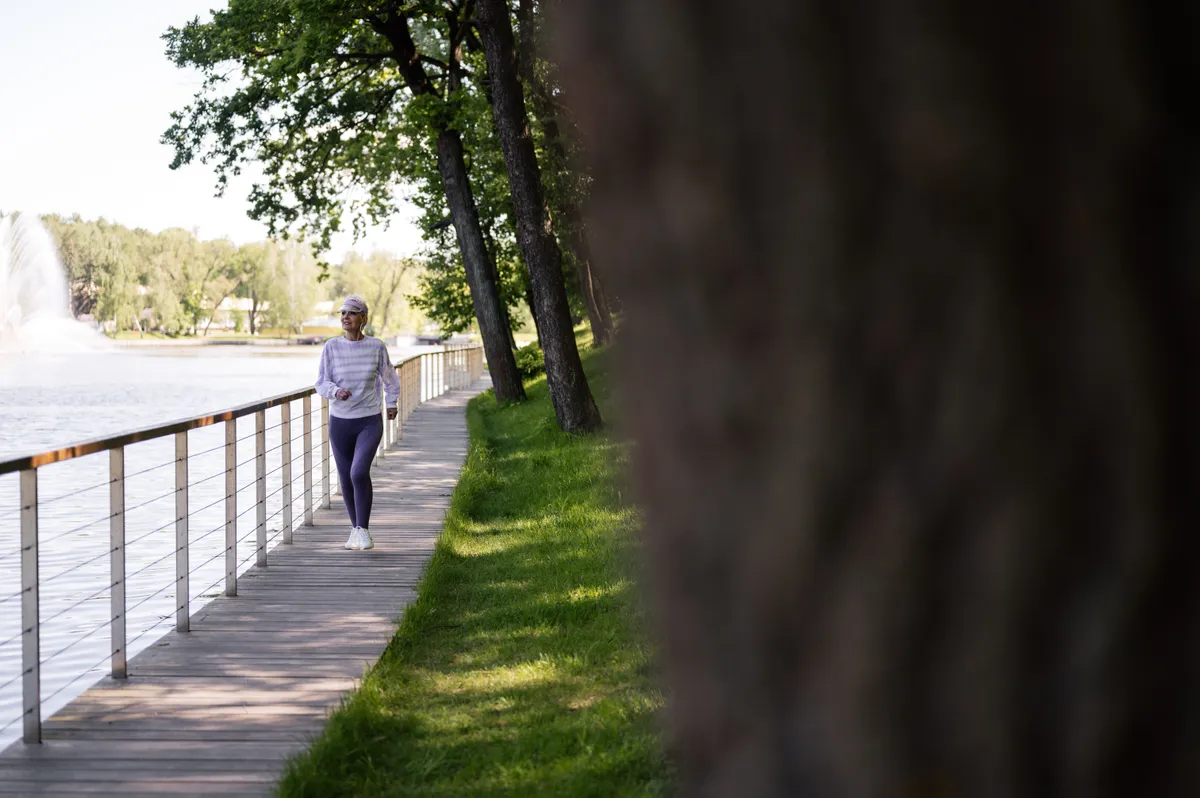
Yes. Regular exercise is one of the most reliable natural ways to sleep better in menopause — it deepens sleep, eases anxiety, and lifts mood. Moderate aerobic activity, strength training, and gentle yoga all help, and consistency matters more than intensity. Time it for morning or afternoon rather than right before bed, and even a daily walk counts.
For months, "just exercise more" was the advice that made me want to scream. When you're running on four hours of broken sleep, the idea of dragging yourself to a workout feels not just hard but almost insulting. Where, exactly, was this energy supposed to come from?
So I want to be honest with you from the start: exercise genuinely is one of the best things you can do for menopausal sleep — the research is clear on that — but the way it's usually prescribed ignores the exhaustion that makes it feel impossible. Let me give you both halves: what the evidence actually shows, and how to start when you have nothing in the tank.
Does exercise actually help menopause sleep?
Yes, and it's one of the better-evidenced non-drug options there is. Studies consistently show that regular physical activity helps people fall asleep faster, sleep more deeply, and wake less — and it eases the anxiety and low mood that so often ride along with midlife insomnia. It's not a one-night fix; the payoff builds over weeks of consistency.
The catch worth naming: a single workout won't knock you out tonight, and pinning that hope on it leads to disappointment. Think of exercise as slowly rebuilding your sleep from underneath — strengthening your body clock, your stress resilience, and your sleep drive — rather than as a switch you flip at bedtime.
How does exercise improve sleep?
Through several routes at once. Physical activity builds your sleep drive — the natural pressure to sleep that accumulates with exertion — so you're genuinely sleepier at night. It also lowers stress hormones, steadies your body clock, improves mood, and helps regulate the temperature swings that fragment menopausal sleep.
That last point matters in midlife specifically. Exercise raises your body temperature, and the cool-down afterward can nudge you toward sleepiness — which is part of why finishing a workout several hours before bed works better than right before. Stack these effects over weeks and you're not just tired at night; your whole sleep system runs steadier.
What's the best type of exercise for menopause sleep?
A blend beats any single type, and all three of the main categories earn their place for different reasons. You don't have to do them all every day — but knowing what each does helps you build a week that supports sleep and midlife health together:
| Type | What it does for sleep | Midlife bonus |
|---|---|---|
| Aerobic / cardio (brisk walking, cycling, swimming) | Improves overall sleep quality and mood; builds sleep drive | Heart health, weight, energy |
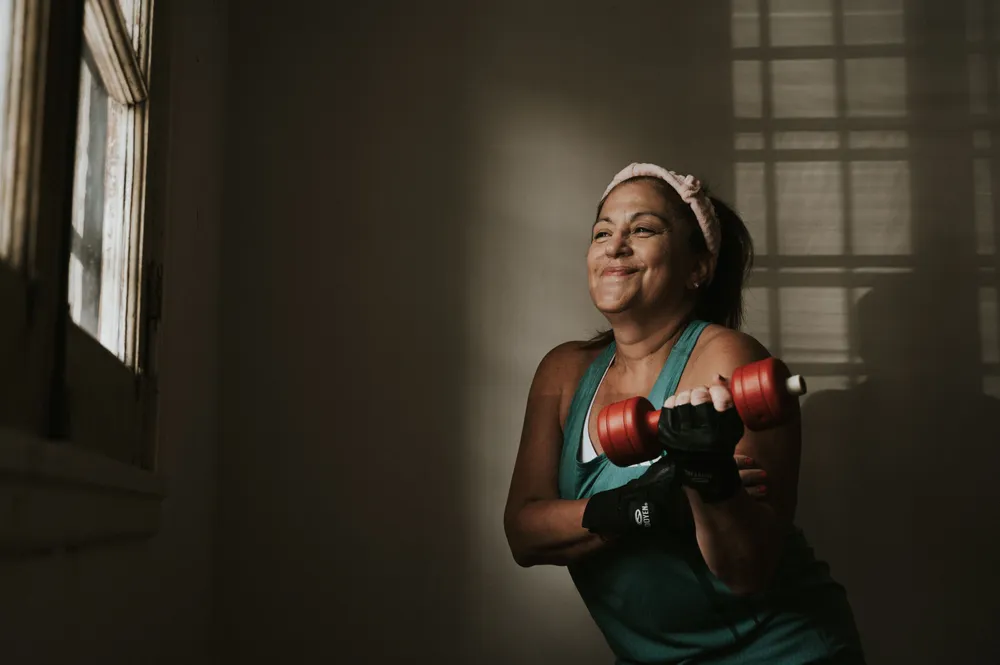
| Strength training (weights, bands, bodyweight) | Supports deeper sleep; eases aches that disrupt it | Protects muscle & bone, which decline in menopause |
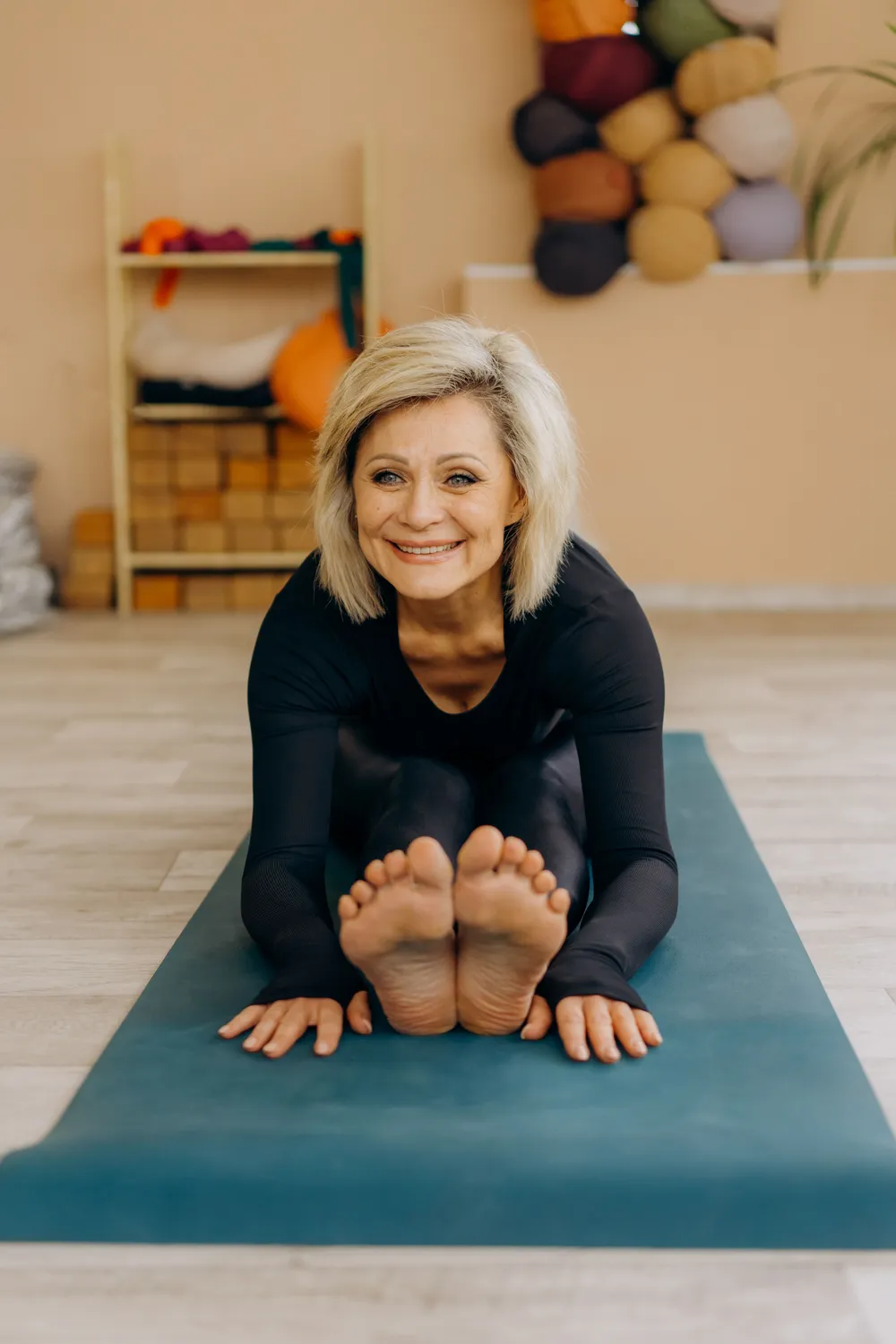
| Yoga / mind-body | Calms the nervous system; good for wired, anxious nights | Some evidence for easing hot-flash impact |
If you only have room for one to start, make it walking — it's free, gentle, and remarkably effective. But don't skip strength training as you build up: protecting muscle and bone is one of the most important things you can do for your body in menopause, and it happens to help you sleep too.
When is the best time to exercise for sleep?
Morning or afternoon is the safest bet for most women. Daytime activity — especially outdoors — anchors your body clock and lets your temperature and heart rate settle well before bed. A brisk morning walk does double duty: exercise plus the bright light that sharpens your rhythm.
Evening exercise is more individual. Older advice said never work out at night, but newer research suggests light-to-moderate movement earlier in the evening is fine for many people — it's vigorous exercise in the last hour or two that tends to backfire, raising your temperature and adrenaline when you're trying to cool and calm. If evenings are your only window, keep it gentle: a walk or restorative yoga, not a hard spin class.
Can exercise reduce hot flashes and night sweats?
Honestly, the evidence here is mixed — so I won't oversell it. Exercise doesn't reliably eliminate hot flashes, and getting overheated during a hard session can even trigger one. What regular activity does do is improve your fitness, weight, mood, and sleep, which helps many women cope with vasomotor symptoms even when the flashes themselves don't vanish.
Yoga and mind-body practices are the exception worth highlighting: several studies suggest they can reduce how much hot flashes disrupt sleep and daily life, likely by calming the stress response. So if flashes are your main sleep thief, pair your movement with the cooling steps in how to stay cool at night rather than expecting exercise alone to fix them.
How much exercise do you actually need?
The standard target is about 150 minutes of moderate activity a week — roughly 30 minutes most days — plus strength training twice weekly. That's the goal, not the starting line. The research is encouraging here: even modest amounts, like a daily walk, measurably improve sleep, so you get real benefit long before you hit the full guideline.
The best workout for your sleep isn't the hardest one — it's the one you'll still be doing in three months. Consistency, not intensity, is what rebuilds a broken night.
What if you're too exhausted to exercise?
This is the real question, and it deserves a real answer — because "just exercise" is useless when insomnia has hollowed you out. The way out of that trap is to start absurdly small and let the sleep benefit fund the next step. You are not lazy; you are under-slept, and that's a physiological hole, not a character flaw.
The science is oddly encouraging here: the tired-but-wired feeling of menopause is partly a dysregulated nervous system, and gentle movement is one of the few levers that calms it the same day. You don't have to earn sleep with a punishing workout. A slow walk counts. Ten honest minutes counts. At this stage the goal isn't fitness — it's simply reminding your body what rhythm feels like.
- Start with ten minutes. A short walk after breakfast or lunch. That's it. Tiny is sustainable; heroic is not.
- Chase the morning light. Walking outdoors early gives you exercise and the light that helps reset the body clock behind your fatigue.
- Lower the bar on bad days. Two minutes of stretching still counts. The goal is the streak, not the score.
- Let it compound. As sleep improves, energy returns, and longer sessions get easier — the same loop that trapped you now works in your favor.
If exhaustion is bottomless no matter what you try, that's worth investigating rather than pushing through — see our guide to menopause fatigue and being tired all day but wired at night, which covers the medical causes worth ruling out.
How soon will exercise improve your sleep?
Some benefit can show up the very first night — people often report falling asleep a little faster on days they were active — but the meaningful, lasting change builds over weeks. In most studies, sleep quality improves noticeably after a few weeks of regular activity, and keeps improving the longer the habit sticks.
This is a slow-release medicine, not a fast one — which, reassuringly, also means it doesn't stop working the way a sleeping pill's effect can fade. The better sleep you build through movement tends to stay built as long as you keep moving.
That timeline is worth holding onto when motivation dips, because the trap is expecting a transformed night after one workout and quitting when it doesn't come. It won't come that fast — and it doesn't need to. Judge exercise by how you're sleeping across a month, not a single night, and track it if that helps: a simple two-week sleep log makes the slow, real improvement visible in a way your foggy memory of last night never will.
Where to go from here
If hip pain is the specific thing holding you back from moving more, we looked at the exercise that actually treats it — and why it beat the injection most people are offered first.
Movement is a foundation, not a whole plan. Pair it with the behavioral gold standard, CBT-I for menopause insomnia, to retrain the sleep pattern itself. If daytime tiredness is your biggest hurdle to getting started, work through menopause fatigue first. And for the whole map of why midlife sleep unravels and every lever that steadies it, start with our complete perimenopause and menopause sleep guide.
Key takeaways
- Regular exercise is one of the most reliable drug-free ways to improve menopausal sleep.
- It helps by easing stress, steadying mood and blood sugar, and deepening slow-wave sleep.
- A mix of aerobic movement and strength training works best, but even a daily walk counts.
- Morning or afternoon exercise suits sleep best; very intense late-night workouts can backfire for some.
- Benefits build over weeks, and gentle movement still helps on days you're too tired for a full workout.
Frequently asked questions
Does exercise help you sleep better during menopause?
Yes. Regular physical activity is one of the most reliable non-drug ways to improve sleep in midlife — it deepens sleep, shortens the time to fall asleep, eases anxiety, and lifts mood. The benefit comes from consistency over weeks, not from a single hard workout. Moderate aerobic exercise, strength training, and yoga all help.
What is the best exercise for menopause sleep?
A mix works best: moderate aerobic exercise like brisk walking for overall sleep quality, strength training twice a week to protect midlife muscle and bone, and yoga or stretching for its calming, sleep-friendly effect. Yoga and mind-body practices have some evidence for easing hot flashes too. The best exercise is the one you'll actually keep doing.
Is it bad to exercise right before bed in menopause?
For many people, vigorous exercise in the last hour or two before bed raises heart rate and body temperature and can delay sleep — not ideal when your thermostat is already touchy. Morning or afternoon is the safer bet. Gentle evening movement like stretching or restorative yoga is usually fine and can even help you wind down.
Can exercise reduce hot flashes and night sweats?
The evidence is mixed. Exercise won't reliably eliminate hot flashes, and overheating during a hard workout can trigger one. But regular activity improves overall fitness, mood, weight, and sleep, which indirectly helps many women cope with vasomotor symptoms. Yoga specifically shows some promise for reducing their impact on sleep and quality of life.
How much exercise do I need to sleep better?
Aim for the general guideline of about 150 minutes of moderate activity a week — roughly 30 minutes most days — plus strength training twice weekly. But you don't need to hit that from day one. Research shows even a daily walk improves sleep, so start with what's doable and build up. Consistency beats intensity for sleep.
Sources cited
- U.S. Department of Health and Human Services. Physical Activity Guidelines for Americans, 2nd edition. health.gov
- Sleep Foundation. Exercise and sleep. sleepfoundation.org
- The Menopause Society (NAMS). Exercise, yoga, and menopausal symptoms. menopause.org
- Kline CE. The bidirectional relationship between exercise and sleep. Am J Lifestyle Med. pubmed.ncbi.nlm.nih.gov

Ellen Hayes
Health & Wellness Writer and Researcher
Hi — I'm Ellen. If you're reading this at some ungodly hour because your brain flipped on in the middle of the night and won't shut off… I get it. I'm right there with you. I'm somewhere in the middle of midlife, deep in perimenopause, and lately sleep and I have a complicated relationship.
I'm not a doctor. I'm not an expert — and I'm never going to talk down to you like one. I'm just a woman who got tired of vague answers ("it's just your age," "try to relax") and decided to actually read the research myself. Then I write it down here, in plain English, the way I'd explain it to a friend over coffee. More about Ellen →