Gluteal Tendinopathy in Menopause: Outer-Hip Night Pain
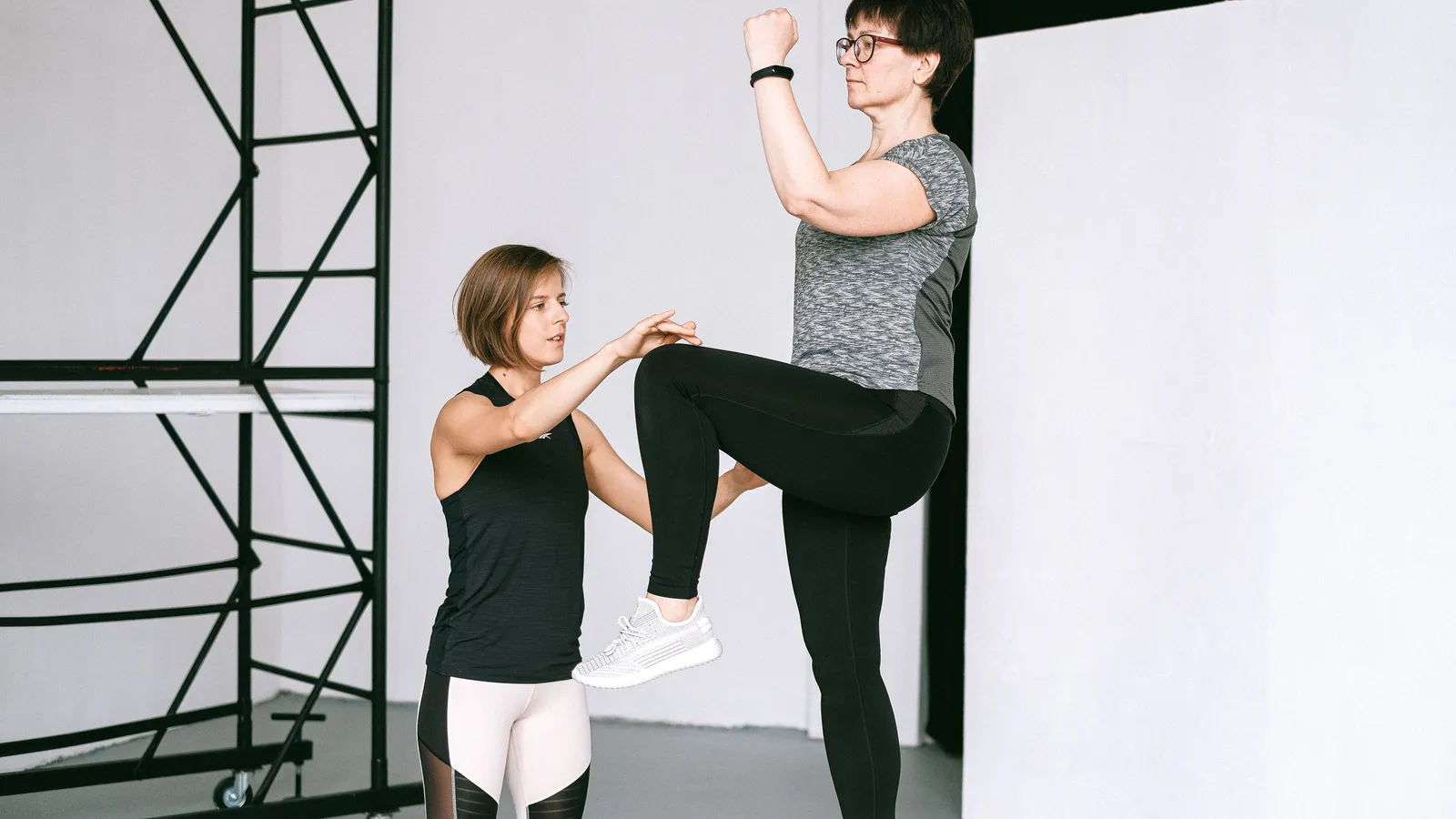
You get into bed, roll onto your side, and within minutes the outer point of one hip starts to throb. You roll over, and the other hip does the same. This pattern has a name, gluteal tendinopathy, and it is common in women in midlife.
I went through the trials and reviews to see what is actually known about gluteal tendinopathy in menopause: what it is, what the research says about hormones, how it is diagnosed, and which treatments have been tested. I'm not a doctor, so I stuck to the papers.
Gluteal tendinopathy affects tendons on the outer hip and can hurt when you lie on that side. It is more common in women. In the LEAP trial, education plus exercise produced better overall improvement than a steroid injection after one year, while average pain scores were similar between the two groups.
How this article fits with the others: our guide to hip pain at night in menopause covers the whole picture. This one goes deeper on a single cause, the tendons on the outer hip, and on what the studies actually measured.
What is gluteal tendinopathy, and why was it called bursitis?
Gluteal tendinopathy is a problem in the tendons of the gluteus medius and gluteus minimus, the muscles on the side of your buttock that attach to the bony bump on the outer hip. For decades the pain there was blamed on an inflamed fluid sac, called trochanteric bursitis.
A 2022 international consensus statement of 15 physiotherapists and 8 orthopedic surgeons explains why that name has been dropped. It says "bursitis" implies inflammation, which has not been shown in the literature, and that histology and imaging studies point to gluteal tendinopathy, with or without bursitis, as the main source of pain. Ultrasound of 877 people with lateral hip pain found no sign of bursitis in 79.8%.
The umbrella term you may hear is greater trochanteric pain syndrome, or GTPS. The consensus says it covers several diagnoses, including external snapping hip, tendon problems and trochanteric bursitis. In this article I use "gluteal tendinopathy" for the tendon version, and I use GTPS only when a study did.
Why is gluteal tendinopathy so common in women in their 40s to 60s?
Gluteal tendinopathy is far more common in women, and midlife is when it shows up. A population study of 3,026 adults aged 50 to 79 found lateral hip pain with trochanteric tenderness in 15.0% of women on one side and 8.5% on both sides, versus 6.6% and 1.9% of men.
Other papers describe the same group. The introduction to the LEAP trial says the condition is experienced by one in four women over 50, and a 2023 review calls it the most prevalent lower-limb tendinopathy, typically in the fifth and sixth decades. The 2022 consensus says it mainly affects women in their fourth to sixth decade.
The same Segal study found that pain on the outer hip went along with other things: tenderness along the iliotibial band, knee osteoarthritis, and low back pain (odds ratio 2.79). If your back also hurts at night, see our article on menopause back pain, because the two can overlap and a clinician needs to sort out which is which.
Does falling estrogen explain gluteal tendinopathy?
Estrogen is a plausible suspect but not a proven cause. The authors of one trial in postmenopausal women wrote that a positive association between high estrogen levels and tendon health "may exist" and that postmenopausal women have lower estrogen. That is a hypothesis, and it is the strongest claim I could find in the papers I read.
That same group tested it. In a 2022 randomized trial of 132 postmenopausal women with this condition, they compared a menopausal hormone therapy cream against a placebo cream, each combined with tendon-specific or sham exercise and education about avoiding tendon compression. All four groups improved over 12 and 52 weeks. Exercise type made no difference.
Hormone therapy only separated from placebo after the researchers split women by body mass index. In women with a BMI under 25, the hormone groups had better scores on the main questionnaire (VISA-G) at 12 weeks and at 52 weeks. In heavier women there was no such advantage reported in the abstract. That is a subgroup finding in one trial, so it is a lead, not an answer.
Hormone therapy has its own benefits and risks that depend on your age, health history and symptoms. That is a decision for you and your clinician. Nothing here suggests starting it for hip pain alone, and the 2022 consensus lists it only as an "emerging" option.
What are the signs of gluteal tendinopathy?
The main sign is pain over the bony point on the outer hip that gets worse with pressure or load. The 2022 consensus describes pain that worsens with walking, stair climbing and lying on the affected side, with the greatest tenderness on the lateral or posterior part of the greater trochanter. It can spread to the buttock and outer thigh.
- Lying on that side: the pain that wakes you or stops you from settling
- Stairs and walking: especially going up stairs
- Single-leg tasks: putting on pants while standing, or getting in and out of a bathtub, according to the consensus
- Sitting: in the LEAP participants' own words, walking, running and sitting were the three most often named activities that hurt
That last point comes from a 2026 analysis of the LEAP participants. They rated the activities most affected by their hip, and the average score was 4.6 out of 10, which the authors describe as roughly a 50% impairment of daily activities. In other words, this is not a trivial ache, and it can affect work and walking as well as sleep.
The LEAP introduction adds that the condition "often interferes with sleep" and that its level of disability and quality of life is equivalent to that of severe hip osteoarthritis. A 2025 Italian study of 62 women with the condition found a median Pittsburgh Sleep Quality Index of 9 (above 5 is considered poor) and a median sleep duration of 6 hours. It was small and cross-sectional, so it shows an association, not cause.
Why does gluteal tendinopathy hurt most at night?
Lying on your side presses your body weight directly onto the outer hip for hours. The 2022 consensus recommends avoiding hip adduction, the leg dropping across the midline, while sitting, standing and sleeping to limit compression through the lateral hip. The Italian study suggests side sleeping adds mechanical stimulus at night.
That Italian paper also found that pain was higher in the evening, a median of 5 out of 10 versus 4 in the morning and afternoon. The authors offer several possible reasons, including posture across the day and side sleeping at night, and they say these are explanations to be tested. I don't want to turn their speculation into fact.
In menopause, there is a second layer. If hot flashes, night sweats or lighter sleep already wake you, a sore hip makes it harder to find a comfortable position to go back to sleep. Our article on menopause joint pain at night covers the broader aching, and the pilar article on hip pain has the full picture.
How is gluteal tendinopathy diagnosed?
Gluteal tendinopathy is usually diagnosed by a clinician through your history and a physical exam, sometimes with imaging. Tests include pressing on the outer hip and asking you to stand on one leg. Studies compared these tests with MRI, which can show changes in the tendons.
In a 2017 study of 65 people with lateral hip pain, pain within 30 seconds of standing on the affected leg raised the probability of MRI-confirmed gluteal tendinopathy from 50% to 98%. Having no tenderness on pressing the bony point made it unlikely. But 20 participants (31%) had gluteal tendinopathy on MRI while testing negative clinically, so no test is perfect.
The consensus also says to look first for hip joint or lumbar spine problems, because they overlap. Hip arthritis tends to hurt deeper, so groin pain suggests a different problem. If your pain is mainly in the groin, or comes with tingling, that is something to bring to a clinician rather than self-diagnose.
What did the LEAP trial find about exercise, injection and waiting?
The LEAP trial found that a physiotherapist-led education and exercise program worked better than a single corticosteroid injection, and both beat waiting, at 8 weeks. At 52 weeks the exercise group still reported better overall improvement than the injection group, but average pain scores no longer differed between those two.
LEAP was a randomized trial of 204 people aged 35 to 70 with lateral hip pain for more than three months, confirmed by clinical exam and MRI (mean age 54.8; 167 were women). It was funded by Australia's National Health and Medical Research Council, and published in the BMJ in 2018. I read the full text through Europe PMC.
| Group | What it involved | Better at 8 weeks* | Pain at 8 weeks (0–10) | Better at 52 weeks* | Pain at 52 weeks (0–10) |
|---|---|---|---|---|---|
| Education + exercise (n=69) | 14 physio sessions over 8 weeks; 4–6 daily home exercises | 51 of 66 (77%) | 1.5 | 51 of 65 (78%) | 2.1 |
| One corticosteroid injection (n=66) | Ultrasound-guided, with local anesthetic | 38 of 65 (58%) | 2.7 | 36 of 63 (57%) | 2.3 |
| Wait and see (n=69) | One physio session with information and reassurance | 20 of 68 (29%) | 3.8 | 31 of 60 (52%) | 3.2 |
*"Moderately better" to "very much better" on a global rating of change. The percentages are my arithmetic from the counts in the abstract.
Look at the last column carefully. At 52 weeks the pain scores for exercise (2.1) and injection (2.3) did not differ statistically; both were lower than waiting (3.2). The authors note that baseline pain was relatively mild, which may have limited the scale's ability to show differences. So the honest summary is "exercise did better on overall improvement at both time points," not "exercise beat the injection on every measure."
The exercise arm was substantial: 14 individual sessions (60 minutes the first time, 30 minutes after) with education on tendon load and a daily program of targeted hip-abductor strengthening. Participants reported completing more than 80% of the prescribed sessions. No serious adverse events were reported. The injection was 1 mL of betamethasone or triamcinolone with local anesthetic.
Reviews since then point the same way, with caveats. A 2025 systematic review concluded that exercise and education can be "cautiously recommended" as the core approach, and a 2024 meta-analysis of three studies found exercise no different from injection for pain but with a higher treatment success rate. That meta-analysis rated the certainty of the evidence low to very low.
What about shockwave therapy and other options?
Shockwave therapy has been tested in an older non-randomized comparison and a few smaller studies, with encouraging but uneven results. In a 2009 trial of 229 people, radial shockwave did better than injection at 4 months, and both shockwave and home training beat injection at 15 months. It used a home program, not the LEAP program.
| Treatment (Rompe 2009) | Success at 1 month | Success at 4 months | Success at 15 months |
|---|---|---|---|
| Home training | 7% | 41% | 80% |
| One corticosteroid injection (25 mg prednisolone) | 75% | 51% | 48% |
| Radial shockwave | 13% | 68% | 74% |
"Success" meant completely recovered or much improved. The pattern matters more than any single number: the injection was fastest at one month and then faded, while the other two caught up and passed it. The LEAP authors describe it as a non-randomised trial in which no load-management advice was given and the home exercise was not specific to the gluteal tendons. I could read only the abstract of the Rompe paper.
A retrospective review of 38 people with MRI-confirmed gluteal tendinopathy who had low-energy shockwave found a success rate of 83.3% right after treatment, falling to 55.6% at a mean of 27 months. There was no comparison group, so it can't show that shockwave caused the improvement. The 2025 narrative review calls the evidence for focused shockwave limited but promising, with a low risk of adverse effects.
Which sleeping positions do experts suggest for outer-hip pain?
The 2022 international consensus gives two examples: sleep on your back with a pillow under your knees, or sleep on your side with a pillow between your legs. The idea is to avoid hip adduction, where the top leg drops across the body, because that compresses the tendons against the bone.
The consensus also says to avoid crossing your legs when sitting and standing, and to avoid standing with your weight shifted onto one hip. It is a consensus statement from experts, not a trial of pillow positions, so I can't tell you how much a pillow helps. I found no study that tested sleep positions for this condition.
- On your back: a pillow under the knees, per the consensus
- On your side: a pillow between your legs, per the consensus; the consensus doesn't specify the pillow's thickness, so use one that stops the top knee from dropping
- Avoid: lying on the painful side if you can, and crossing your legs when you sit
- Track it: a simple note of which nights hip pain woke you helps you and your clinician see whether things are changing, much like in our guide to what to monitor
The consensus also says rehabilitation can start with gentle isometric work and pain-free stretching that avoids compressing the lateral tendons, then progress to heavier strengthening based on how you tolerate it. If you are new to strength work, our article on exercise and sleep during menopause explains how to ramp up, and menopause muscle loss covers why strength matters at this stage.
When is surgery considered for gluteal tendinopathy?
Surgery is considered when pain and loss of function persist despite proper non-surgical treatment, especially when imaging shows a tear in the gluteus medius tendon. The 2022 consensus says 60 to 90% of people respond to conservative care, and that the panel could not agree on a single set of findings that mandates surgery.
The consensus lists findings that may lead to surgery, including a gluteus medius tear on imaging, a severe gait deviation and an inability to lift the leg out to the side against gravity. It lists age, BMI, tear size, tissue quality, smoking, diabetes and low physical function as poor prognostic signs, and says repairs can be open or endoscopic.
The evidence for surgery is thinner than for exercise. The consensus says multiple low-level studies report improvement, and a small randomized trial of 33 people with recalcitrant gluteal tendinopathy (mean age 58, 30 women) compared arthroscopic removal of the bursa and release of the iliotibial band, with or without additional radiofrequency microdebridement. Both groups improved at 52 weeks; the added procedure showed no extra benefit. Full-thickness tendon tears were excluded, so this was not a tendon-repair trial.
A Danish study followed 97 women already referred to a hospital for hip abductor tendon problems. After rehabilitation, 49 underwent surgery for persistent symptoms and MRI-confirmed tears. This selected hospital group cannot tell us what proportion of all women with gluteal tendinopathy will need surgery.
Who should be careful about starting a home exercise program?
Anyone whose hip pain is not clearly the outer-hip pattern should be examined before starting a strengthening routine. The LEAP trial excluded people with significant low back, sciatic or groin pain, a recent steroid injection, current physiotherapy, a hip replacement or neurological conditions, so its results may not apply to you.
That exclusion list is a useful reminder: the trial results describe people with a confirmed diagnosis, not everyone with hip pain. If you have hip osteoarthritis, a spine problem, or a hip replacement, the right exercises may be different. A physical therapist can adapt loading to your situation, which is how the trial's physiotherapists worked.
The LEAP injection arm used a steroid with local anesthetic given under ultrasound by a radiologist. I did not read a source that lists steroid injection side effects in this condition, so I will not guess at them. Ask the person offering the injection about risks that apply to you, especially if you have diabetes or take blood thinners.
Talk to your doctor if…
Talk to your doctor if hip pain follows a fall, comes with fever or swelling, or does not improve after a few weeks of changes. A clinician needs to separate gluteal tendinopathy from hip joint disease, a spine problem, a fracture or infection, and to tell you whether exercise is safe for you.
- After a fall or injury: hip pain that began right after a fall needs to be examined, since a fracture or a tendon tear is possible.
- With fever, redness or swelling: these are not part of ordinary tendinopathy and need prompt assessment.
- In the groin: pain deep in the groin or down the front of the thigh points toward the hip joint.
- Radiating with tingling or numbness: pain that spreads down the leg with tingling, numbness or weakness can come from the spine.
- Night pain that doesn't improve: if pain keeps waking you after weeks of changing positions and loading, or it wakes you even when you are not lying on it, get it assessed.
- Considering injections, shockwave or hormone therapy: discuss the benefits, costs and your own risks first.
Where to go from here
Start with our guide to hip pain at night in menopause for other causes. For broader symptoms, see menopause joint pain at night or menopause back pain. If you wake without feeling rested, our guide to waking up tired in menopause looks beyond hip discomfort at what can interrupt restorative sleep.
Key takeaways
- It is a tendon problem: experts now say gluteal tendinopathy, not inflammation of a bursa, is the main source of pain on the outer hip.
- It clusters in midlife women: 15.0% of women aged 50 to 79 had it on one side in one study, with an odds ratio of 3.37 versus men.
- Estrogen is a hypothesis: the link is plausible but unproven, and hormone cream helped only in women with a BMI under 25 in one trial.
- LEAP: exercise beat a single injection at 8 weeks (77% vs 58% better) and for overall improvement at 52 weeks, though pain scores were similar.
- Shockwave: one 2009 trial favored it over injection at 4 and 15 months, but the evidence is limited.
- Sleep position: experts suggest a pillow under the knees on your back or between your legs on your side, but I found no trial testing it.
- Surgery: considered after proper conservative care fails, often when a tendon tear shows on imaging.
- See someone if: pain follows a fall, comes with fever, sits in the groin, spreads with tingling, or does not improve.
Frequently asked questions
What is gluteal tendinopathy?
Gluteal tendinopathy is irritation or damage in the tendons of the gluteus medius and gluteus minimus muscles where they attach to the bony point on the outer hip. It causes pain over that spot, often worse when you lie on that side, climb stairs or stand on one leg.
Is gluteal tendinopathy the same as trochanteric bursitis?
Not quite. Trochanteric bursitis is the older name. A 2022 expert consensus says the term implies inflammation, which has not been shown in studies. Imaging and tissue studies point instead to the gluteal tendons, with or without bursitis, as the main source of pain and loss of function.
Does menopause cause gluteal tendinopathy?
Nobody has proved that. The condition is much more common in women than men and clusters in midlife. Researchers suspect falling estrogen may affect tendons, but the authors of one trial wrote only that an association "may exist." It remains a hypothesis, not a proven cause.
Is it better to exercise or get a cortisone injection?
In the LEAP trial, 51 of 66 people in the education and exercise group were much or moderately better at 8 weeks, against 38 of 65 after one corticosteroid injection. At 52 weeks the exercise group still had better global improvement, though average pain scores did not differ between the two.
Is it okay to sleep on the painful hip?
Experts advise against it when you can avoid it. A 2022 international consensus suggests education that limits compression of the outer hip, including sleeping on your back with a pillow under your knees, or on your side with a pillow between your legs. Lying on the sore side is a known trigger.
When should hip pain at night be checked by a doctor?
Get checked promptly if pain follows a fall, comes with fever, or is sudden and severe, and soon if pain sits in the groin, spreads down the leg with tingling or numbness, or does not ease. A clinician needs to separate this tendon problem from joint, spine or other causes.
Sources cited
- Segal NA, Felson DT, Torner JC, et al. Greater trochanteric pain syndrome: epidemiology and associated factors. Arch Phys Med Rehabil. 2007;88(8):988-992. pubmed.ncbi.nlm.nih.gov
- Mellor R, Bennell K, Grimaldi A, et al. Education plus exercise versus corticosteroid injection use versus a wait and see approach on global outcome and pain from gluteal tendinopathy: prospective, single blinded, randomised clinical trial (LEAP). BMJ. 2018;361:k1662. pmc.ncbi.nlm.nih.gov
- Disantis A, Andrade AJ, Baillou A, et al. The 2022 International Society for Hip Preservation (ISHA) physiotherapy agreement on assessment and treatment of greater trochanteric pain syndrome (GTPS): an international consensus statement. J Hip Preserv Surg. 2023. pmc.ncbi.nlm.nih.gov
- McMillan RM, Ganderton CL, Cook J, et al. Does menopausal hormone therapy, exercise, or both improve pain and function in postmenopausal women with greater trochanteric pain syndrome? A 2x2 factorial randomized clinical trial. Am J Sports Med. 2022;50(2):515-525. pubmed.ncbi.nlm.nih.gov
- Grimaldi A, Mellor R, Nicolson P, et al. Utility of clinical tests to diagnose MRI-confirmed gluteal tendinopathy in patients presenting with lateral hip pain. Br J Sports Med. 2017;51(6):519-524. pubmed.ncbi.nlm.nih.gov
- Rompe JD, Segal NA, Cacchio A, Furia JP, Morral A, Maffulli N. Home training, local corticosteroid injection, or radial shock wave therapy for greater trochanter pain syndrome. Am J Sports Med. 2009;37(10):1981-1990. pubmed.ncbi.nlm.nih.gov
- Seo KH, Lee JY, Yoon K, et al. Long-term outcome of low-energy extracorporeal shockwave therapy on gluteal tendinopathy documented by magnetic resonance imaging. PLoS One. 2018;13(7):e0197460. pmc.ncbi.nlm.nih.gov
- Bremer T, Nicklen P, Fearon A, Morrissey D. The efficacy of gluteal tendinopathy treatments: a systematic review. Clin Rehabil. 2025;39(5):600-617. pmc.ncbi.nlm.nih.gov
- Patricio Cordeiro TT, Rocha EAB, Scattone Silva R. Effects of exercise-based interventions on gluteal tendinopathy: systematic review with meta-analysis. Sci Rep. 2024;14:3343. pmc.ncbi.nlm.nih.gov
- Gill JK, Neal-Smith G, Saed A, et al. Management of greater trochanteric pain syndrome: a narrative review. Cureus. 2025. pmc.ncbi.nlm.nih.gov
- Dancy ME, Alexander AS, Clark CJ, et al. Gluteal tendinopathy: critical analysis review of current nonoperative treatments. JBJS Rev. 2023;11(10):e23.00101. pubmed.ncbi.nlm.nih.gov
- Minetto MA, Busso C, Andrighetti M, et al. Increased adiposity and impaired sleep are associated with severity of greater trochanteric pain syndrome: a cross-sectional study. Front Med. 2025. pmc.ncbi.nlm.nih.gov
- Grimaldi A, Nasser A, Mellor R, Vicenzino B. Functional impact of gluteal tendinopathy: a secondary cross-sectional analysis of baseline data from the LEAP randomised clinical trial. Braz J Phys Ther. 2026. pmc.ncbi.nlm.nih.gov
- Blakey CM, O'Donnell J, Klaber I, et al. Radiofrequency microdebridement as an adjunct to arthroscopic surgical treatment for recalcitrant gluteal tendinopathy: a double-blind, randomized controlled trial. Orthop J Sports Med. 2020;8(1). pmc.ncbi.nlm.nih.gov
- Zakikhany N, Lange J, Lund B, Bohn MB. Generic health status improves after non-surgically and surgically treated hip abductor tendon pathology: a retrospective study of ninety-seven female patients. BMC Musculoskelet Disord. 2025. pmc.ncbi.nlm.nih.gov
How this article was checked
The LEAP trial (BMJ 2018) and the 2022 ISHA consensus were read in full text via Europe PMC, and the Minetto 2025 study was read in part. The other studies, including Segal 2007, McMillan 2022, Grimaldi 2017, Rompe 2009, Seo 2018, the 2024 and 2025 reviews and the 2018 and 2026 LEAP analyses, were read as abstracts only. The methods and results of the Blakey and Zakikhany studies were additionally checked in their full texts via Europe PMC. I did not find a study of sleep positions for this condition or a source on steroid injection side effects, so the article says so.
It has not been reviewed by a clinician. Ellen Hayes is a researcher and writer, not a doctor, and nothing here is a diagnosis or a substitute for being seen by one.
Ellen Hayes
Health & Wellness Writer and Researcher
Hi — I'm Ellen. For this one I read the LEAP trial and an international expert consensus in full and the other studies as abstracts, and I wrote down what they show and what they don't.
I'm not a doctor. I'm not an expert — and I'm never going to talk down to you like one. I'm a woman in the middle of perimenopause who got tired of vague answers, started reading the actual research, and writes it down here in plain English, the way I'd explain it to a friend over coffee. More about Ellen →