Menopause Back Pain: Why It Tracks Your Sleep More
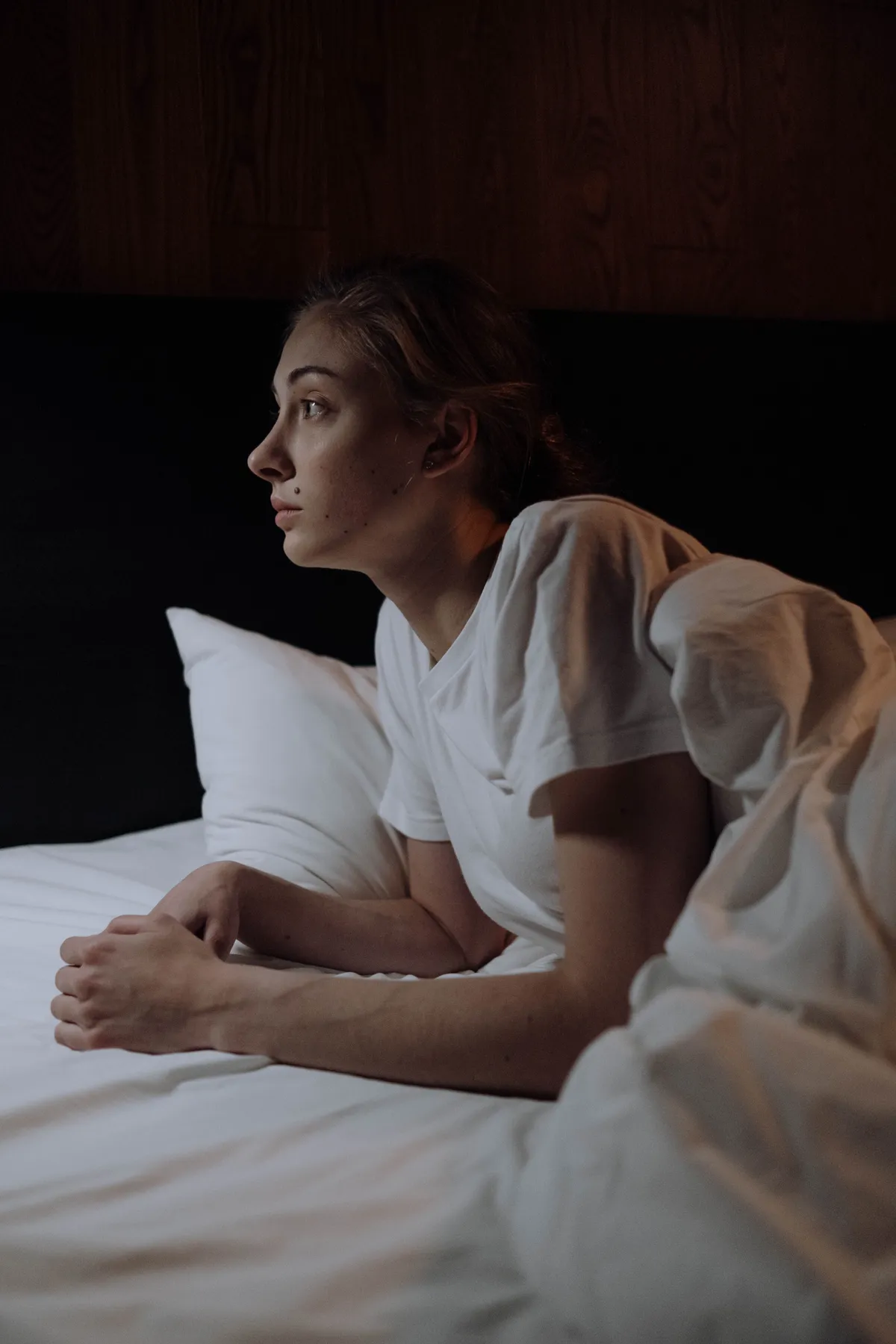
Back pain does get measurably worse through the menopause transition, tracking with night-waking and hot flushes more than with hormone levels directly. One popular fix is backwards too: medium-firm beat firm in a real mattress trial. None of this applies with emergency signs or a cancer history — see a doctor first.
I went looking for this one after my own lower back started announcing itself every night around the same time my hot flushes did. My doctor's first question wasn't about my spine — it was about my sleep. I assumed that was a brush-off. It wasn't.
The research backs her up, and in a direction I didn't expect. The hormone story everyone reaches for turns out to be the weak explanation. The sleep story is the strong one — which is awkward, because it means there isn't a pill or a patch that fixes this on its own.
Before the rest of this page. Back pain with tingling, weakness or numbness in both legs, loss of feeling around your genitals or anus, new difficulty controlling your bladder or bowels, or new changes in how sex feels needs emergency care — call 999 or go to A&E.
And if you have or have had cancer, new back pain that doesn't ease with rest or is worse at night is its own reason to be seen. The full list is in when to get help now.
Does menopause actually cause back pain?
It coincides with it, clearly — but “cause” turns out to be the wrong word once you look at what was actually measured. The only study I found that tracked this directly followed real hormone levels alongside real pain reports in the same women, over years, and the hormones didn't explain the pain. Something else did.
Read that result slowly, because it cuts against almost everything written about this topic. It is not saying hormones are irrelevant to menopause — they obviously aren't. It's saying that in this data, the direct hormone measurements didn't predict who got more back pain. What predicted it was the symptom cluster: poor sleep, hot flushes, mood.
That reframes the question usefully. This isn't really “why do my hormones give me back pain” — it's “why does everything that disrupts my nights also seem to show up in my back,” which is a different and more answerable question.
Why does it track with night-waking instead of hormones directly?
Nobody has fully worked this out, and I'm not going to pretend otherwise. The honest picture is that pain and sleep run in both directions at once: poor sleep lowers pain tolerance, and pain fragments sleep. The Mitchell and Woods data can't tell you which way the arrow points for any one woman, and neither can I.
What it can tell you is that stress physiology was tangled up in it too.
I want to be careful with that cortisol finding, because “lower cortisol” sounds like it should mean “more relaxed,” and that's not quite what's being measured. My read — not something this specific study tested, just my own inference — is that a blunted overnight cortisol rhythm isn't a separate cause so much as another symptom of the same disrupted system showing up in a hormone panel.
So the honest summary is: this is a cluster, not a chain. Hot flushes, night-waking, mood, stress physiology and back pain rise together during the transition. Treating any one piece in isolation — just the back, just the hot flushes — is working against the grain of what the data actually shows.
Does hormone therapy help?
Modestly, for one specific measure, and not at all for symptoms — which is a more precise and less satisfying answer than either “yes” or “no.” The only randomised trial I found that tested this directly split on exactly that line.
So HRT may have protected spinal flexibility a little, in a trial of only 78 women — small enough that I'd want it repeated before leaning on it, and narrow enough (early postmenopause only) that it may not tell you much if you're further out. It didn't change whether these particular women actually had back symptoms.
If hormone therapy is right for you for other reasons — and for many women it is — that decision should rest on those reasons, not on an expectation that it will fix your back.
Do I need a firmer mattress?
Probably not — and the evidence runs the other way. “Get a firm mattress” is close to universal advice for back pain, repeated so often it's treated as common sense. A real trial tested it against the alternative, and common sense lost.
Two honest caveats. “Medium-firm” here is a specific, measured point on a European standardisation scale (Hs 5.6 out of 10, where 10 is softest) — not “soft,” and mattress firmness is notoriously hard to compare across brands that each use their own marketing scale. And one of the three outcomes, pain on rising, had a confidence interval that just touched 1 (0.97–3.86), so treat that one as suggestive rather than settled.
Still, the direction is consistent across all three measures, and it's the only trial of its kind I could find. If you're shopping for a new mattress for this reason specifically, that's worth knowing before you default to the firmest option in the showroom — though retailers' “medium-firm” labels aren't standardised the way the trial's scale was, so treat it as a direction, not a precise target.
If you're not ready to replace a mattress, a topper that softens a too-firm one is a cheaper way to test the idea — that combination hasn't been tested in a trial the way the mattress itself was, but it's a reasonable lower-cost approximation.
What actually helps at night?
A short, unglamorous list, and the NHS's own self-care guidance is the closest thing to a consensus I found. None of it is specific to menopause — it's just good mechanical advice that happens to matter more now, because the nights are already harder.
- Keep moving within what's comfortable. The NHS advises staying active and continuing with normal activities as much as possible — prolonged rest tends to make ordinary mechanical back pain worse, not better. One exception worth knowing: if movement makes it worse rather than better, or morning stiffness regularly lasts more than 30 minutes, that's a different pattern — inflammatory back pain behaves the opposite way to mechanical pain, and it's worth naming to a GP rather than assuming it's the same ache everyone else has.
- Side sleepers: a pillow between the knees. It keeps the hips and lower spine roughly aligned instead of letting the top leg pull the spine into rotation all night.
- Back sleepers: a pillow under the knees. It takes some of the arch out of the lower back.
- Heat, not just at bedtime. A warm bath or heat pack is on the NHS's own list of things that may help.
- Reconsider the mattress question above rather than assuming firmer is automatically better.
I'd add one thing the lists don't usually say out loud: if the ache is part of the same bad night as a hot flush and a racing mind, treating only the back is treating a third of the problem. The sleep hygiene and CBT-I approaches covered elsewhere on this site are doing real work here too, even though they don't mention your spine once.
What if it's actually my hips or my joints?
Worth separating out, because the fixes differ. Pain centred low and central, or radiating down a buttock or leg, is more likely the back itself. Pain at the side of the hip, especially lying on that side, often isn't spinal at all. And aching that moves between several joints fits a broader pattern than back pain alone.
I've covered the other two separately: hip pain at night for the side-of-hip pattern, and menopause joint pain at night for aching that travels between joints.
None of these are mutually exclusive. It's entirely normal to have more than one of these going on in the same week, and the practical answer is the same either way: describe where it actually hurts, and when, rather than reaching for the first label that sounds plausible.
When is back pain an emergency, or at least a reason to be seen?
Most back pain is mechanical, common, and improves within weeks on its own. But a short list of patterns changes that, and I'd rather give you the NHS's own three tiers than soften them into one vague “see a doctor if it's bad.”
Call 999 or go to A&E if you have back pain with:
- Pain, tingling, weakness or numbness in both legs
- Loss of feeling around your genitals or anus
- New difficulty peeing, or new loss of control over your bladder or bowels
- Changes in how sex feels, or new difficulty with arousal or orgasm
- Chest pain, or the back pain started after a serious accident
Clinically, this combination is known as cauda equina syndrome — nerve compression at the base of the spine — and it's treated as a surgical emergency. That's added clinical context rather than the NHS page's own wording, but the list of signs above is theirs. Don't drive yourself; call 999 or have someone take you.
Get an urgent same-day appointment, or call 111, if:
- You feel hot, cold, shivery or generally unwell alongside the pain
- It's severe pain that started suddenly, or it's getting rapidly worse
See a GP (non-urgent, but don't let it drift) if:
- It hasn't improved after a few weeks of self-care
- It's stopping your day-to-day activities, or you're worried about the pain or struggling to cope
- You've lost weight without trying to
- There's a lump or swelling in your back, or your back has changed shape
- It doesn't improve with rest, or is worse at night
- It's worse when sneezing, coughing or pooing
- It's coming from high up — between your shoulder blades — rather than the lower back
I want to be direct about the two bolded items, because this is a sleep website and I've just spent several thousand words explaining why ordinary back pain correlates with night-waking. That correlation is real. It is also true, separately, that the NHS lists “worse at night” and unexplained weight loss or a change in your back's shape as reasons connected to rarer but serious causes, including cancer and infection.
Those two things are not in tension. Most night-pattern back pain is the ordinary, symptom-cluster kind this article is about. But I'm not going to write a clean rule that tells you which one you have, because I don't have one.
Two things are worth tracking even tonight, though. Does any position give you even brief relief? Ordinary mechanical pain usually eases somewhat lying a certain way; pain that genuinely doesn't ease in any position is a more specific flag than “worse at night” alone. And is it about the same each night, or getting worse week over week?
The honest version: if nothing eases it, it's trending worse, or your pain genuinely isn't easing with the self-care above after a few weeks, or anything on the list applies, that's the appointment — whatever time of day it hurts most.
And if you have, or have had, cancer, new back pain deserves an earlier, more direct conversation with whoever manages that history, rather than working through the self-care list first. Bone is widely reported in oncology literature as a common site for secondary spread, particularly from breast cancer — that's general medical background rather than something from the four sources listed below, so I'm flagging it as such.
What should you do first?
Five steps, in an order that puts the urgent and the cheap ahead of the slow and the speculative. None of this replaces being examined by someone who can actually look at your spine, and pain that persists for weeks deserves that rather than months of guessing on your own.
- Rule out the emergency list first. Both-leg symptoms, saddle numbness, new bladder or bowel trouble, or pain after a serious accident is 999 or A&E, not this list.
- If you have a cancer history, say so early. New back pain in that context is a reason to call whoever manages your care directly, rather than starting with self-care.
- Try the night-time mechanics before you try a new mattress. A pillow between or under the knees, depending on your sleep position, costs nothing and takes one night to test.
- If you are shopping for a mattress, consider medium-firm over firm. It's the opposite of the usual advice, and it's the one with a trial behind it.
- Treat the night as a whole, not just the ache. If the back pain shows up alongside hot flushes and a racing mind, the sleep-focused approaches elsewhere on this site are addressing the same underlying cluster, not a separate problem. And if none of the above applies but it's been several weeks without improvement either way, that's still a reason to see a GP — don't wait out months on your own.
What I'd want a friend to take from this. Not “your hormones are wrecking your back” — the data doesn't actually say that. The more useful version: this is part of the same rough patch as your sleep and your hot flushes, it tends to ease as that patch eases, medium-firm beats firm if you're buying new, and a short, specific list of things would make me pick up the phone rather than wait it out.
Where to go from here
If it's the hip rather than the spine keeping you up, read hip pain at night. If it moves between joints, menopause joint pain at night covers that pattern. And if hot flushes and 3 a.m. wake-ups are the bigger problem the back pain rides along with, start there: how to fall back asleep at 3 a.m.
For how all of this fits into the bigger picture of midlife sleep, start at the complete perimenopause and menopause sleep guide.
Key takeaways
- In 292 women followed with up to 6,812 observations, back pain rose significantly during the transition and early postmenopause, but hormone levels (estrone, FSH, testosterone) were unrelated to it. Night-time awakening, hot flushes, mood and difficulty concentrating were each significantly associated with it instead (all p < 0.0001).
- This looks like a symptom cluster rather than a direct hormonal cause — pain, poor sleep and stress physiology likely reinforce each other, and the available data can't say which starts first.
- In a small 2-year randomised trial (78 early-postmenopausal women, a result I'd want repeated before leaning on it), hormone therapy modestly slowed the decline in lumbar spine mobility (p < 0.05 pooled), but had no detectable effect on back symptoms themselves.
- A firmer mattress is not clearly better. In a 313-person randomised trial, medium-firm mattresses beat firm ones on pain in bed and disability at 90 days, with a weaker, borderline benefit for pain on rising (CI touched 1). The authors note the firm-mattress recommendation has long lacked supporting evidence.
- Side sleepers: a pillow between the knees to keep the hips and spine roughly aligned. Back sleepers: a pillow under the knees to ease the arch in the lower back. This is standard physiotherapy positioning advice rather than something from a trial cited here. Staying moderately active tends to help more than prolonged rest.
- Pain centred at the hip, or that moves between several joints, may not be spinal at all — see hip pain at night and joint pain at night for those patterns.
- Emergency (999/A&E): pain, tingling, weakness or numbness in both legs; loss of feeling around the genitals or anus; new difficulty peeing or new loss of bladder or bowel control; new changes in how sex feels; chest pain; pain after a serious accident.
- Same-day (111/urgent GP): fever or feeling generally unwell with the pain; sudden severe pain or pain that's rapidly worsening.
- See a GP: no improvement after a few weeks; you're worried about the pain or struggling to cope; unexplained weight loss; a lump or change in the shape of your back; pain that doesn't ease with rest or is worse at night; pain worse with coughing, sneezing or pooing; pain high between the shoulder blades.
- Night-pattern pain is usually the ordinary, symptom-cluster kind this article describes — but it's also one of the NHS's own listed reasons to be seen, especially alongside weight loss or a change in your back's shape. The two aren't in conflict; persistent or accompanied pain gets checked regardless of what time it hurts most.
- A cancer history, particularly breast cancer, changes the urgency of new back pain, because bone is a common site for secondary spread.
Frequently asked questions
Does menopause cause back pain?
It coincides with a rise in back pain, but the only study that tracked this directly found hormone levels (estrone, FSH, testosterone) were unrelated to it. What was related: night-time awakening, hot flushes, mood and difficulty concentrating, all significantly (p < 0.0001) — suggesting a symptom cluster rather than a direct hormonal cause.
Does HRT help with back pain?
Modestly, for spine mobility, not for symptoms, and the trial was small. In a 2-year randomized trial of 78 early-postmenopausal women, hormone therapy slightly slowed the decline in lumbar spine flexibility, but the researchers detected no preventive or aggravating effect on back symptoms themselves. A result worth repeating before leaning on it.
Is a firm mattress better for back pain?
Not necessarily — a 313-person randomized trial found medium-firm mattresses beat firm ones on pain in bed and disability at 90 days, with a weaker, borderline benefit on pain on rising. The researchers noted the firm-mattress recommendation has long lacked supporting evidence.
What sleep position is best for back pain?
Side sleepers do best with a pillow between the knees, which keeps the hips and lower spine aligned. Back sleepers benefit from a pillow under the knees, which reduces the arch in the lower back. This is standard physiotherapy advice rather than a trial finding cited elsewhere in this article.
Why is my back pain worse at night?
It's genuinely common with ordinary mechanical back pain, which this article covers. But the NHS also lists pain that's worse at night as one reason to see a GP, particularly alongside unexplained weight loss or a change in your back's shape — so persistent or accompanied night pain should still be checked.
Could my back pain be something else, like my hip or joints?
Possibly. Pain at the side of the hip, especially lying on that side, often isn't spinal. Aching that moves between several joints fits a broader pattern than back pain alone. Describing exactly where and when it hurts helps tell these apart.
When is back pain a medical emergency?
Call 999 or go to A&E for pain, tingling, weakness or numbness in both legs; loss of feeling around the genitals or anus; new difficulty with your bladder or bowels; new changes in how sex feels; chest pain; or pain after a serious accident. This combination can signal cauda equina syndrome, a surgical emergency.
Should I worry about back pain if I've had cancer?
Yes, enough to mention it early. Bone is widely reported as a common site for secondary spread, particularly from breast cancer, and new back pain in someone with that history deserves a direct conversation with whoever manages your care rather than a self-care trial first.
Sources cited
- Mitchell ES, Woods NF. Pain symptoms during the menopausal transition and early postmenopause. Climacteric. 2010;13(5):467–478. doi:10.3109/13697137.2010.483025. pubmed.ncbi.nlm.nih.gov
- Kyllönen ES, Heikkinen JE, Väänänen HK, Kurttila-Matero E, Wilen-Rosenqvist G, Lankinen KS, Vanharanta JH. Influence of estrogen-progestin replacement therapy and exercise on lumbar spine mobility and low back symptoms in a healthy early postmenopausal female population: a 2-year randomized controlled trial. Eur Spine J. 1998;7(5):381–386. doi:10.1007/s005860050094. pubmed.ncbi.nlm.nih.gov
- Kovacs FM, Abraira V, Peña A, Martín-Rodríguez JG, Sánchez-Vera M, Ferrer E, Ruano D, Guillén P, Gestoso M, Muriel A, Zamora J, Gil del Real MT, Mufraggi N. Effect of firmness of mattress on chronic non-specific low-back pain: randomised, double-blind, controlled, multicentre trial. Lancet. 2003;362(9396):1599–1604. doi:10.1016/S0140-6736(03)14792-7. pubmed.ncbi.nlm.nih.gov
- National Health Service (UK). Back pain — causes, self-care and when to get help. nhs.uk
How this article was checked
Every figure and quotation here was read at its primary source: three peer-reviewed papers, including a Lancet randomised trial, plus the UK National Health Service's patient page. All four sources are listed and linked in full above.
Where the evidence was mixed or limited — the small size of the hormone-therapy trial, the single confidence interval that touched 1 in the mattress trial, the direction of the pain-and-sleep relationship — this article says so rather than rounding it into a cleaner story.
It has not been reviewed by a clinician. Ellen Hayes is a researcher and writer, not a doctor, and nothing here is a diagnosis or a substitute for being seen by one.
Ellen Hayes
Health & Wellness Writer and Researcher
Hi — I'm Ellen. I went looking for a reason my back hurt and came back with a reason my whole night was rough. Turned out to be the more useful answer, even if it was the less tidy one.
I'm not a doctor. I'm not an expert — and I'm never going to talk down to you like one. I'm a woman in the middle of perimenopause who got tired of vague answers, started reading the actual research, and writes it down here in plain English, the way I'd explain it to a friend over coffee. More about Ellen →