Amitriptyline for Sleep in Menopause: What Trials Show
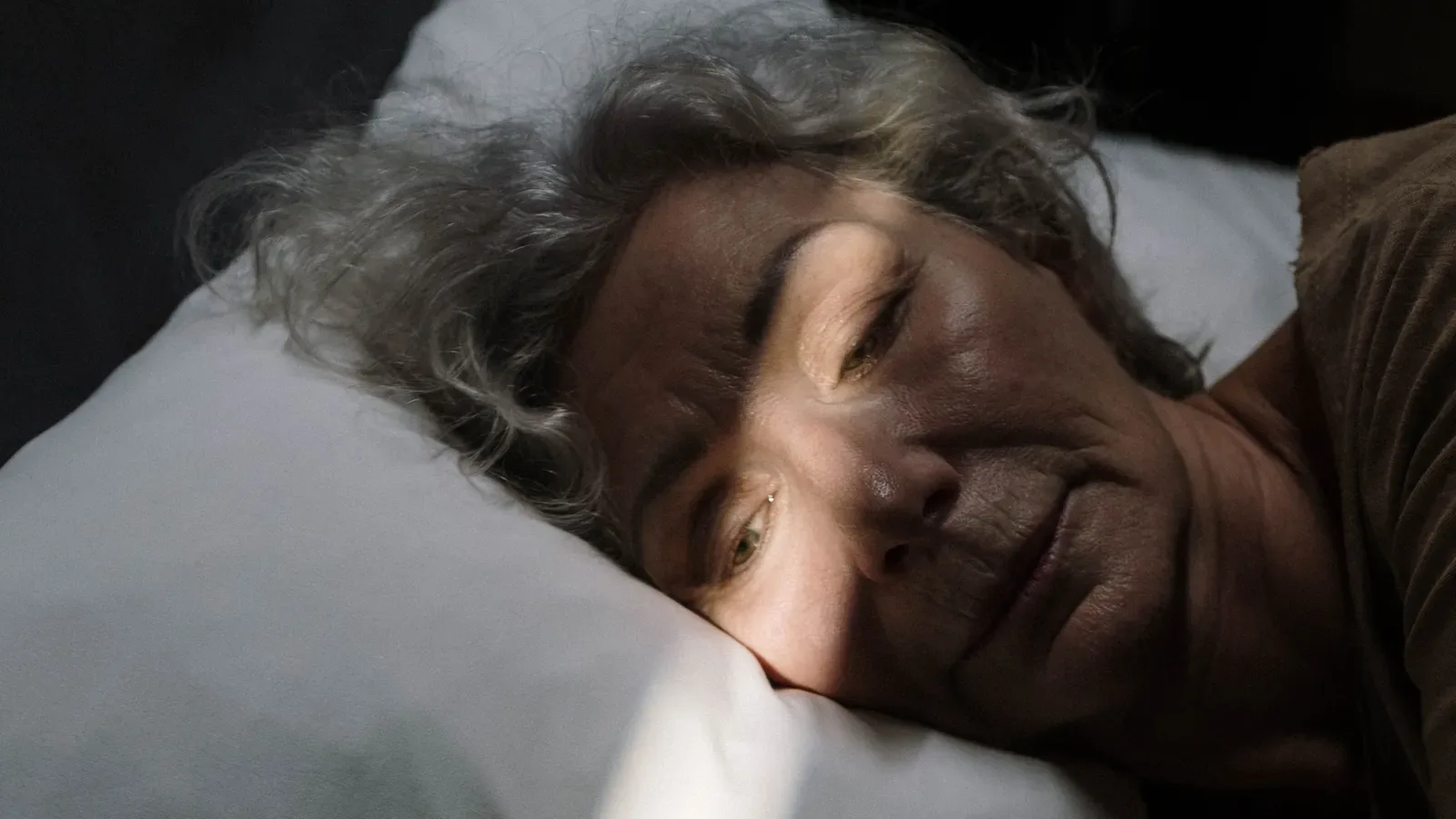
If you have been lying awake for months in menopause, a doctor may have mentioned amitriptyline for sleep: an old antidepressant, taken at a small dose at bedtime. It can sound gentler than a sleeping pill. The research tells a more mixed story.
I read the amitriptyline tablet label, MedlinePlus, the 2025 DREAMING trial, a trial against CBT-I, and the 2023 Beers Criteria to see what they say about sleep. I'm not a doctor. This is what the sources say, not advice to start or stop anything.
Amitriptyline is a tricyclic antidepressant approved for depression, not insomnia. Doctors sometimes prescribe 10 to 20 mg off-label for sleep. A 2025 placebo-controlled trial found a small benefit at 6 weeks that was not clinically relevant and no benefit later. It carries a boxed warning and strong anticholinergic effects.
What is amitriptyline, and why is it prescribed for sleep?
Amitriptyline is a tricyclic antidepressant. The tablet label says it is indicated "for the relief of symptoms of depression." Doctors also prescribe it off-label at low doses for sleep; the trials below used 10 to 20 mg. Sedation is a known effect. Off-label means the FDA label does not cover that use.
MedlinePlus says amitriptyline is used to treat symptoms of depression, and its page also mentions other uses such as nerve pain after shingles and migraine prevention. It says nothing about insomnia. That gap is worth keeping in mind when a forum thread presents it as a sleep pill.
The label itself notes that "a sedative effect may be apparent before the antidepressant effect is noted." That sedation is why a low dose gets used for sleep. But the label's doses are written for depression, 50 to 100 mg at bedtime to start with in one method, far above the 10 to 20 mg used in sleep research.
If you are deciding among sleep medicines, our guide to sleeping pills for menopause insomnia compares the main options side by side.
Does low-dose amitriptyline help sleep? What the trials found
The best evidence is thin. The 2025 DREAMING trial, the first placebo-controlled test in general practice, found amitriptyline 10 to 20 mg lowered insomnia severity more than placebo at 6 weeks, but the authors called the gap not clinically relevant. From 12 weeks onward, no significant difference remained.
The same trial found mirtazapine did better: a 6-point drop at 6 weeks, with improvement and recovery rates of 52% and 56% against 14% on placebo. Amitriptyline's rates, 40% and 36%, did not differ significantly from placebo. Participants were adults aged 18 to 85, not a menopause-specific group.
The trial's full text adds one more detail. At 20 weeks, the amitriptyline group had less favorable scores than placebo on overall and physical fatigue, a difference that crossed the threshold for clinical relevance. It also found amitriptyline was generally tolerated and evaluated well. Both statements are in the paper.
An earlier look came from a sleep clinic. In a 2023 cross-sectional study of 752 patients on 10 to 20 mg, 73.9% reported better sleep maintenance and 66.1% reported at least one side effect. It had no placebo group, relied on self-report, and its authors said it justified randomized trials.

Is there evidence for amitriptyline for sleep in menopause specifically?
I did not find a trial testing amitriptyline for sleep in menopausal women. The trials above enrolled adults with insomnia in general. Menopause can bring night sweats, mood change and fragmented sleep, but whether amitriptyline helps those particular nights has not been tested in the sources I opened. Treat the numbers as a general guide, not a menopause result.
One practical consequence: the label includes "increased perspiration" among its reported adverse reactions. If hot flashes and night sweats are what wake you, ask your doctor how that fits. Our article on clonidine for hot flashes and sleep cover a medicine that was tested for those nights, with its limits.
Amitriptyline is also used for pain, as MedlinePlus notes for nerve pain after shingles. If aching joints are what keep you awake, see menopause joint pain at night before assuming the problem is sleep alone.
What is the boxed warning on amitriptyline?
The boxed warning concerns suicidal thinking and behavior. The label says antidepressants increased that risk compared with placebo in children, adolescents and young adults in short-term studies. It says short-term studies did not show an increase in adults beyond age 24, and showed a reduction in adults aged 65 and older. It applies to every antidepressant, whatever the reason prescribed.
The label's pooled analysis, covering 295 short-term trials in over 77,000 adults, reported 1 fewer case of suicidality per 1,000 treated for ages 25 to 64 and 6 fewer for ages 65 and older. For 18 to 24 it reported 5 additional cases per 1,000.
Still, the label asks that all patients, whatever the reason for the prescription, be monitored for clinical worsening, suicidality and unusual behavior changes, especially in the first few months and at dose changes. MedlinePlus adds that risk can change at any age, especially when the dose goes up or down.
If you or someone you love is in crisis, call or text 988 (Suicide & Crisis Lifeline) in the United States. If someone is in immediate danger, call 911. Tell the prescriber right away about new agitation, panic, hostility, unusual behavior or thoughts of self-harm.
What are the possible side effects of amitriptyline?
MedlinePlus lists side effects that include nausea, drowsiness, dry mouth, constipation, difficulty urinating and blurred vision. The label adds urinary retention, dizziness, weakness, fatigue, nightmares, low blood pressure on standing, and weight gain or loss. Because the drug blocks acetylcholine, many of these are called anticholinergic effects.
In the 2025 trial comparing amitriptyline with CBT-I, people on amitriptyline reported more side effects, mostly anticholinergic. They reported dry mouth, difficulty waking up, vivid dreaming, increased appetite, difficulty urinating and sweating more often than before treatment. Headache and restless sleep were reported less often.
- Next-day drowsiness: MedlinePlus says it can cause drowsiness, and to avoid driving or operating machinery until you know how it affects you.
- Weight and appetite: the label lists "weight gain or loss," and the CBT-I trial participants reported increased appetite.
- Heart effects: the label lists palpitation, tachycardia, arrhythmias and conduction changes, particularly at high doses.
- Blood sugar: "both elevation and lowering of blood sugar levels have been reported."
- Eyes: it can cause pupil dilation, which in people with narrow angles can trigger an attack of angle-closure glaucoma.
- Rare serious effects: the label describes very rare cases resembling neuroleptic malignant syndrome and serotonin syndrome (with certain other drugs).
MedlinePlus says to call your doctor immediately for crushing chest pain, seizures, a rapid, pounding or irregular heartbeat, severe rash, yellowing of the skin or eyes, fainting or hallucinations.
Who should not take amitriptyline, or should use it only with close supervision?
Several groups are told to avoid it or use extra caution. The label contraindicates it with MAO inhibitors, with cisapride, after prior hypersensitivity, and in the acute recovery phase after a heart attack. It urges caution with seizures, urinary retention, glaucoma, heart disease and liver problems. This summary comes from the label and MedlinePlus, not a personal assessment.
- MAO inhibitors: the label says hyperpyretic crises, severe convulsions and deaths have occurred with tricyclics and MAOIs together, and that at least 14 days should pass after stopping an MAOI.
- Recent heart attack: not recommended during the acute recovery phase.
- Angle-closure glaucoma or urinary retention: the label says that in angle-closure glaucoma, "even average doses may precipitate an attack."
- Seizure history, heart disease, liver impairment, overactive thyroid or thyroid medication: the label advises caution or close supervision.
- Bipolar disorder risk: the label says depressed patients should be screened because antidepressants alone may precipitate a mixed or manic episode in people at risk.
- Adults 65 and older: the label says they are particularly sensitive to anticholinergic effects, with a higher risk of falls. The Beers Criteria advise avoiding it.
- Pregnant or planning pregnancy: the label says use during pregnancy only if the potential benefit justifies the risk to the fetus. MedlinePlus says to tell your doctor.
- Breastfeeding: the label says amitriptyline is excreted into breast milk, and MedlinePlus says not to breast-feed while taking it.
- Alcohol: MedlinePlus says it can add to the drowsiness, and the label says amitriptyline may enhance the response to alcohol and other CNS depressants.
What do the Beers Criteria say about amitriptyline after 65?
The 2023 American Geriatrics Society Beers Criteria list amitriptyline among antidepressants with strong anticholinergic activity, and the recommendation is to avoid it in adults 65 and older. The stated reasons are that these drugs are highly anticholinergic, sedating and cause orthostatic hypotension. The panel rates the evidence high and the recommendation strong.
The Beers list also names amitriptyline, clomipramine, doxepin and imipramine among tertiary tricyclics that raise the risk of orthostatic hypotension, and flags them in people with a history of syncope. The panel says the criteria should be applied thoughtfully and support, not replace, shared decision-making. MedlinePlus says older adults should not usually take amitriptyline because it is not as safe or effective.
The amitriptyline label describes the same risk in its own words: cognitive impairment, psychomotor slowing, confusion, sedation and delirium, plus a possible rise in falls. Many readers here are in their 50s, but this matters at 65, and for anyone with a parent or friend who takes it.
Which medicines and supplements interact with amitriptyline?
Several do. The label warns about MAO inhibitors, cisapride, other sedating drugs, alcohol, anticholinergic drugs, thyroid medicine, disulfiram, cimetidine and drugs that inhibit the liver enzyme CYP2D6, which include many other antidepressants such as the SSRIs fluoxetine, sertraline and paroxetine. Bring a complete list, supplements included, to your pharmacist.
- SSRIs and other 2D6 inhibitors: the label says they can raise tricyclic levels, and that the person "may become abruptly toxic" when one is added to a stable dose.
- Other sedatives (alcohol, benzodiazepines, barbiturates): the label says amitriptyline may enhance their effects. See clonazepam (Klonopin) for sleep in menopause for that class.
- Anticholinergic drugs: the label says hyperpyrexia (very high fever) has been reported, particularly during hot weather, and that paralytic ileus may occur.
- Topiramate and cimetidine: the label says either may raise amitriptyline concentrations.
- Thyroid medication and guanethidine-type drugs: close supervision is needed, and amitriptyline may block the antihypertensive action of guanethidine.
- Surgery: the label says that when possible, the drug should be discontinued several days before elective surgery. Do not decide that yourself; ask your surgeon.
Other sedating medicines on this site, such as trazodone and mirtazapine, also have interaction cautions. Adding two together is a pharmacist question.
How is amitriptyline different from low-dose doxepin?
Doxepin is a close chemical cousin, but a 3 mg or 6 mg doxepin tablet (Silenor) is FDA-approved for insomnia with trouble staying asleep, and amitriptyline is not. The doxepin label rests on six randomized trials of up to 3 months in 1,423 people. Amitriptyline has no such label, and its sleep evidence is smaller.
| Amitriptyline | Low-dose doxepin (Silenor) | |
|---|---|---|
| FDA-labeled use | Depression | Insomnia with sleep maintenance difficulty |
| Sleep dose | 10–20 mg in trials (off-label) | 3 mg or 6 mg; do not exceed 6 mg a day |
| Boxed warning | Yes (suicidality) | None listed on the Silenor label I opened |
| Beers Criteria (65+) | Avoid | Doxepin 6 mg or less safety profile "comparable to that of placebo" |
| Placebo-controlled sleep trials | DREAMING, 80 adults | Six randomized trials, 1,423 people |
The Silenor label also has cautions: it contraindicates untreated narrow-angle glaucoma and severe urinary retention, advises against taking it within 3 hours of a meal, and warns about complex sleep behaviors, with no alcohol. Read our doxepin for sleep in menopause article for the full picture.
What happens when you stop amitriptyline?
Do not stop suddenly. MedlinePlus says not to stop without talking to your doctor, who will likely reduce the dose gradually, and that abrupt discontinuation can bring nausea, headache and lack of energy. The label says abrupt cessation after prolonged use may produce nausea, headache and malaise, and that gradual reduction can bring irritability, restlessness and dream and sleep disturbance.
The label adds that these symptoms "are not indicative of addiction," and that rare cases of mania or hypomania have been reported within 2 to 7 days after stopping chronic therapy. That is one reason to plan the stop with your prescriber.
MedlinePlus says to take a missed dose when you remember, skip it if the next dose is near, and not to double up. For an overdose, MedlinePlus says to call poison control at 1-800-222-1222 and 911 if the person collapsed, had a seizure or can't be awakened. The label says deaths may occur from overdose with this class, and prescriptions should be for the smallest feasible quantity.
How does amitriptyline compare with CBT-I?
In a 2025 trial of 187 people with insomnia and medical conditions, 12 weeks of amitriptyline 10 to 20 mg was non-inferior to group CBT-I on insomnia severity using a liberal margin. But more CBT-I participants reached a clinical response, 58% versus 41%, and amitriptyline users reported more side effects. The authors said CBT-I should remain first-line.
The American College of Physicians' 2016 guideline reached the same order of priority: it recommends that all adults receive cognitive behavioral therapy for insomnia (CBT-I) as the initial treatment for chronic insomnia disorder, and a shared decision about short-term medicine only when CBT-I alone was unsuccessful.
None of this means a medicine is wrong for you. It means CBT-I deserves a real try, or a real conversation about why not. If waking at 3 a.m. is what bothers you, ask the prescriber whether a sleep-clinic or CBT-I referral can happen alongside any pill.
When should you talk to your doctor about amitriptyline?
Talk to your doctor before starting it, and again if anything changes. Your doctor can weigh your mood, medicines, heart and eye history, age and plans for pregnancy or surgery. This list draws on the label and MedlinePlus; it is not a complete safety review.
- You have glaucoma, trouble urinating, seizures, heart rhythm problems, liver disease, thyroid disease or bipolar disorder in your history.
- You take an SSRI, another antidepressant, a sedating medicine, a thyroid pill, alcohol or any supplement.
- You are 65 or older, or caring for someone who is, and want to ask about falls and confusion.
- You are pregnant, could be, are breastfeeding, or have surgery or dental work planned.
- You notice agitation, panic, irritability, hostility, unusual mood changes or thoughts of self-harm, especially after a start or dose change.
- You have fainting, a pounding or irregular heartbeat, hallucinations or severe rash. MedlinePlus says to call right away.
- Sleepiness, dry mouth, constipation, urination trouble or weight change is severe or doesn't go away.
- You want to stop, or you are about to run out. Ask for a taper plan.
What else can you try if sleep keeps slipping away?
Start with CBT-I, which the ACP calls the initial treatment for chronic insomnia. If medicine still seems right, compare options tested for sleep itself. The Silenor label's six trials make low-dose doxepin one comparison point, and the DREAMING trial gives another for mirtazapine.
Our sleeping pills for menopause insomnia article is the overview. Then read about doxepin, trazodone and mirtazapine and bring your questions to your visit.
Where to go from here
For two weeks, write down bedtime, wake-ups, caffeine, alcohol, hot flashes and how you feel at noon. That diary helps a clinician judge whether medicine or something else, like pain, apnea or mood, is behind the nights.
Key takeaways
- Off-label: amitriptyline is approved for depression; sleep use is off-label.
- Modest, short-lived benefit: in DREAMING, the 6-week gain was not clinically relevant and faded after 12 weeks.
- No menopause trial found: the evidence comes from adults with insomnia in general.
- Boxed warning: antidepressants carry a suicidality warning; monitor mood, especially at starts and dose changes.
- Beers 65+: the AGS advises older adults to avoid it for strong anticholinergic effects.
- Doxepin differs: only 3 mg or 6 mg doxepin is FDA-approved for insomnia.
- Taper, don't quit: sudden stopping can cause withdrawal symptoms and worse sleep.
Frequently asked questions
Is amitriptyline approved for sleep or insomnia?
No. The amitriptyline tablet label says it is indicated "for the relief of symptoms of depression." Using a low dose for insomnia is off-label, which is legal and common but means no official insomnia dose or wording exists. The only low-dose tricyclic with an FDA insomnia label is doxepin (Silenor), at 3 mg or 6 mg.
Does low-dose amitriptyline actually help sleep?
Only modestly and briefly in the best trial I found. In the 2025 DREAMING trial, 10 to 20 mg of amitriptyline lowered Insomnia Severity Index scores 3.4 points more than placebo at 6 weeks, which the authors called not clinically relevant, and no benefit showed from 12 weeks onward. It was a small trial of 80 people.
What is the boxed warning on amitriptyline?
It is a boxed warning on the label. The label says antidepressants increased suicidal thinking and behavior compared with placebo in children, adolescents and young adults in short-term studies. Short-term studies did not show that increase in adults beyond age 24, and showed a reduction in adults 65 and older. Anyone starting should be watched for changes in mood or behavior.
Is amitriptyline safe for women over 65?
The 2023 Beers Criteria list amitriptyline among strongly anticholinergic antidepressants and advise older adults to avoid it, calling them highly anticholinergic, sedating and likely to cause orthostatic hypotension. MedlinePlus says older adults should not usually take amitriptyline because it is not as safe or effective. Your doctor makes the final call.
What are the common side effects of amitriptyline?
MedlinePlus lists nausea, drowsiness, dry mouth, constipation and blurred vision as common. The label also lists urinary retention, dizziness, weight gain or loss, and orthostatic hypotension. In a 2025 trial comparing amitriptyline with CBT-I, people on amitriptyline reported more dry mouth, difficulty waking up, vivid dreaming, increased appetite and sweating.
How is amitriptyline different from low-dose doxepin?
Both are tricyclic antidepressants, but doxepin as Silenor is FDA-approved for insomnia with sleep maintenance trouble, at only 3 mg or 6 mg. Amitriptyline is labeled for depression, and the Beers Criteria say low-dose doxepin at 6 mg or less has a safety profile comparable to placebo. Amitriptyline carries no such statement.
Can I stop amitriptyline suddenly?
No. MedlinePlus says not to stop it without talking to your doctor, who will usually reduce the dose gradually. The label says abrupt cessation after prolonged use may cause nausea, headache and malaise. In one 2025 trial, 68 percent of people who stopped amitriptyline reported worse sleep afterward, so ask your prescriber for a stopping plan.
Sources cited
- Amitriptyline hydrochloride tablets. Drug label (A-S Medication Solutions), DailyMed, label version of June 12, 2024. dailymed.nlm.nih.gov
- MedlinePlus. Amitriptyline. National Library of Medicine, National Institutes of Health (revised January 15, 2024). medlineplus.gov
- Effectiveness of low-dose amitriptyline and mirtazapine in patients with insomnia disorder and sleep maintenance problems: a randomised, double-blind, placebo-controlled trial in general practice (DREAMING). 2025. pmc.ncbi.nlm.nih.gov
- Low-dose amitriptyline versus cognitive behavioral therapy for insomnia in patients with medical comorbidity: a randomized controlled multicenter non-inferiority trial. 2025. pmc.ncbi.nlm.nih.gov
- Off-label low dose amitriptyline for insomnia disorder: patient-reported outcomes. 2023. pubmed.ncbi.nlm.nih.gov
- American Geriatrics Society 2023 updated AGS Beers Criteria for potentially inappropriate medication use in older adults. 2023. pmc.ncbi.nlm.nih.gov
- Silenor (doxepin) tablets. Drug label, DailyMed, label version of April 21, 2026. dailymed.nlm.nih.gov
- Qaseem A, Kansagara D, Forciea MA, et al. Management of chronic insomnia disorder in adults: a clinical practice guideline from the American College of Physicians. Ann Intern Med. 2016. pubmed.ncbi.nlm.nih.gov
How this article was checked
Label wording (indication, boxed warning, contraindications, interactions, adverse reactions, withdrawal, geriatric use) comes from the amitriptyline tablet label and the Silenor label (read through openFDA, linked to the same labels on DailyMed), and precautions from MedlinePlus. The DREAMING and CBT-I trials were read as abstracts, with parts of both full texts; the 2023 clinic study and the ACP guideline were read as abstracts only; the Beers Criteria were read in full text. I found no trial of amitriptyline for sleep in menopausal women.
It has not been reviewed by a clinician. Ellen Hayes is a researcher and writer, not a doctor, and nothing here is a diagnosis or a substitute for being seen by one.

Ellen Hayes
Health & Wellness Writer and Researcher
Hi — I'm Ellen. For this one I read the amitriptyline label, MedlinePlus, the 2025 trials and the Beers Criteria, and summarized what they say.
I'm not a doctor. I'm not an expert — and I'm never going to talk down to you like one. I'm a woman in the middle of perimenopause who got tired of vague answers, started reading the actual research, and writes it down here in plain English, the way I'd explain it to a friend over coffee. More about Ellen →