Clonidine for Hot Flashes and Sleep: What Studies Show

You wake up drenched at 2 a.m., kick off the covers, and by the time you cool down your sleep is gone. If your doctor suggested clonidine, a pill normally given for high blood pressure, you may wonder why.
I read the clonidine tablet label, MedlinePlus, the clinical trials and the Menopause Society's position on nonhormone treatments to find out what clonidine does for hot flashes, and what it does or doesn't do for sleep. I'm not a doctor; this is what the sources say.
Clonidine is a blood pressure medicine that doctors sometimes prescribe off-label for hot flashes. Trials show a modest reduction, about one fewer hot flash a day. It commonly causes dry mouth, drowsiness and dizziness, and stopping it suddenly can spike blood pressure. I found no trial showing it improves menopause sleep directly.
What is clonidine, and why is it used for hot flashes?
Clonidine is a prescription medicine approved for high blood pressure. MedlinePlus says it is "used alone or in combination with other medications to treat high blood pressure," and lists menopausal hot flashes among its other uses. Using it for hot flashes is off-label, meaning a doctor can prescribe it, but the FDA label does not cover that purpose.
The clonidine tablet label I opened says plainly that the tablets "are indicated in the treatment of hypertension." That label has no menopause wording, no hot flash dose, and no sleep claim. It is worth knowing that before you read a forum thread that makes it sound like a menopause drug.
Clonidine has been tested for hot flashes for decades; a 2006 JAMA review already counted 10 clonidine trials. A 2025 review by Zalles and Santoro lists clonidine with SSRIs, SNRIs, gabapentin and oxybutynin as nonhormone options supported by some evidence, and notes that, when it was written, only paroxetine mesylate and fezolinetant had FDA approval among nonhormone drugs; elinzanetant (Lynkuet) was approved in October 2025.
If you want the approved and better-studied options first, see our articles on paroxetine and venlafaxine, gabapentin and Veozah and Lynkuet.
How well does clonidine work for hot flashes?
Clonidine works modestly. A 2006 JAMA systematic review pooled four clonidine trials and found it reduced daily hot flashes by 0.95 compared with placebo. The same review found SSRIs and SNRIs reduced them by 1.13 and gabapentin by 2.05, though the review notes the drugs were never compared head to head.
That review found 10 clonidine trials in total, but only four had data that could be combined. It also warned that most trials had methodological deficiencies and that results may not generalize. That is the honest ceiling on what the numbers tell us.
Here are the main clonidine trials I could read. All were done in women with a history of breast cancer, which is where much nonhormone hot flash research was done:
| Trial | Who | Clonidine | What it found |
|---|---|---|---|
| Pandya, 2000 | 194 postmenopausal women with breast cancer on tamoxifen | 0.1 mg a day by mouth for 8 weeks | Hot flash frequency fell 37% vs 20% on placebo at 4 weeks and 38% vs 24% at 8 weeks |
| Goldberg, 1994 | Women with breast cancer on tamoxifen | Skin patch (crossover design) | Frequency fell 20% from baseline, which the authors called "statistically impressive" but "clinically moderate" |
| Boekhout, 2011 | 102 women with a history of breast cancer | 0.1 mg a day for 12 weeks | Hot flash scores were lower than placebo in week 12 (P = .03) and over the 12 weeks (P = .045) |
Be careful about reading these as results for every woman in menopause. The women in these trials had breast cancer and often took tamoxifen, which itself causes hot flashes. I did not find a large recent trial of clonidine in otherwise healthy perimenopausal women, so the numbers are a guide, not a promise.
What does the Menopause Society say about clonidine?
The Menopause Society (formerly NAMS) does not recommend clonidine. Its 2023 nonhormone position statement recommends cognitive-behavioral therapy, clinical hypnosis, SSRIs and SNRIs, gabapentin and fezolinetant at the highest evidence level, and lists clonidine among the treatments it does not recommend.
A Healio report on the statement quotes Dr. Nanette Santoro, who adds context: she would view "not recommended" here "as being not recommended as a first-line agent." In other words, clonidine is usually a later choice, after treatments with better evidence and fewer side effects.
The Zalles and Santoro review points the same way. It calls hormone therapy the "gold standard" and says the newer neurokinin-3 drugs act directly on the brain neurons that control body temperature and lack the off-target side effects of older nonhormone drugs. If you are considering clonidine, ask your doctor why it, rather than those, fits you.
Does clonidine help with sleep in menopause?
I could not find evidence that it does. No trial I opened tested clonidine as a sleep treatment for menopausal women. Sleepiness is a known effect of the drug, so people sometimes take it at night, but in the largest trial I read, the 194-woman Pandya study, more women on clonidine than on placebo reported trouble sleeping.
The clonidine tablet label also lists "insomnia," "sleep disorder" and "vivid dreams or nightmares" among reported adverse experiences, though it notes that many of these were seen in patients taking other medicines and that a causal relationship has not been established. So the drug can make you sleepy, and it may also disturb sleep.
There is a reasonable but unproven idea that if night sweats wake you, fewer hot flashes could mean fewer awakenings. I did not find a menopause trial that tested whether that happens with clonidine. If sleep is the main problem, our sleeping pills for menopause insomnia article compares medicines that were tested for sleep itself.

What are the possible side effects of clonidine?
Dry mouth and drowsiness are the most common. The clonidine tablet label says the most frequent effects, which appear dose-related, are dry mouth in about 40 of 100 patients, drowsiness in about 33, dizziness in about 16, and constipation and sedation in about 10 each. It adds that most adverse effects are mild and tend to diminish with continued therapy.
Those percentages come from blood pressure patients, so they may not match what you would see at a hot flash dose. The menopause-related trials reported a similar pattern. A 2016 meta-analysis by Hervik and Stub listed these adverse events for trials with a clonidine group (for Loibl, the table does not separate clonidine from the other arm):
- Boekhout: reduced appetite, nausea, sleepiness, dizziness, fatigue, dry mouth, sweating and constipation.
- Goldberg (patch): drowsiness, dry mouth, constipation and itching under the patch.
- Loibl: loss of appetite, sleeplessness, nausea, drowsiness, tiredness, sweating, constipation, restless sleep, nervousness, moodiness and dry mouth.
- Pandya: difficulty sleeping.
MedlinePlus lists the common effects as dry mouth, tiredness, weakness, headache, nervousness, nausea, vomiting and constipation, and says to tell your doctor if they are severe or don't go away. Serious effects it says need medical help right away include rash, hives, trouble swallowing or breathing, fainting, and a fast or irregular heartbeat.
Other label items worth knowing include dry eyes, which matters for contact lens wearers, and slow heart rate or dizziness on standing. The tablet label also reports decreased sexual activity, nocturia and weight gain among many less frequent effects. If any of these appear, tell your prescriber rather than quitting on your own.
Who should not take clonidine for hot flashes?
Some women should avoid clonidine or use it only with close monitoring. The label says it should not be used in patients with known hypersensitivity to clonidine, and it flags heart rhythm problems, slow heart rate and certain medicine combinations. This list comes from the label and MedlinePlus, not from a personal assessment.
- Allergy to clonidine: the label lists known hypersensitivity as a reason not to use it, and notes that people with a skin reaction to the clonidine patch may develop a rash with tablets.
- Slow heart rate or heart conduction problems: the label says clonidine may worsen sinus node dysfunction and atrioventricular (AV) block, and has postmarketing reports of severe bradycardia needing temporary cardiac pacing in patients with conduction problems or on other sympatholytic drugs.
- Low blood pressure, fainting or dizziness: MedlinePlus asks you to tell your doctor if you have ever had a stroke or low or high blood pressure. Clonidine lowers blood pressure.
- Taking diltiazem, verapamil, digitalis or beta-blockers: the label says to monitor heart rate with these, and reports sinus bradycardia needing hospitalization with diltiazem or verapamil.
- Taking tricyclic antidepressants: the label says they may reduce clonidine's blood pressure effect.
- Taking sedatives or drinking alcohol: the label says clonidine may add to the effects of alcohol, barbiturates and other sedating drugs.
- Pregnant, planning pregnancy or breastfeeding: MedlinePlus says to tell your doctor before taking it.
- Surgery coming up: MedlinePlus says to tell your surgeon or dentist. The label says to continue clonidine to within 4 hours of surgery and resume it soon after, so don't stop on your own.
Why you shouldn't stop clonidine suddenly
Stopping clonidine abruptly can cause a rebound in blood pressure. The tablet label says sudden cessation has, in some cases, caused nervousness, agitation, headache and tremor, accompanied or followed by a rapid rise in blood pressure. MedlinePlus likewise says not to stop it without talking to your doctor, who will usually lower the dose gradually.
The label says the likelihood appears greater after higher doses or with continued beta-blocker treatment, and describes rare cases of hypertensive encephalopathy, stroke and death after withdrawal. For tablets, it says the physician should reduce the dose gradually over 2 to 4 days.
This is the practical reason to take clonidine exactly as prescribed. A forgotten refill on a trip, or a few skipped doses because you feel fine, can matter more than it would with many other hot flash drugs. Ask your pharmacist what to do if you run out, and don't change the schedule yourself.
Clonidine, blood pressure and menopause
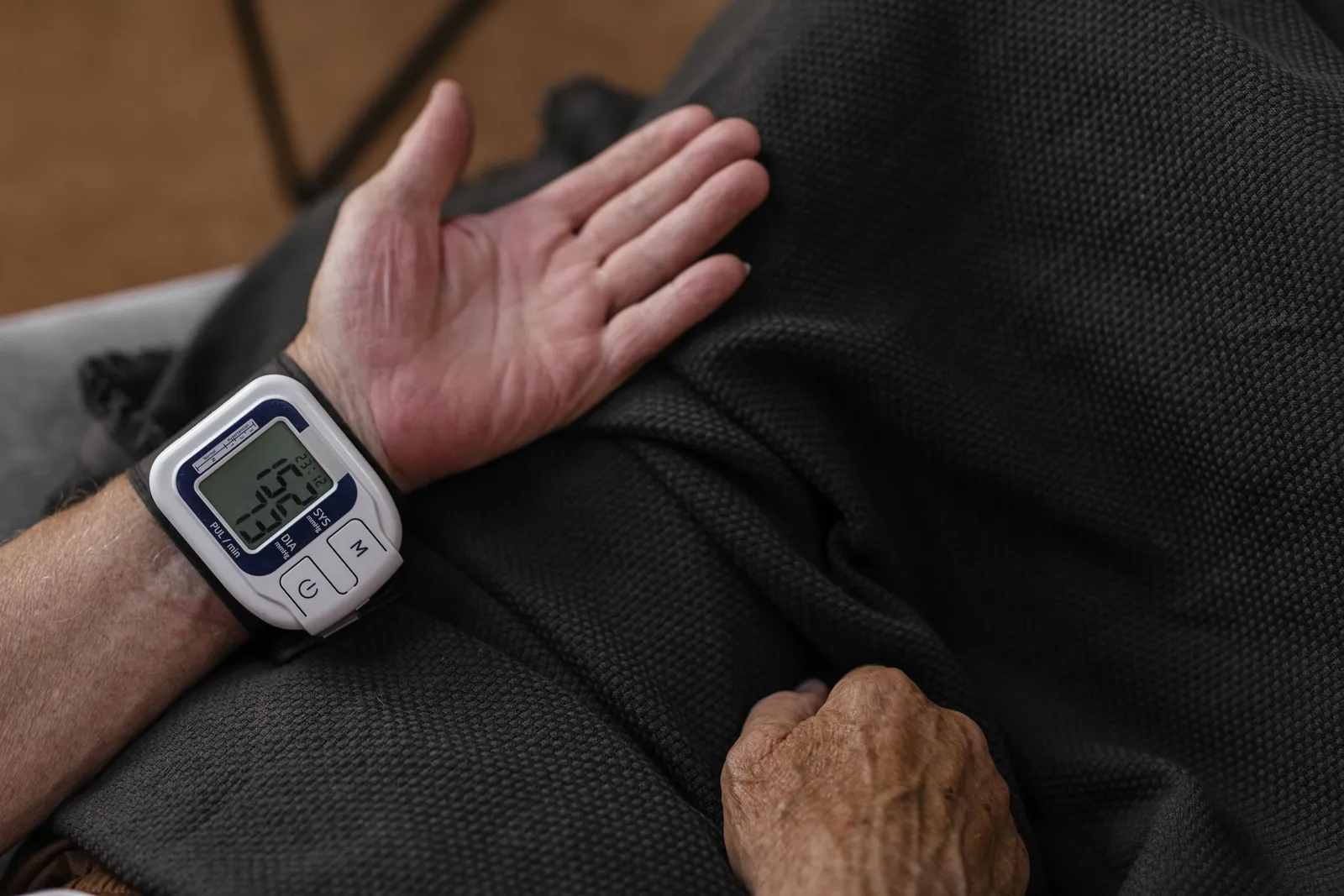
Clonidine lowers blood pressure, which may suit someone with hypertension and be a problem if pressure is already low. MedlinePlus says to tell your doctor if you have had low or high blood pressure. Because it is a blood pressure drug first, your readings and your other medicines matter more here than with most hot flash options.
Our menopause and high blood pressure article covers blood pressure in midlife. Whether clonidine makes sense if you already take a blood pressure drug is a decision for your prescriber, based on your readings and the rest of your medicine list.
If your doctor does prescribe it, ask whether you should check your pressure at home, what numbers should prompt a call, and whether other medicines on your list interact. A written list of every prescription, over-the-counter product and supplement helps the pharmacist catch problems.
Can you drink alcohol or take sedatives with clonidine?
You should ask your pharmacist first. MedlinePlus says alcohol can make clonidine's side effects worse and tells you to ask your doctor about the safe use of alcohol. The label says clonidine may potentiate the central nervous system depressant effects of alcohol, barbiturates and other sedating drugs.
That includes prescription sleep and anxiety medicines. If you already take a benzodiazepine, see our article on lorazepam (Ativan) for sleep in menopause, and tell your prescriber about every sedating product before adding clonidine. Stacking sedatives can slow your reactions and add to dizziness.
MedlinePlus also says clonidine may cause drowsiness or dizziness, and to avoid driving or operating machinery until you know how it affects you. That is worth finding out on a day when you don't have to be anywhere.
When should you talk to your doctor about clonidine?
Talk to your doctor before starting clonidine for hot flashes, and call again if side effects appear. Your doctor can compare it with hormone therapy and the nonhormone options with stronger evidence. Several situations in the label and MedlinePlus point to a call or a pharmacist visit.
- You have low blood pressure, a slow heartbeat, heart rhythm problems, a past stroke or fainting spells.
- You take blood pressure medicine, a beta-blocker, diltiazem, verapamil, digoxin, a tricyclic antidepressant or any sedating medicine.
- You are pregnant, could be pregnant, are breastfeeding, or have surgery or dental work planned.
- Dry mouth, dizziness, constipation or sleepiness is severe or doesn't go away.
- You notice new insomnia, vivid dreams, nightmares, confusion, mood changes or a fast or irregular heartbeat.
- You've missed doses, are about to run out, or want to stop. Ask how to taper rather than quitting.
- You develop a rash, hives, trouble swallowing or breathing, or you faint. MedlinePlus says to get medical help right away.
Get urgent help after an overdose or if someone collapses, has a seizure, has trouble breathing or can't be awakened. MedlinePlus says to call 911 in those cases, and poison control at 1-800-222-1222 for an overdose.
What else can you try for hot flashes that wake you?
Several options have stronger evidence than clonidine. The Menopause Society recommends cognitive-behavioral therapy, clinical hypnosis, SSRIs and SNRIs, gabapentin and fezolinetant, and says hormone therapy remains the most effective treatment, especially within 10 years of the final period. Your doctor can tell you which fit your health history.
Our hot flashes guide walks through the whole menu. If night sweats are what wakes you, the gabapentin article covers a drug with more hot flash data behind it, and the Veozah and Lynkuet article covers the newer brain-targeted drugs.
Clonidine can still make sense in specific cases, for example when other options aren't suitable or haven't worked. The point is to choose it deliberately, with a plan to review it, not as the first thing you try because someone you know takes it.
Where to go from here
For two weeks, write down how many hot flashes you have, how often you wake, and what time of night. Bring that and a full medicine list to your visit. For the sleep side of the problem, start with sleeping pills for menopause insomnia and compare what each medicine was actually studied for.
Key takeaways
- Off-label: clonidine tablets are approved for high blood pressure, not hot flashes or sleep.
- Modest effect: a 2006 JAMA analysis found about 0.95 fewer hot flashes a day than placebo, less than gabapentin or SSRIs.
- Not a first-line pick: the Menopause Society's 2023 statement lists clonidine among treatments it does not recommend.
- Sleep is unproven: I found no trial showing clonidine improves sleep in menopause, and in one trial more women on it reported trouble sleeping.
- Common side effects: dry mouth, drowsiness, dizziness and constipation, per the label.
- Don't stop suddenly: abrupt cessation can raise blood pressure quickly, so any change goes through your prescriber.
Frequently asked questions
Does clonidine help hot flashes in menopause?
A little, according to trials. A 2006 JAMA review pooled four clonidine trials and found about one fewer hot flash a day than placebo, a smaller effect than gabapentin or SSRIs. In one trial of 194 women, clonidine cut hot flash frequency 38% versus 24% on placebo at 8 weeks. Side effects limit its use.
Is clonidine approved for hot flashes?
No. The FDA-approved use on clonidine tablet labels is high blood pressure, and MedlinePlus lists menopausal hot flashes among its other uses. Prescribing it for hot flashes is off-label, which is legal but means no official menopause dose or label wording exists. Approved nonhormone options include paroxetine mesylate, fezolinetant and, since 2025, elinzanetant.
Will clonidine help me sleep during menopause?
I found no trial showing that clonidine improves sleep in menopausal women. Drowsiness is a common side effect, but in a 194-woman trial, more women on clonidine reported difficulty sleeping than on placebo, 41% versus 21%. If hot flashes wake you, treating them may help sleep indirectly, but that is not proven for clonidine.
What are the most common side effects of clonidine?
The clonidine tablet label says dry mouth occurs in about 40 of 100 patients, drowsiness in about 33, dizziness in about 16, and constipation and sedation in about 10 each. It describes most effects as mild, tending to fade with continued therapy. Those figures come from blood pressure use, not from menopause trials.
Can you stop clonidine suddenly?
No. The label says patients should not stop clonidine without consulting their physician, because sudden cessation can cause nervousness, agitation, headache, tremor and a rapid rise in blood pressure. For tablets, the label says the doctor should reduce the dose gradually over 2 to 4 days. Never stop on your own, and ask before skipping doses.
Is clonidine safe if I already take blood pressure medicine?
It needs a doctor's review. The label says diltiazem, verapamil, digitalis and beta-blockers can combine with clonidine to slow the heart rate, and sinus bradycardia needing hospitalization and a pacemaker has been reported with diltiazem or verapamil. Bring a full list of medicines and supplements so your prescriber or pharmacist can check each one.
Sources cited
- Clonidine hydrochloride tablets. Drug label (Teva; repackaged by RemedyRepack), DailyMed, label version of September 8, 2026. dailymed.nlm.nih.gov
- MedlinePlus. Clonidine. National Library of Medicine, National Institutes of Health. medlineplus.gov
- Nelson HD, Vesco KK, Haney E, et al. Nonhormonal therapies for menopausal hot flashes: systematic review and meta-analysis. JAMA. 2006;295(17):2057-2071. pubmed.ncbi.nlm.nih.gov
- Pandya KJ, Raubertas RF, Flynn PJ, et al. Oral clonidine in postmenopausal patients with breast cancer experiencing tamoxifen-induced hot flashes. Ann Intern Med. 2000;132(10):788-793. pubmed.ncbi.nlm.nih.gov
- Goldberg RM, Loprinzi CL, O'Fallon JR, et al. Transdermal clonidine for ameliorating tamoxifen-induced hot flashes. J Clin Oncol. 1994;12(1):155-158. pubmed.ncbi.nlm.nih.gov
- Boekhout AH, Vincent AD, Dalesio OB, et al. Management of hot flashes in patients who have breast cancer with venlafaxine and clonidine: a randomized, double-blind, placebo-controlled trial. J Clin Oncol. 2011;29(29):3862-3868. pubmed.ncbi.nlm.nih.gov
- Hervik J, Stub T. Adverse effects of non-hormonal pharmacological interventions in breast cancer survivors, suffering from hot flashes: a systematic review and meta-analysis. Breast Cancer Res Treat. 2016;160(2):223-236. pmc.ncbi.nlm.nih.gov
- The 2023 nonhormone therapy position statement of The North American Menopause Society. Menopause. 2023;30(6):573-590. pubmed.ncbi.nlm.nih.gov
- Healio. NAMS releases recommendations to treat menopause symptoms with nonhormone therapies. June 8, 2023. healio.com
- Zalles L, Santoro N. Nonhormonal treatments for vasomotor symptoms. Curr Opin Obstet Gynecol. 2025;37(5):326-331. pubmed.ncbi.nlm.nih.gov
- LYNKUET (elinzanetant) Prescribing Information. DailyMed, U.S. National Library of Medicine, 2025. dailymed.nlm.nih.gov
How this article was checked
Label wording (adverse effect rates, withdrawal, interactions) comes from the clonidine hydrochloride tablet label on DailyMed, and the precautions from MedlinePlus. The Nelson, Pandya, Goldberg, Boekhout and Zalles studies and the Menopause Society statement were read as abstracts only, and the statement's wording on clonidine comes from its abstract plus a Healio report. The Hervik review was read in full text. I found no trial of clonidine for sleep in menopausal women.
It has not been reviewed by a clinician. Ellen Hayes is a researcher and writer, not a doctor, and nothing here is a diagnosis or a substitute for being seen by one.

Ellen Hayes
Health & Wellness Writer and Researcher
Hi — I'm Ellen. For this one I read the clonidine tablet label, MedlinePlus and the hot flash trials, and summarized what they say.
I'm not a doctor. I'm not an expert — and I'm never going to talk down to you like one. I'm a woman in the middle of perimenopause who got tired of vague answers, started reading the actual research, and writes it down here in plain English, the way I'd explain it to a friend over coffee. More about Ellen →