Perimenopause Headaches: It's the Swings, Not the Drop
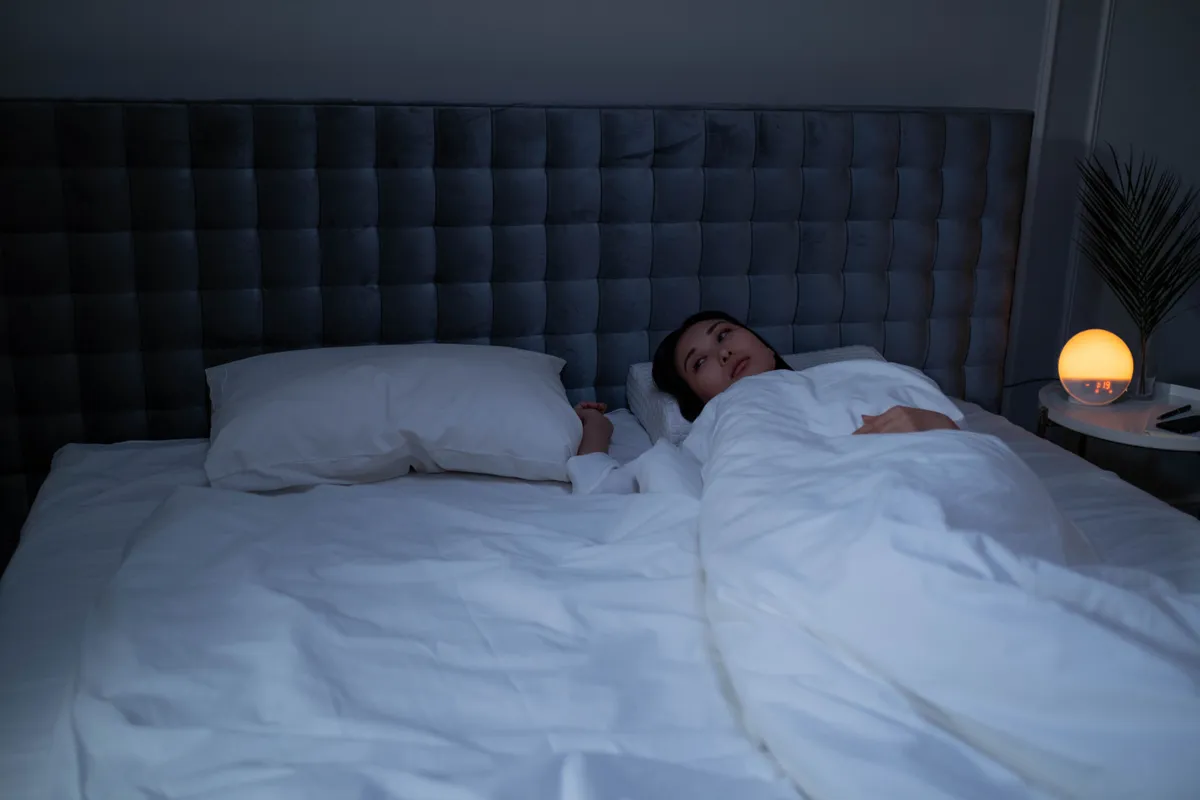
Headaches often worsen in perimenopause, and the reason is usually misdescribed. It isn't low estrogen — it's unstable estrogen. That's why the transition is the rough part and why migraine without aura frequently improves once periods stop. Migraine with aura behaves differently and changes what's safe to take.
I got a run of headaches in my mid-forties that didn't match anything I'd had before. Not the once-a-month kind tied to a period I could predict, but a scattered, unreliable version that turned up without a pattern I could name. I assumed it was stress, then screens, then not enough water, in that order.
What actually explained it was one word I'd been reading past for months. Everything about perimenopause talks about fluctuating hormones — and for headaches, the fluctuation isn't background detail. It's the mechanism. Once that clicked, a lot of things that hadn't made sense lined up, including some good news about what happens later.
Two things before we start. A headache that is sudden and explosive, the worst you've ever had, or comes with slurred speech, vision change, weakness, or a stiff neck and fever is not a perimenopause question — that's an emergency room question. And a headache that is new for you, or clearly different in kind from the ones you used to get, needs assessing at any age, not just over 50. The full list is in the red flags section.
Do headaches really get worse in perimenopause?
Yes, measurably — though the size of the effect is more modest than the internet suggests, and that's worth knowing before you brace for the worst. The largest dataset I could find looked at over three and a half thousand midlife women who already had migraine, and asked how often their headaches came.
Read that as a real but partial shift: most women with migraine did not move into the high-frequency group. What changed is the odds, not the destiny. If your headaches have got worse, the research backs you up; if they haven't, you aren't waiting for something inevitable.
The more interesting number in that study is the one from its stricter analysis. When the researchers also accounted for depression, body mass index, preventive medication and medication overuse, the perimenopause effect held — but the postmenopause effect stopped being statistically significant.
That's a clue rather than a conclusion, and the authors said as much: it suggests different mechanisms are at work at the two stages. Practically, it means some of what gets filed under “menopause headaches” is standing in for other things — and several of those other things, from painkiller use to sleep to a pair of reading glasses, have sections of their own further down.
The order I'd work through this page. First rule out the emergency patterns. Second, count your medication days, because that one is common, reversible, and makes everything else harder to judge. Third, settle the aura question. Fourth, check the boring reversible causes. Only then is the hormonal explanation the most useful one left.
Why is it the swings and not the drop?
Because it isn't the level of estrogen that provokes a migraine brain — it's the movement. A drop is one kind of movement, which is why period-linked migraine has always been a thing. What perimenopause adds is movement without a schedule. A 2026 review of the field in the journal Headache puts the mechanism in one line.
The review says that “unstable estradiol and progesterone levels during perimenopause can worsen migraine frequency and predictability,” and that estrogen fluctuations underlie the fact that migraine is roughly three times more common in women than in men.
Predictability is the word I'd underline. Plenty of women in their thirties had headaches reliably tied to their cycle — annoying, but forecastable, and therefore manageable. Perimenopause doesn't simply add headaches; it removes the pattern. Cycles shorten, lengthen, skip, and the hormonal dips that used to arrive on schedule now arrive whenever.
Why this is genuinely useful to know. If instability is the trigger, then the goal of treatment isn't to push estrogen up — it's to stop it lurching. That's a different aim, and it's why continuous hormone regimens tend to suit migraine better than cyclical ones, a point the same review makes. More on that in the hormone therapy section.
It also explains something that sounds contradictory until you see the mechanism: some women's headaches get worse when they start hormone therapy, and better once the dose settles. A change in either direction is still a change.
Do you have migraine with aura, and why does it matter so much?
This question shapes more of your treatment than anything else on this page, and most women reading it have never been asked it directly. Aura means fully reversible neurological symptoms — classically visual — that arrive before or alongside the headache. Whether you get it changes both your outlook and your safest options.
One hard rule before you use any of this. The formal definition requires at least two attacks. If this is the first time you have had symptoms like these, it cannot be called aura yet — and first-ever neurological symptoms need assessing urgently to rule out a transient ischaemic attack or stroke, not filing under migraine.
That isn't me being over-cautious: the current criteria were adopted specifically because they “performed better in distinguishing migraine with aura from transient ischaemic attacks.” Everything below is for recognising a pattern you have had before.
The formal definition is a checklist rather than a chain. Aura symptoms come in six kinds — visual, sensory, speech or language, motor, brainstem and retinal — and a diagnosis needs three or more of six characteristics, not all of them. Those six include spreading gradually over five minutes or more, each symptom lasting five to sixty minutes, and being followed by headache within an hour.
Two consequences of it being three-of-six rather than all-of-six. First: aura does not have to be followed by a headache at all. ICHD-3 has a named category for typical aura without headache, and in your forties and fifties that's a common way for it to show up. Visual symptoms with nothing hurting afterwards still count — take them to a doctor rather than dismissing them because there was no pain.
Second: true weakness is not on this page. Motor symptoms are a recognised aura type, but weakness in an arm or leg is also on the emergency list, and the emergency list wins. Don't sort your own limb weakness into the migraine box.
In plain terms, the common visual version — and visual aura occurs in over 90% of people who get aura: zigzag lines, a blind spot that creeps outward, shimmering or flickering in part of your vision. Or numbness and tingling spreading up an arm, building over minutes, then fading. Not a split-second flash, and not something that lasts all day.
The stroke risk attached to aura is real, and it is worth your doctor knowing about. It's also real enough to change treatment choices without being a reason to panic — and I'm not going to put a number on it, because the review I'm citing doesn't, and your own number depends on things like blood pressure and whether you smoke. That's a conversation for your doctor, and it's a good reason to have it.
If you've never been sure whether what you get counts as aura, that's the thing to take to the appointment. Describe what you see, how long it takes to build, and whether it has happened more than once. It's a question with a real answer.
Will it get better after menopause?
For many women with migraine without aura, yes — and this is the part that rarely makes it into articles about midlife headaches, which tend to stop at the bad news. The 2026 review states plainly that migraine without aura often improves after menopause. Aura is the exception that persists.
That fits the mechanism. If the problem is hormonal instability rather than hormonal level, then the end of the transition — when the swinging stops and settles low — should be a calmer place for a migraine brain. And for a lot of women it turns out to be.
I'd hold that loosely rather than as a promise. “Often improves” is not “always improves,” the study above still found 12.0% of postmenopausal women in the high-frequency group, and the timeline isn't something anyone can quote you. But if you're in the thick of it at 48 and assuming this is now permanent, the evidence doesn't support that assumption.
How much of this is actually the sleep?
Enough that it belongs near the front rather than as an afterthought. The 2026 review lists sleep disturbance among the midlife conditions that complicate migraine management, alongside hot flashes, mood disorders and metabolic disease. But there's a sharper version of the sleep question than “try to rest more.”
It's this: do you wake up with the headache already there? Because that specific pattern has its own diagnosis, and it isn't a hormonal one.
The honest caveat comes from the same source, and it stops this being a party trick. ICHD-3 notes that sleep apnoea headache “seems to be less frequent and of longer duration than previously assumed,” and that although morning headache is significantly more common in people with sleep apnoea than in the general population, “headache present upon awakening is a non-specific symptom.”
So waking with a headache doesn't mean you have apnoea. It means it's a reasonable thing to raise — particularly if you snore, wake gasping, or someone has noticed you stop breathing, and particularly because apnoea gets more common after menopause. Our guide to menopause and sleep apnea covers who should be tested.
And apnoea isn't the only thing that does mornings. A headache that is worse when you lie down, worse on coughing, bending or straining, worse in the morning with vomiting, or getting steadily worse across weeks is a different pattern altogether, and it belongs in the red flags section rather than in a sleep study queue. Don't let this section route every morning headache to apnoea.
There's a second, less dramatic sleep connection worth naming. Broken sleep is a well-recognised migraine trigger in its own right, which puts perimenopausal women in an unhelpful loop: hot flashes fragment the night, the fragmented night lowers the threshold for a headache, and the headache makes the next night worse. If night sweats are what's waking you, keeping the room cool is working on the headache too.
Could your painkillers be causing the headaches?
Possibly, and this is the one I'd check before anything hormonal, because it's both common and reversible. Taking acute headache medication too many days a month can turn an episodic headache problem into a near-daily one — a recognised condition with formal criteria, not a fringe theory.
Two different day-counts get muddled here constantly, including by me on a first pass, so let me separate them. Fifteen or more days a month is how often the headache comes. The threshold for how often you take medication is a separate number — and it depends on what you're taking.
That combination-painkiller detail matters more than any other line in this section, because the combination products are among the most-reached-for things in an American medicine cabinet. If you're taking one of those on twelve days a month, you are over the threshold — even though twelve sounds modest and nobody ever told you there was a line.
And there's a category for the pattern that catches people who think they're safe. ICHD-3 recognises medication-overuse headache “attributed to multiple drug classes not individually overused” — meaning you can qualify by taking several different things, none of which alone crosses its own line. So if you take something on most days, bring the count even when no single drug looks excessive.
Notice the trap in the structure. The condition requires you to already have a headache disorder, and the treatment for that disorder is the thing that causes it. Nobody arrives here by being careless — you arrive by having more headaches and reasonably taking something for them.
Which is exactly why perimenopause is a high-risk window for it. Headaches become more frequent and less predictable, so you reach for something more often, and the counting is easy to lose when there's no cycle to count against.
Count the days, not the doses. Write down every day you take anything for a headache — prescription, or the box in the kitchen drawer — for one month. It's a number your doctor will want and that almost nobody arrives with. And don't stop a medication abruptly on your own because of this section: withdrawal is genuinely unpleasant, and this is reduced with a plan rather than by quitting cold.
Does hormone therapy help headaches or make them worse?
Both, depending on the form and the schedule — and the details here are unusually decisive, so this is a poor topic for a general answer. The 2026 review is direct: menopausal hormone therapy “has variable effects,” and which effect you get depends heavily on what you take and how.
Three distinctions from that review do most of the work:
- Route matters. The review states that “oral estrogen, particularly at higher doses, may worsen migraine and elevate vascular risk, especially in women with aura,” while “low-dose transdermal estrogen — recommended by the North American Menopause Society — appears safer and better tolerated.” Patch and gel are not interchangeable with tablets here.
- Schedule matters. “Continuous progestogen regimens may reduce withdrawal-related attacks compared with cyclic regimens.” That follows directly from the instability mechanism — a cyclical regimen builds in a withdrawal.
- Aura matters. It's the factor that pushes the balance toward the lower-risk route, because of the vascular risk that travels with it.
What I'd caution against is the conclusion a lot of people jump to, in either direction. “Migraine with aura means you can never take estrogen” overstates it; so does “hormones will fix your headaches.” The evidence supports something narrower: the form and schedule are a real decision with real consequences, and it's one to make with a prescriber who knows you have migraine and knows whether you get aura.
If you also came here because of the nights, our honest look at HRT covers the sleep side of the same decision, and progesterone and sleep covers the other half of the prescription.
One more from the same review, in case a vascular problem rules out the usual drugs: newer migraine treatments — the CGRP monoclonal antibodies, gepants and ditans — are described as effective, non-vasoconstrictive alternatives, “especially for women with cardiovascular contraindications.” Worth knowing those exist before accepting that nothing can be done.
What should you actually work out before the appointment?
Five questions decide most of what happens next, and none of them is about how bad the pain feels. That's the part I got wrong for months — I kept trying to describe the severity, when the useful information was elsewhere. Each of these has a different consequence.
1. Is this an emergency pattern?
Sudden and explosive, the worst you've ever had, with neurological symptoms, with fever and a stiff neck, after a head injury, or worse on lying down, coughing and straining. This one isn't weighed against the others — it goes to the red flags section and then to a doctor today.
2. Is this headache new for you, or different in kind?
Not worse than usual — different. A new headache where you never had them, or one that behaves unlike your familiar ones. This question has no age gate. A new headache at 44 deserves the same look as one at 54, and having perimenopause to blame is exactly what makes it easy to skip.
3. Do you get aura, and has it happened more than once?
Visual zigzags, a spreading blind spot, shimmering, numbness creeping up an arm — building over five minutes or more. Both halves of the question matter: aura needs at least two attacks by definition, and a first-ever episode is an urgent assessment rather than a label.
4. How many days a month do you take something?
Not the dose — the number of days, counting everything, including whatever's loose in your bag. Ten or more days of a triptan, opioid, ergot or combination painkiller; fifteen or more of a plain one; or a bit of several things on most days. Any of those counts.
5. Is the headache already there when you wake?
Present on waking, usually on both sides. Combined with snoring or witnessed pauses in breathing, that's the pattern that should get you asked about a sleep study rather than handed a hormone prescription — as long as the pressure pattern in question 1 has been excluded first.
What each answer leads to
- Emergency pattern. Urgent assessment today. Nothing else on this page applies until that's excluded.
- New, or different in kind, at any age. Get it assessed before treating it as hormonal, not after a month of trying things. It's question two for a reason: it comes before everything except the emergency patterns, because it's the one a ready explanation hides.
- Familiar pattern, not new. Worth saying out loud too — it's what makes the boring reversible causes and the hormonal picture the useful places to look.
- Aura, and it has happened more than once. Say it out loud at the appointment. It steers the hormone decision toward low-dose transdermal and continuous rather than cyclical. And if it has never actually been looked at by a doctor, say that too — it doesn't make it urgent, but it does make it the first thing on the list.
- Aura-like symptoms for the first time. That's the emergency route, not this one. Same day.
- Aura, no — as far as you know. Say that too, and describe what you do get, because the without-aura group is the one most likely to improve after menopause. But don't rule yourself out on the strength of this page: visual symptoms with no headache afterwards still count as aura, and that's the version most easily missed.
- Over the medication threshold. Raise medication-overuse headache by name. Reducing frequency often helps more than any hormonal change, and it needs a plan rather than abrupt stopping.
- Under the threshold, or not sure. Bring the count anyway. It's what rules this out, and without it the appointment goes round in circles.
- Headache present on waking. Ask specifically about sleep apnoea and whether you should be tested. Don't accept a hormonal explanation for a morning headache without that question being asked.
- Not present on waking. Worth saying, because it makes apnoea a less likely explanation and moves attention to the triggers that are in play during the day.
- None of the above. Then it's the familiar pattern, and the ordinary reversible causes in the next section are where I'd look before the hormonal explanation. If your headaches track your worst nights, work on sleep and hot flashes for a month — and if a month of better nights changed nothing, go back rather than giving it another season.
The one thing to bring. A month of diary: which days you had a headache, which days you took something, how you slept, and where you were in your cycle if you still have one. Four columns. It answers most of the questions above on its own, and our two-week sleep tracker already covers the sleep column.
When is a headache an emergency?
Most headaches in midlife are not dangerous, and the point of this list isn't to make you anxious about the ordinary ones. It's that a small number of patterns need seeing today rather than at your next appointment, and they're specific enough to recognise.
Seek immediate medical help if any of these describe your headache:
- It's the first headache you have ever had in your life and it interferes with your daily activities.
- It came on suddenly and is explosive or violent — described as needing medical attention right away, because it may be due to a ruptured blood vessel in the brain.
- It's “the worst ever,” even if you regularly get headaches.
- It comes with slurred speech, a change in vision, problems moving your arms or legs, loss of balance, confusion, or memory loss. Including the first time you get symptoms that might be aura — first-ever belongs here, not in the migraine section.
- It comes with fever, stiff neck, nausea and vomiting.
- It's getting worse over 24 hours, or it followed a head injury.
- It's severe and just in one eye, with redness in that eye.
- You have only just started getting headaches — especially if you're over 50. The source treats new-onset headache as a warning sign in its own right, with being over 50 making it more so. So don't read an age cut-off into it: a headache that is new for you, or clearly different in kind from your usual ones, needs looking at whatever your age.
- Headaches with vision problems, pain while chewing, or weight loss, or a new headache if you have a history of cancer or a weakened immune system.
Three more patterns worth adding for this audience specifically, because they're the ones a hormonal explanation covers up:
- Worse when you lie down, cough, bend or strain, or worse in the morning with vomiting, or worsening steadily across weeks rather than hours. That's a pressure pattern, and it's the reason not every morning headache is sleep apnoea.
- A severe headache when your blood pressure is very high, or a new headache while you're taking an anticoagulant.
- A headache with a first-ever seizure.
The trap specific to this age group. Being in perimenopause doesn't make you immune to any of the above, and having a ready explanation for your headaches makes it easier to dismiss one that doesn't fit. If a headache is different in kind from your usual ones — not just worse — that difference is the thing to act on, and it's the reason it's question 2 of the five above.
What about the boring causes worth ruling out first?
These are the ones nobody writes a midlife-hormones article about, which is exactly why they go unchecked for months. None of them is exotic, all of them are common in your forties and fifties, and most can be checked or ruled out within a single appointment.
- Caffeine — including the withdrawal. The weekend headache that arrives because you skipped your usual coffees has formal criteria: consumption over 200 mg a day for more than two weeks, interrupted or delayed, with the headache developing within 24 hours of the last intake and relieved within an hour by 100 mg of caffeine, or gone within seven days of stopping altogether. Two hundred milligrams is roughly two cups.
- Your teeth and jaw. Grinding and clenching are strongly linked to broken sleep, which is the whole subject of this site. If you wake with a sore jaw as well as a headache, that's a dentist question — see teeth grinding at night.
- Your eyes. Presbyopia starts around 45, and headache and eye strain are a common way it announces itself. If you've been squinting at your phone for a year, get your eyes tested before you get your hormones blamed.
- Sinuses, dehydration and your neck. Unglamorous, genuinely common, and all three are easy to check.
- Your blood pressure. It tends to rise through the menopause transition, most of us haven't had it measured in years, and it's a two-minute test. Ask for it at the same appointment.
And check your other prescriptions, not just the hormones. Several medications commonly taken in midlife list headache among their effects — nitrates, proton pump inhibitors, bisphosphonates and SSRIs among them.
One deserves naming on its own: if you are still on a combined hormonal contraceptive and you get migraine with aura, that specific combination is a recognised concern and a reason to talk to your prescriber rather than waiting. Smoking compounds the same vascular risk. None of this is a reason to stop anything on your own.
What actually helps perimenopausal headaches?
Start with the reversible causes rather than the hormonal explanation, because that order finds more answers faster. Nothing below replaces a diagnosis, and migraine that's frequent enough to shape your month deserves proper preventive treatment rather than a list of habits.
- Count your medication days first. If you're over the threshold, the rest usually won't work as well until that's addressed — ICHD-3 says the majority improve after stopping the overused medication, though it “usually, but not invariably” resolves. It's also the cheapest thing on this list to find out.
- Protect the nights you can control. If night sweats are fragmenting your sleep, that's a headache intervention. Room temperature, bedding and sleepwear, in that order.
- Ask about apnoea if you wake with it. A headache that resolves with treatment of something else is the kind worth chasing hardest.
- Get your blood pressure measured, and your eyes tested. Two cheap checks that between them explain a fair number of new midlife headaches, and neither needs a specialist.
- Get the aura question settled. It's a five-minute conversation that changes what's appropriate for years afterwards.
- Ask about preventive treatment, not just rescue. The Martin study's authors concluded that the increased risk in the transition “suggests a need for optimized preventive treatment of migraine during this time of women's life.” Preventives exist and the established ones include beta-blockers, topiramate and certain antidepressants.
- Keep the regimen steady if you're on hormones. Continuous rather than cyclical, and don't chop and change on your own — instability is the trigger you're trying to avoid.
- Treat the obvious co-travellers. Depression, weight and medication overuse all sat in the adjusted model of that study for a reason, and all are worth their own attention.

One last thing: it isn't on the official symptom list
Headaches don't appear among the menopause symptoms on the US government's patient-facing menopause page, which covers hot flashes, sleep problems, mood changes, memory, urinary and vaginal symptoms. That's worth knowing, because it explains why the topic may not come up at your appointment unless you raise it.
But I want to be careful with that observation, because the absence is in the leaflet, not in the science. Migraine in the menopausal transition has a large research literature, a 2026 review in a specialist journal, formal diagnostic criteria for the conditions that imitate it, and named treatment considerations. The knowledge exists. It just hasn't been handed to patients in the same place the hot flashes were.
Where to go from here
If waking with the headache is your pattern, go straight to menopause and sleep apnea. If it's the night sweats breaking your sleep, start with how to stay cool at night. If low mood is travelling with the headaches, menopause depression covers that overlap, and menopause fatigue covers the exhaustion side.
For how all of this fits into the bigger picture of midlife sleep, start at the complete perimenopause and menopause sleep guide.
Key takeaways
- The mechanism is hormonal instability, not low estrogen. A 2026 review in Headache states that unstable estradiol and progesterone in perimenopause can worsen migraine frequency and predictability.
- The increase is real but partial. Among 3,664 women with migraine, 8.0% were in the high-frequency group before menopause versus 12.2% in perimenopause — so most women did not move into that group.
- In the fully adjusted analysis, which accounted for depression, BMI, preventive medication and medication overuse, only the perimenopause effect stayed significant. Some of what looks like menopause headache is something else.
- Migraine without aura often improves after menopause. Migraine with aura tends to persist and independently raises the risk of ischaemic stroke — which is why the aura question shapes treatment choices.
- Aura is defined as needing at least two attacks and three of six characteristics — so a first-ever episode of neurological symptoms is an urgent assessment, not a label, and aura without any following headache still counts.
- Check the boring causes before the hormonal one: caffeine and its withdrawal, teeth grinding, uncorrected vision, sinuses, dehydration, blood pressure, and your other prescriptions — including a combined contraceptive if you have aura.
- Two separate day-counts: the headache on 15 or more days a month, and the medication on “10 or more or 15 or more days/month, depending on the medication” for over three months. The lower threshold covers triptans, opioids, ergots and combination painkillers — and you can also qualify by taking several things without crossing any single line. It's reduced with a plan, never by stopping abruptly on your own.
- ICHD-3 says more than half of people with headache on 15 or more days a month have medication-overuse headache, and the majority improve after stopping the overused drug. Perimenopause is a high-risk window because the headaches get less predictable and the counting gets lost.
- A headache present on waking, usually on both sides, may be the sleep apnoea pattern — but waking headache is a non-specific symptom, and a headache worse on lying down, coughing or straining is a pressure pattern that needs assessing instead.
- Form and schedule of hormone therapy matter more than whether you take it: oral estrogen at higher doses may worsen migraine and vascular risk especially with aura, while low-dose transdermal appears safer, and continuous beats cyclical.
- CGRP monoclonal antibodies, gepants and ditans are non-vasoconstrictive options for women with cardiovascular contraindications.
- A sudden explosive headache, the worst ever, your first ever if it stops your day, one with neurological symptoms or fever and stiff neck, or a headache that is new for you at any age, needs seeing today — having perimenopause to blame makes it easier to dismiss one that doesn't fit.
Frequently asked questions
Do headaches get worse in perimenopause?
Often, but less dramatically than you might expect. Among 3,664 women with migraine, 8.0% had high-frequency headache before menopause versus 12.2% in perimenopause. So the odds rise, but most women don't move into the frequent-headache group. If yours have worsened, the research supports you.
Why does perimenopause cause headaches?
Because estrogen becomes unstable, not because it becomes low. A 2026 review in Headache found that unstable estradiol and progesterone in perimenopause can worsen both migraine frequency and predictability. A drop is one kind of movement; what perimenopause adds is movement without a schedule.
Will my headaches improve after menopause?
For many women, yes. The same review states that migraine without aura often improves after menopause, which fits the instability mechanism — once the swinging stops, the trigger goes. Migraine with aura is the exception and tends to persist, so the aura question matters for your outlook.
How do I know if what I get counts as aura?
Aura needs at least two attacks and three of six characteristics, so a first-ever episode of visual or sensory symptoms is an urgent assessment rather than a label. It also does not have to be followed by a headache — ICHD-3 has a category for typical aura without headache, and that version is easily dismissed.
Why does migraine with aura matter for hormone therapy?
Because migraine with aura independently increases the risk of ischaemic stroke, which makes the form of estrogen a real decision. Oral estrogen at higher doses may worsen migraine and vascular risk, especially with aura, while low-dose transdermal estrogen appears safer and better tolerated.
Can painkillers make my headaches worse?
Yes, and it's easy to fall into. Medication-overuse headache needs headache on 15 or more days a month plus medication on "10 or more or 15 or more days/month, depending on the medication" for over three months. The lower threshold covers triptans, opioids, ergots and combination painkillers. Never stop abruptly without a plan.
Why do I wake up with a headache?
One recognised cause is sleep apnoea: morning headache, usually on both sides, which clears when the apnoea is treated. But ICHD-3 notes that headache on waking is a non-specific symptom, so it's a reason to ask about a sleep study, not a diagnosis. And a headache worse lying down, coughing or straining is a different pattern that needs assessing rather than a sleep study.
When should I worry about a headache?
Get seen the same day for a sudden explosive headache, the worst you've ever had, one with slurred speech, vision change, weakness, confusion or loss of balance, one with fever and a stiff neck, one after a head injury, or one that is worse lying down or on coughing. A headache that is new for you needs assessing at any age, not only over 50.
Sources cited
- Martin VT, Pavlovic J, Fanning KM, Buse DC, Reed ML, Lipton RB. Perimenopause and menopause are associated with high frequency headache in women with migraine: results of the American Migraine Prevalence and Prevention Study. Headache. 2016;56(2):292–305. doi:10.1111/head.12763. pubmed.ncbi.nlm.nih.gov
- Korn TF, Bernstein C. Migraine across the menopausal transition and beyond: a narrative review. Headache. 2026;66(6):1390–1404. doi:10.1111/head.70071. pubmed.ncbi.nlm.nih.gov
- International Headache Society. 8.2 Medication-overuse headache. International Classification of Headache Disorders, 3rd edition. ichd-3.org
- International Headache Society. 8.2.2 Triptan-overuse headache. ICHD-3. ichd-3.org
- International Headache Society. 8.3.1 Caffeine-withdrawal headache. ICHD-3. ichd-3.org
- International Headache Society. 10.1.4 Sleep apnoea headache. ICHD-3. ichd-3.org
- International Headache Society. 1.2 Migraine with aura. ICHD-3. ichd-3.org
- MedlinePlus, US National Library of Medicine. Headache — when to seek emergency care. medlineplus.gov
- Office on Women's Health, US Department of Health and Human Services. Menopause symptoms and relief. womenshealth.gov
Ellen Hayes
Health & Wellness Writer and Researcher
Hi — I'm Ellen. I spent a year describing my headaches by how much they hurt, which turns out to be the least useful thing about them. The questions that actually moved anything were the boring ones: how many days, on waking or not, aura or not.
I'm not a doctor. I'm not an expert — and I'm never going to talk down to you like one. I'm a woman in the middle of perimenopause who got tired of vague answers, started reading the actual research, and writes it down here in plain English, the way I'd explain it to a friend over coffee. More about Ellen →
How this article was checked
Every figure and quotation here was read at its primary source: two studies in Headache, five sets of diagnostic criteria from the International Classification of Headache Disorders, and the US government's MedlinePlus and womenshealth.gov pages. All nine are listed and linked in full above.
Nothing was taken from a summary, a secondary article or another blog — several searches on the hormone-therapy question returned exactly that, and were discarded.
It has not been reviewed by a clinician. Ellen Hayes is a researcher and writer, not a doctor, and nothing here is a diagnosis or a substitute for being seen by one.