Morning Light for Menopause Sleep: Why 10 Minutes Works
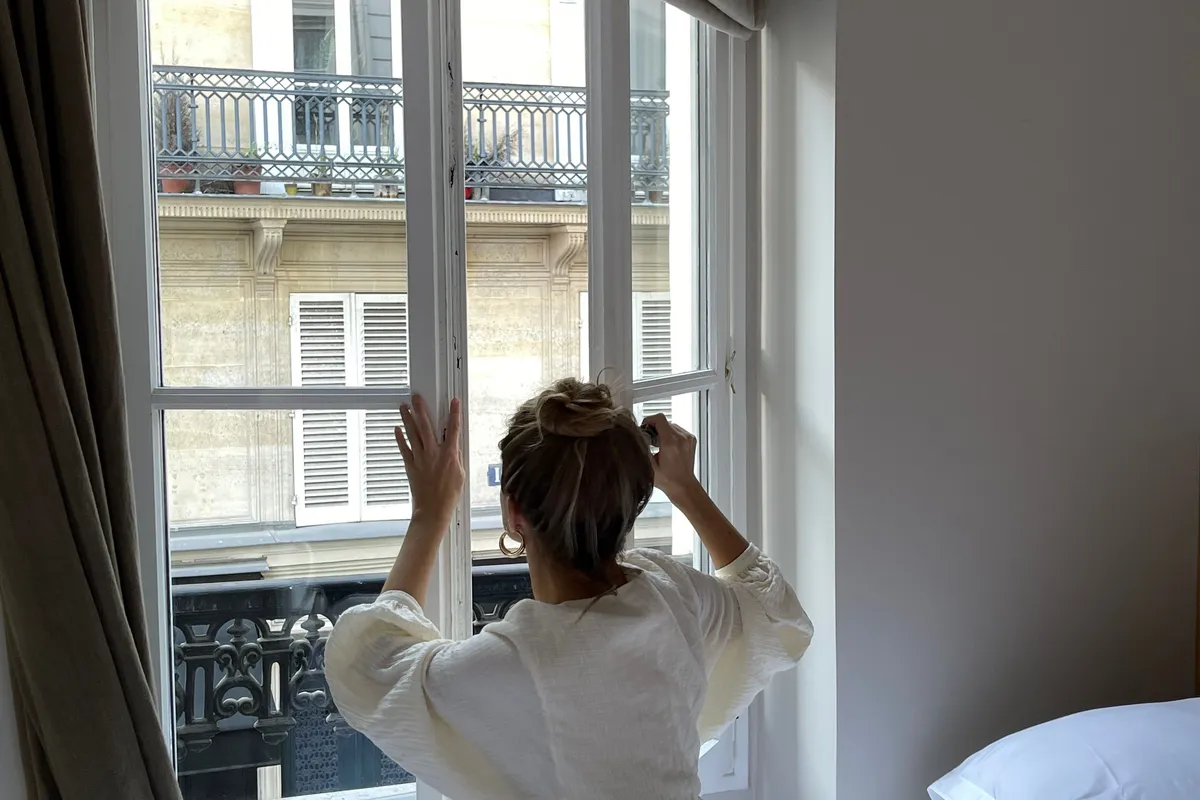
Morning light is the strongest signal your body clock has. Getting 10 to 30 minutes of outdoor light within an hour of waking anchors your rhythm and starts the countdown to melatonin roughly 14 to 16 hours later. It costs nothing, and in midlife — when rhythms weaken — it matters more than it did at 30.
We spend so much energy on the night. Cooler room, darker curtains, no screens, the right supplement, the right pillow. It took me an unreasonably long time to notice that every fix I'd tried lived between 9 p.m. and 3 a.m. — and that the research kept pointing somewhere else entirely: at what my eyes see in the first hour after waking.
This is the least glamorous intervention I've written about. There's nothing to buy, nothing to swallow, and no before-and-after photo. It's also, plausibly, the one with the best ratio of evidence to effort — which is why it deserves its own article rather than a bullet point buried in someone's list of twenty sleep hygiene tips.
How does morning light improve sleep at night?
By setting the clock that decides when you get sleepy. Light entering your eyes hits specialized receptors that report directly to the brain's master clock in the hypothalamus — a pathway separate from vision. That morning signal locks your rhythm to the actual day, lifts the natural cortisol pulse that wakes you properly, and starts the timer on tonight's melatonin.
The timer is the part worth remembering. Melatonin release begins roughly 14 to 16 hours after your clock registers morning. Light at 7 a.m. means sleepiness arriving at a reasonable hour; a first real dose of light at 11 a.m. pushes that whole cascade later. Nothing about your evening routine can fully compensate for a body clock that was never told when the day started.
It's the exact mirror of the problem in our piece on blue light and screens at night. Same system, opposite direction: light in the morning is medicine, light at midnight is interference. Most of us have heard only half of that.
Why does this matter more in menopause?
Because the signal gets weaker exactly when your nights get harder. Circadian rhythms flatten and drift earlier with age, and the melatonin your body produces declines. On top of that, hormone-driven waking fragments the night, and broken sleep tends to shrink the daytime: less energy out of the house, more time under indoor lighting.
That creates a loop worth naming. Poor night, low-light day, weaker clock signal, poorer night. Morning light is one of the few places you can break in from the outside — it doesn't need your sleep to improve first. It's also the piece that makes everything else work better, from CBT-I to a consistent wake time.
I'll be straight about the evidence here, because it matters: the strong circadian research is in adults generally, not in menopausal women specifically. Trials of light therapy in this exact group are only now being run. What we have is a well-established mechanism plus large studies linking daytime light to better sleep — which is reason enough to try something free, but not the same as a randomized trial in women your age.
How much light do you actually need?
Far more than a lit room provides, and far less than a sunny beach. The unit is lux, and the gap between indoors and outdoors is enormous: a bright living room sits at a few hundred lux, while an overcast morning outside delivers several thousand. That's why "I open the blinds" isn't the same intervention as "I stand outside."
| Where you are | Roughly how bright | Useful for the clock? |
|---|---|---|
| Living room with lamps on | 100–300 lux | Barely registers |
| Sitting beside a bright window | 500–2,000 lux | Helps, if you stay a while |
| Outdoors, overcast morning | 1,000–10,000 lux | Yes — this is the target |
| Outdoors, clear sky | 10,000–100,000 lux | Yes, and quickly |
| Light therapy box | 10,000 lux at the stated distance | Yes — the winter substitute |
In practice: 10 to 30 minutes outdoors on an ordinary morning, longer if it's gloomy, shorter if the sun is out. You don't stare at the sun — never do that — you simply need to be out under the sky with your eyes open. Sunglasses reduce the effect, so leave them off for the first stretch unless you have a medical reason to wear them.
When should you get it?
Within about an hour of waking, and at a similar time each day. The clock responds most strongly to light soon after your natural wake time, and consistency is what turns a nice morning into an actual rhythm. A wildly different wake time on weekends undoes much of the anchoring you built during the week.
What "counts" is more flexible than people assume. It doesn't need to be a walk or exercise. Coffee on the doorstep, the first stretch of the commute on foot, waiting for the kettle by an open door, walking the dog, standing outside while the car defrosts — all of it reaches your eyes. The habit is what matters, not the aesthetics of it.
Does a light therapy lamp work?
Yes, and it's the sensible answer for dark winters or mornings that start before sunrise. Light boxes are the standard tool in circadian and seasonal treatment: typically 10,000 lux, used for 20 to 30 minutes shortly after waking, at the maker's stated distance, with UV filtered out. You work or eat in front of it rather than staring at it.
Two practical points that decide whether it helps. Distance matters enormously — a box rated 10,000 lux delivers that only at a set distance, so putting it across the room makes it decorative. And timing is the whole treatment: used in the morning it advances your clock, but used late in the evening it can push your sleep even later, which is the opposite of what you want.
Talk to a doctor before using a light box if you have bipolar disorder (bright light can trigger mania), have an eye condition such as macular degeneration or retinal disease, are taking medication that increases light sensitivity, or have a history of seasonal mood disorder being treated another way. And never look directly at the sun to get your morning light.
What should you realistically expect?
A gradual shift, not a transformed night. Circadian changes take days to weeks to settle, so judge this over a fortnight rather than a morning. The most common first sign isn't better sleep at all — it's waking more easily, and feeling sleepy at a more sensible hour in the evening.
What it will not do is stop a hot flash. If night sweats or palpitations are doing the waking, morning light won't touch the cause, and you'd be better served by cooling strategies or a conversation about hormone therapy. Think of light as the thing that fixes when your body wants to sleep, not what interrupts it.
The unglamorous truth is that the most evidence-backed thing on my whole list is free, takes ten minutes, and happens before I've even properly woken up. It won't sell anyone a subscription — which may be exactly why nobody mentioned it to me.
Where to go from here
Pair this with its evening counterpart: light and screens at night is the same mechanism working against you after dark. Then set it inside the complete perimenopause and menopause sleep guide.
If mornings are rough because the nights are broken, look at the tired-but-wired pattern; and if you'd like the structured version of fixing your sleep timing, CBT-I is where light exposure becomes a proper plan. Getting your light outdoors while walking also doubles as exercise for better sleep.
Key takeaways
- Morning light reaches receptors that set the brain's master clock, anchoring your rhythm and starting the countdown to melatonin 14 to 16 hours later.
- Aim for 10 to 30 minutes outdoors within an hour of waking, at a consistent time — outdoors even on a grey day beats any indoor lighting.
- A lit room is 100–300 lux; an overcast morning outside is 1,000–10,000. Glass and distance from the window cut the dose substantially.
- Circadian rhythms weaken and shift earlier with age and melatonin declines, so the signal matters more in midlife than it did at 30.
- A 10,000-lux light box is the winter substitute — used in the morning at the stated distance; used late at night it pushes sleep later instead.
- Expect an easier wake-up and earlier evening sleepiness within a couple of weeks; it will not stop hot flashes or night sweats.
Frequently asked questions
How does morning light improve sleep at night?
Light in the morning reaches special receptors in the eye that set the brain's master clock. That signal anchors your body's timing, sharpens the daily cortisol rhythm, and starts the countdown to melatonin release roughly 14 to 16 hours later, so sleepiness arrives at a sensible hour.
How much morning light do I need?
Aim for 10 to 30 minutes outdoors within an hour of waking. Outdoor light delivers thousands of lux even on an overcast day, while a bright indoor room offers only a few hundred. On dark winter mornings you may need longer outside, or a light therapy box instead.
Does light through a window count?
It helps, but it isn't equivalent. Glass cuts the intensity substantially, and sitting a few feet back from a window reduces it further. If getting outside is difficult, sit as close to the window as you can, for longer, and consider a light box during dark months.
Why does the body clock change in menopause?
Circadian rhythms tend to weaken and shift earlier with age, and melatonin output declines. Add hormone-driven night waking and less daytime light exposure, and the signal separating day from night gets blurry. Morning light is one of the few ways to sharpen that contrast again.
Is a light therapy lamp safe to use?
For most people, yes. Standard boxes give 10,000 lux for 20 to 30 minutes in the morning and filter UV. Talk to a doctor first if you have bipolar disorder, an eye condition such as macular degeneration, or take medication that increases light sensitivity.
Sources cited
- Burns AC, Saxena R, Vetter C, Phillips AJK, Lane JM, Cain SW. Time spent in outdoor light is associated with mood, sleep, and circadian rhythm-related outcomes: a cross-sectional and longitudinal study in over 400,000 UK Biobank participants. J Affect Disord. 2021;295:347–352. pubmed.ncbi.nlm.nih.gov
- Burns AC, et al. Day and night light exposure are associated with psychiatric disorders: an objective light study in >85,000 people. Nature Mental Health. 2023. nature.com
- National Institute of General Medical Sciences (NIH). Circadian rhythms. nigms.nih.gov
- American Academy of Sleep Medicine. Healthy sleep habits and circadian rhythm sleep-wake disorders. aasm.org
- Mayo Clinic. Seasonal affective disorder treatment: choosing a light therapy box. mayoclinic.org
- Sleep Foundation. Light and sleep; light therapy for circadian rhythm disorders. sleepfoundation.org

Ellen Hayes
Health & Wellness Writer and Researcher
Hi — I'm Ellen. I spent two years optimizing my evenings and never once thought about my mornings, which in hindsight is a bit like soundproofing the bedroom while leaving the front door open.
I'm not a doctor. I'm not an expert — and I'm never going to talk down to you like one. I'm a woman in the middle of perimenopause who got tired of vague answers, started reading the actual research, and writes it down here in plain English, the way I'd explain it to a friend over coffee. More about Ellen →