Hydroxyzine for Sleep in Menopause: Uses and Safety

Hydroxyzine for sleep can sound appealing when menopause brings restless nights and an anxious wait for bedtime. Yet a medicine that causes drowsiness is not automatically an established treatment for chronic insomnia. Before considering it, the useful questions are what it is meant to treat and how its risks fit your health.
I compared the US drug label, patient information and the published sleep evidence. This guide separates those sources so you can take a more focused set of questions to a clinician. It does not suggest a dose or recommend switching from a treatment that is already helping.
Hydroxyzine is a sedating prescription antihistamine sometimes used off-label for sleep in the United States. Insomnia evidence is limited and mixed, and it is not an established menopause treatment. Discuss heart-rhythm risks, interactions, next-day drowsiness and alternatives such as CBT-I with a clinician before considering it for persistent sleep problems.
What is hydroxyzine, and is it approved for insomnia?
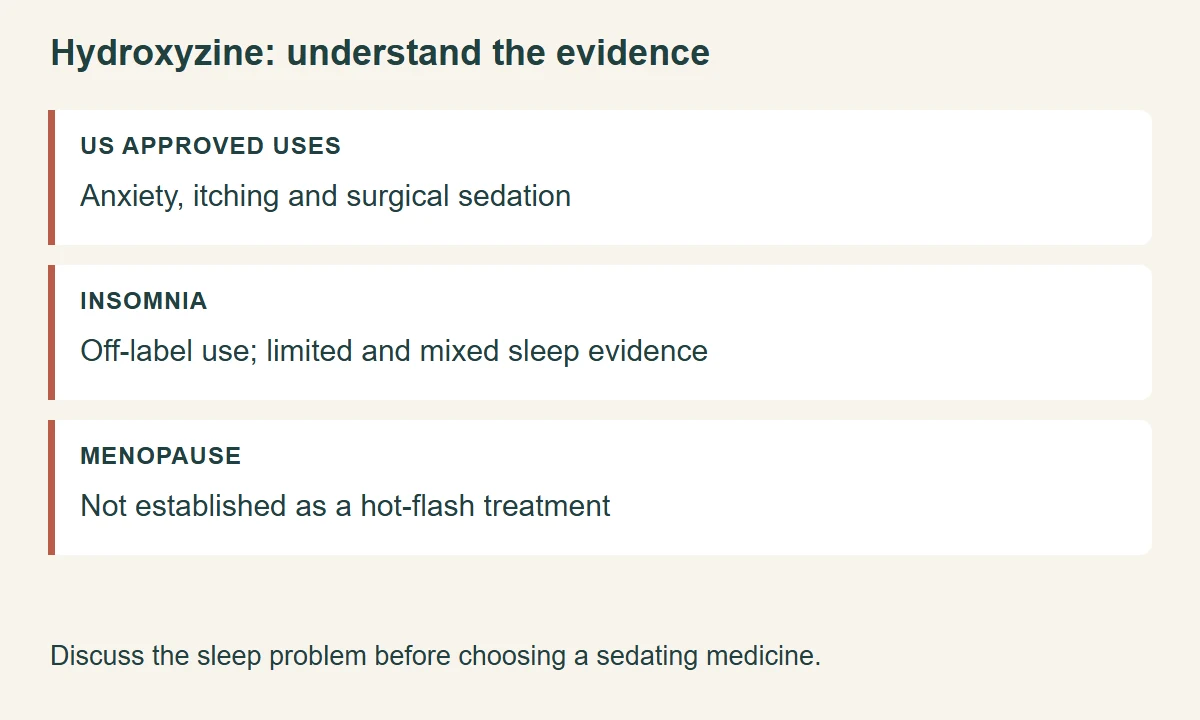
Hydroxyzine is a prescription antihistamine with sedating effects. Its US label includes anxiety, allergy-related itching and sedation around surgery, but not insomnia. Using hydroxyzine for sleep is therefore off-label in the United States. That does not settle whether it is appropriate; it makes the purpose and evidence important discussion points.
The US prescribing information describes approved uses and safety precautions. Approvals can differ between countries. A statement that hydroxyzine is prescribed for sleep somewhere else does not change its US indication or establish that it will address your particular pattern of waking.
Ask the prescriber to finish this sentence: “The main reason I am proposing this medicine is…” Anxiety, itching and persistent insomnia are different starting points. You may have more than one concern, but a clear treatment goal makes it easier to judge whether the medicine is doing what was intended.
For example, write down whether your main difficulty is getting to sleep, remaining asleep or feeling able to function the next day. Put your most important question at the top of the appointment notes. You can bring an incomplete account; the point is to make the conversation easier, not to arrive with a finished medical assessment.
Bring the actual package or a photograph of its label. Hydroxyzine products and prescription directions vary, and a brand name found in an older article may not be the name printed on your current bottle. A pharmacist can confirm the formulation and explain the directions that apply to your prescription.
Our comparison of medicines discussed for menopause insomnia provides background on different treatment targets. Use it to prepare questions, rather than to match yourself to a drug based only on the symptom that feels worst tonight.
What does research show about hydroxyzine for sleep?
A systematic review found a small, mixed evidence base for hydroxyzine in adults with sleep difficulties. It did not establish reliable long-term benefit or a menopause-specific effect. A European insomnia guideline does not recommend antihistamines for insomnia because evidence is insufficient. Sedation alone should not be mistaken for proven insomnia treatment.
The review's authors suggested hydroxyzine might be considered for short-term use in some circumstances, while calling for better research. That conclusion needs to sit alongside the more restrictive European Insomnia Guideline. There is no consistent endorsement here that everyone with insomnia should try an antihistamine.
When looking at a study summary, ask three things: who took part, what improved and how long people were followed. Falling asleep sooner, waking less and functioning better during the day are separate outcomes. Improvement in one does not tell you that the others improved as well.
A missing safety report also differs from a report showing no side effects. The distinction matters when a small evidence base is used to describe a medicine as “safe.” Established label warnings remain relevant even when a sleep study is too small or poorly reported to detect them.
Does hydroxyzine treat menopause symptoms or night sweats?
The sleep evidence discussed here does not establish hydroxyzine as a treatment for menopausal hot flashes or night sweats. If sweating, anxiety and prolonged waking occur together, describe each separately. A sedating medicine may be proposed for one concern without addressing the cause of every symptom that interrupts your nights.
Before an appointment, write down a recent difficult night in ordinary language. Did you wake feeling hot, or notice heat after you were already awake? Were you itching? Were thoughts racing? Were you uncomfortable or needing the bathroom? This description is more useful than deciding in advance that hormones explain everything.
Keep a separate note of symptoms during the day. The person assessing you can decide which deserve investigation and which treatments to discuss. You do not need a perfect diary, a hormone test you ordered yourself or a complete explanation before asking for help.
Our menopause insomnia guide gives the wider context. If heat and sweating are prominent, the articles on night sweats and hormone therapy and sleep cover different conversations to have with a clinician.
Make room for your priorities. Someone who needs to drive early may view morning drowsiness differently from someone whose biggest concern is persistent itching. That is a reason for an individual assessment, rather than a reason to assume the same sedating medicine fits both situations.
Why does hydroxyzine carry a heart-rhythm warning?
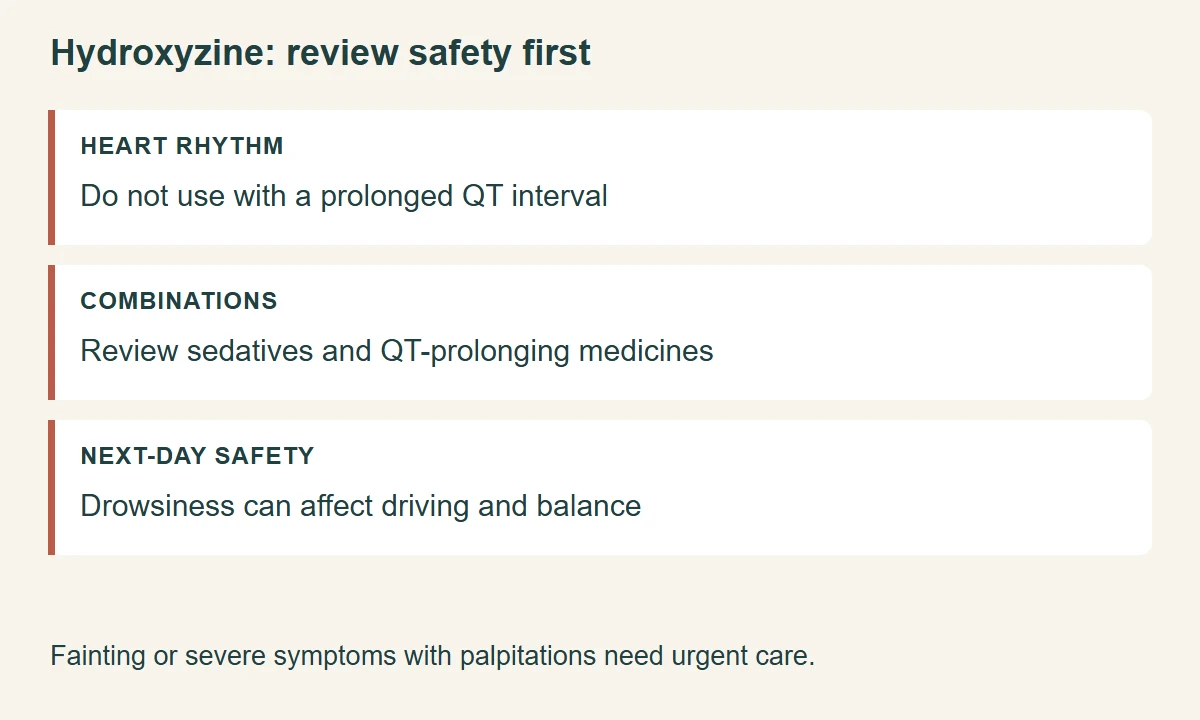
Hydroxyzine can affect the heart's electrical rhythm, and a prolonged QT interval is a contraindication in its US label. Heart disease, electrolyte problems and interacting medicines can increase concern. Tell the prescriber about fainting, rhythm diagnoses and relevant family history so they can assess risk before deciding whether hydroxyzine is suitable.
The European Medicines Agency's safety review explains measures to reduce rhythm-related risk. Those European restrictions should not be turned into a universal dosing plan for a US reader. Your prescriber must use the relevant local label and your medical history.
Tell the clinician if you have previously been advised to avoid a medicine because of an ECG result. If you do not remember the diagnosis, say so and ask how records can be checked. The absence of a familiar medical term in your own notes is not proof that the issue has resolved.
A medicine review should include items prescribed by other clinicians and medicines used only occasionally. Bring an accurate list rather than trying to decide which ones “count.” Ask whether any proposed investigation is needed in your case; an online article cannot determine who needs an ECG or blood tests.
Do not dismiss new symptoms automatically as menopause. If palpitations occur with fainting, chest pain or difficulty breathing, seek urgent medical care. Tell the treating team what you have taken, including timing and other medicines. Severe symptoms need assessment rather than a comparison with someone else's experience online.
Can hydroxyzine cause next-day drowsiness or interact with other medicines?
Hydroxyzine can cause drowsiness, dizziness and dry mouth, and it can add to the effects of other sedating substances. Alcohol can worsen impairment. Review all medicines and supplements with a pharmacist, and avoid driving or hazardous tasks until you know how hydroxyzine affects you. Morning alertness is part of treatment safety.
MedlinePlus patient guidance also highlights confusion in older adults. A medicine that makes getting out of bed or moving around at night feel unsafe deserves a prompt discussion, even if it seems to shorten the time spent waiting to fall asleep.
Think through an ordinary morning before the prescription starts. Who drives, who cares for someone else, and which tasks require quick decisions? Ask what you should do if you feel impaired. Having a plan is more useful than expecting to decide how alert you are while already late for work.
Include antihistamines, cold remedies, prescription sleeping medicines and anything marketed as a “natural sleep aid” in the review. Packaging language does not establish that products can be taken together safely. Ask before adding something on a difficult night, even if the extra product is sold without a prescription.
Keep the pharmacy directions available and ask about missed doses or nights when your routine changes. Do not take someone else's tablets, increase your dose because you remain awake or use a schedule copied from a research paper. The right next step when directions are unclear is to contact the pharmacy.
If several people help manage your medicines, agree on one up-to-date list and explain who made the most recent change. Include when a medicine was stopped as well as when it was started. This can help the pharmacist check the actual regimen instead of an old list that no longer reflects what you take.
Who needs particular caution before taking hydroxyzine?
Hydroxyzine needs particular review in people with rhythm risks, older adults, and anyone taking interacting or sedating medicines. Pregnancy, breastfeeding and relevant drug allergies also matter. Share this history before treatment rather than assuming that a prescription antihistamine has the same precautions as an allergy medicine you previously bought without a prescription.
The US label lists early pregnancy as a contraindication and advises against use in nursing mothers. MedlinePlus advises patients not to take it during pregnancy and not to breastfeed while using it. If pregnancy is possible or you are breastfeeding, contact the prescriber for advice before taking hydroxyzine.
A history of reacting to cetirizine or levocetirizine belongs in the allergy discussion. Tell the pharmacist what happened, rather than writing only “allergy medicine” on a form. Names, symptoms and any treatment you needed help the clinician distinguish the concern from an expected side effect.
For older adults, ask about balance, confusion and the burden of other medicines. Being past menopause does not mean everyone has the same medication risks. A new prescription should be considered alongside your ability to manage nighttime trips, remain alert and carry out the activities that matter to you.
Have a clear action plan for reactions. Seek prompt medical advice for a new rash, and urgent care for a severe reaction, a seizure or breathing difficulty. The label advises discontinuing hydroxyzine at the first skin rash or other sign of hypersensitivity and seeking medical guidance.
What should you discuss instead of simply adding a sedating tablet?
For persistent insomnia, discuss cognitive behavioral therapy for insomnia, or CBT-I, and an assessment of symptoms that may be disrupting sleep. AASM guidance strongly recommends multicomponent CBT-I. It is more than general bedtime advice. Medicine decisions should be made alongside a clear diagnosis, individual risks and an agreed plan for review.
The AASM behavioral treatment guideline distinguishes CBT-I from sleep hygiene alone. Our CBT-I guide explains what the treatment involves and questions about access. Ask whether a qualified local or digital service is available and suitable for you.
You can prepare for that conversation by describing what you have already tried and what made it difficult to continue. “I tried a sleep app” gives less information than naming the program, whether it involved a therapist and which parts you completed. Cost, work and caregiving constraints belong in the discussion.
If the clinician proposes medicine, ask how the option compares with the alternatives for your actual complaint. The goal is not to find the strongest sedative. It is to agree on a plan whose expected benefit is meaningful to you and whose risks and practical demands you understand.
Other symptoms may require their own assessment. For example, mention loud snoring, observed pauses in breathing or persistent daytime sleepiness rather than treating them as evidence that you need more sedation. Our sleep apnea article can help you prepare that separate conversation.
What should a hydroxyzine sleep review include?
A useful hydroxyzine review compares the intended benefit with side effects and daytime function, using the treatment goal agreed at the start. Ask when to return, what would lead to a change and who to contact sooner. Continuing a prescription should be a deliberate decision, not simply the result of an automatic refill.
Bring a short account of nights and mornings. Note what you hoped would improve, what changed and anything that made you feel unsafe or uncomfortable. You do not have to calculate a sleep score. Concrete examples can give the clinician a better starting point than “it works sometimes.”
- Purpose: Which symptom was the medicine meant to address?
- Benefit: Is the improvement noticeable in daily life?
- Burden: Are drowsiness or other effects interfering with your routine?
- Next step: What is the agreed plan if the benefit is limited?
If a new medicine is prescribed elsewhere, update the clinician and pharmacist rather than waiting until the sleep review. Interaction checks need the current list. Keep the prescriber's contact details and instructions somewhere easy to find, particularly if you have questions outside a scheduled appointment.
A difficult week does not require you to redesign the plan yourself. Ask how to handle ongoing symptoms and whether the original treatment target still fits. That conversation can include revisiting the diagnosis, improving access to CBT-I or discussing another approach. Hydroxyzine for sleep deserves the same careful review as any other prescription.
Where to go from here
For the wider picture, return to the menopause insomnia guide. Then read about CBT-I, compare sleep medicine categories, or explore the separate evidence for mirtazapine and sleep before preparing questions for your clinician.
Key takeaways
- Hydroxyzine for insomnia is off-label in the United States; drowsiness is not proof of long-term sleep benefit.
- The research is limited and mixed, with no established menopause-specific benefit.
- QT prolongation, interactions and next-day impairment need attention before treatment.
- Discuss CBT-I and agree on a clear review plan rather than increasing or combining medicines yourself.
Frequently asked questions
Is hydroxyzine approved for sleep in the US?
Hydroxyzine is not approved specifically for insomnia in the United States. Its label includes anxiety, itching and sedation around surgery. Clinicians sometimes prescribe it off-label for sleep, but the reason, expected benefit and risks should be discussed. Approval and available products may differ in other countries.
Does hydroxyzine stop menopause night sweats?
The research discussed here does not establish hydroxyzine as a treatment for menopausal night sweats. Feeling sleepy and reducing hot flashes are different outcomes. Describe sweating and waking separately to your clinician, so a treatment proposed for anxiety or sleep is not mistaken for treatment of every menopause symptom.
How quickly will hydroxyzine make me fall asleep?
A drug label's description of when effects begin is not a guarantee of when you will fall asleep. Response and impairment vary, and sleep difficulties have different causes. Follow your own prescription instructions, ask about timing, and do not take an extra dose because you are still awake.
Can I take hydroxyzine with another sleep aid?
Do not add another sleep aid without a pharmacist or prescriber checking the combination. Hydroxyzine can add to sedation, and some medicines also raise heart-rhythm concerns. Include prescription medicines, over-the-counter products, supplements and alcohol in the discussion. A product being available without prescription does not establish that combining it is safe.
Who should avoid hydroxyzine because of heart risks?
A prolonged QT interval is a contraindication in the US hydroxyzine label. Other rhythm risks, relevant family history, heart disease and interacting medicines also need review. Tell the prescriber about fainting or previous ECG concerns. Palpitations with fainting, chest pain or breathing difficulty need urgent medical assessment.
Is hydroxyzine a good long-term menopause sleep treatment?
Available research does not establish hydroxyzine as a reliable long-term treatment for menopause insomnia. The evidence is limited, and European guidance does not recommend antihistamines for insomnia. Discuss assessment of persistent sleep problems, access to CBT-I and a planned medication review rather than assuming repeated refills confirm ongoing benefit.
Sources cited
- DailyMed: hydroxyzine hydrochloride US prescribing information — Read source
- Burgazli et al., 2023: systematic review of hydroxyzine for adult sleep; abstract — Read source
- Riemann et al., 2023: European Insomnia Guideline — Read source
- European Medicines Agency: hydroxyzine heart-rhythm restrictions — Read source
- MedlinePlus: hydroxyzine patient information — Read source
- Edinger et al., AASM 2021: behavioral and psychological treatments for chronic insomnia — Read source

Ellen Hayes
Health & Wellness Writer and Researcher
I compare prescribing information and research so the differences are easier to discuss with a clinician. This article is a research summary, not a medical review or a personal treatment recommendation. About Ellen and the site.