Testosterone for Menopause: What It Fixes, What It Won't

Testosterone helps one menopause problem with good evidence: low sexual desire that causes distress, after menopause. For fatigue, mood, brain fog or sleep, the trial data show no clear benefit. No testosterone product is FDA-approved for women in the US, so every prescription here is off-label or compounded.
The FDA held a workshop on testosterone for women on September 17, and within a day three different people had forwarded me the headline. Two of them read it as good news. One read it as a warning. They were all reading the same article.
I understand the confusion, because I've been watching this one build for a while. Testosterone has quietly become the thing women ask about after they've tried everything else — the hormone that's supposedly going to hand back the energy, the focus, the muscle and the sleep, all at once, if only someone would prescribe it.
I've thought about asking for it myself, on the afternoons when I read the same paragraph four times. What stopped me wasn't fear of hormones. It was finding out how short the list of tested benefits actually is, and how long the list of things I was hoping it would fix.
The honest framing up front: this isn't an argument against testosterone. For one specific problem it works, and the evidence is decent. It's an argument for knowing which problem that is, because the list of things it's being sold for is much longer than the list of things it's been shown to do.
Does testosterone actually drop at menopause?
Not at menopause itself. In a seven-year study that followed 172 women through their final period, average testosterone did not change at all across the transition. What falls is estrogen. Testosterone drifts down slowly with age instead, and a separate study of 1,423 women found that decline steepest in the early reproductive years. A completely different curve.
That single fact reframes the whole conversation. The pitch you hear in clinics — "menopause crashes your testosterone, we put it back" — describes estrogen, not testosterone. Your ovaries and adrenal glands keep making androgens after your periods stop.
One real exception: surgery. That study followed women through natural menopause. If your ovaries were removed, testosterone does drop, sharply and immediately — and that group is exactly who many of the original testosterone trials enrolled. If that is you, the argument on this page does not apply the same way.
So if you reached menopause naturally and feel flattened at 51, low testosterone is an unlikely explanation on the numbers alone. That doesn't mean nothing is wrong. It means the cause is probably somewhere else, and our article on menopause fatigue walks through the more likely suspects.
Is testosterone approved for women in the US?
No. As of September 2026 there is still no FDA-approved testosterone product for women in the United States, for any indication. Approved women's formulations exist elsewhere, including Australia. American women get male products at a fraction of the dose, or creams and pellets mixed by a compounding pharmacy.
This matters more than it sounds. When a drug is approved, someone has verified the dose in the tube, run the trials, and written a label listing what can go wrong. None of that exists for the testosterone an American woman is handed, no matter how confident the clinic sounds.
Insurance usually won't cover it either. Reuters reported this month on women hitting denials and delays at the pharmacy counter. With no approved indication, many end up paying out of pocket — which is part of why the cash-pay wellness clinic model has grown around this hormone in particular.
What did the FDA say in September 2026?
On September 17, 2026, the FDA held a public workshop on testosterone use in menopausal women. The stated purpose was to examine the current evidence and the critical knowledge gaps, to inform future research and drug development. Regulators asked manufacturers for studies. Nothing was approved that day.
It was, genuinely, a step. An FDA official said the agency stood ready to review applications, and speakers pushed for a product formulated and dosed for women rather than a shaved-down male gel. That is a real change in tone after two decades without an approval.
But a workshop is not an approval, and the experts in the room were careful about why. Evidence supports one use; long-term safety data, especially on the heart and the breast, still don't exist. Read the coverage carefully and the headline is "we need better studies," not "testosterone is cleared."
What does testosterone actually treat in menopause?
One thing, with real evidence behind it: hypoactive sexual desire disorder after menopause. That means desire has dropped low enough to distress you, and eleven medical societies agreed in 2019 that this is the only evidence-based reason to prescribe testosterone to a woman. Everything else is extrapolation.
And if you still have periods? The eleven societies were explicit about that too: there are insufficient data to make any recommendation about testosterone in premenopausal women. The desire evidence comes from women already past menopause.
The effect is real but moderate. In the largest pooled analysis, testosterone improved desire, arousal, orgasm, pleasure and sexual self-image, and reduced sexual distress, in postmenopausal women compared with placebo or with estrogen alone. Those are meaningful outcomes if low desire is what's bothering you.
Notice what's in that second sentence. The same analysis that confirmed the sexual benefit found nothing for muscle, bone or thinking — the same trials, the same researchers, the same paper.
The authors add one caution: few women contributed data on those outcomes. So "no effect found" is not "proven useless". It means nobody has yet run a trial big enough to settle it.
Does testosterone help you sleep?
There is no good evidence that it does. Sleep was not a primary outcome in the trials that got pooled, and the consensus statement does not list sleep among the things testosterone treats. If your nights are broken by night sweats, the hormone with evidence is estrogen, not testosterone.
I want to be fair to the biology here, because there is a plausible story. Sex hormones do influence sleep architecture, and women who sleep badly often have worse everything. But "plausible" and "tested" are different words, and on this one the tests haven't been run.
If sleep is your actual problem, the treatments with evidence behind them are the boring ones. Estrogen therapy when hot flashes are waking you, oral micronized progesterone at bedtime, and CBT-I when your body sleeps fine but your brain won't stop. None of them is testosterone.
A useful test for any hormone pitch: ask which randomized trial measured the outcome you care about. If the answer is a mechanism ("testosterone supports energy metabolism") rather than a trial, you're being sold a theory.
Will it fix the fatigue, the mood, or the brain fog?
This is where the marketing runs furthest ahead of the data. Fatigue itself was rarely measured as its own outcome. The closest the global consensus got was general wellbeing and depressed mood, and it found no effect on either, with too little evidence to judge cognition.
Bone density and muscle strength showed nothing either, on the same thin data. So the honest summary is not "testosterone fails at these things" — it is that almost nobody has properly tested them.
That list is almost exactly the list of things testosterone is being prescribed for. Fatigue, low mood, fog, strength, motivation — the symptoms that make a woman in her fifties feel like a stranger to herself. It is the most sympathetic possible reason to try something, and the least supported.
Which leaves the obvious question: then what is it? The usual answers are unglamorous and treatable — an underactive thyroid, low iron, undiagnosed sleep apnea, depression, or simply months of broken sleep. Those are worth ruling out with a blood test and an honest conversation before any hormone enters the picture.
Can a blood test tell you if your testosterone is low?
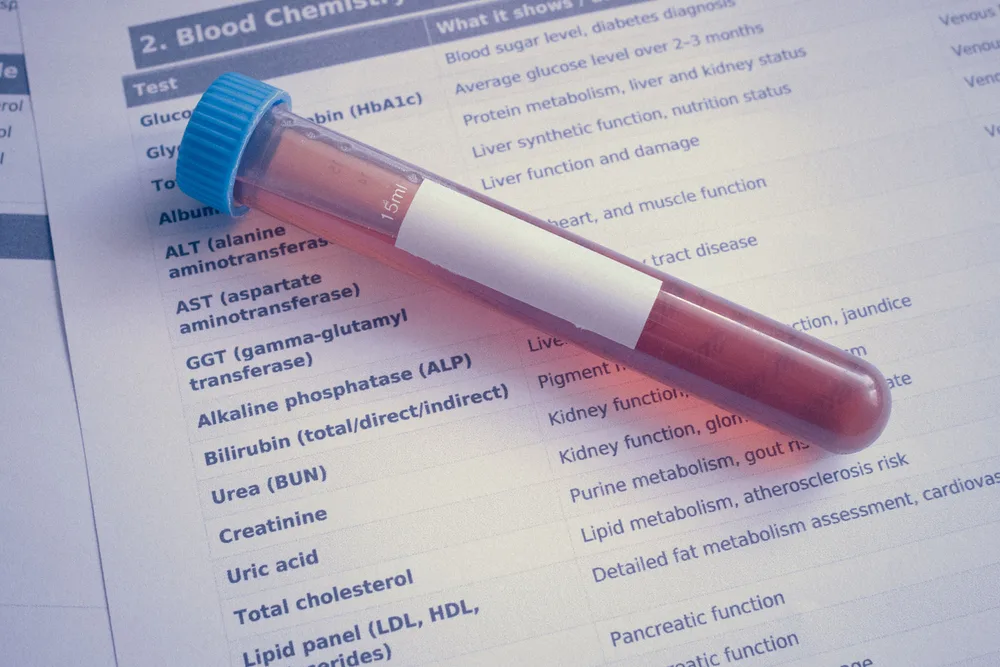
Not in the way clinics imply. The consensus is blunt: no cut-off blood level of any androgen separates women with sexual problems from women without them. There is no validated diagnosis of female testosterone deficiency. Blood levels are measured for a different reason, which is safety.
There's a technical problem underneath the clinical one. The consensus calls direct assays "highly unreliable in the female range" — they were built for male-range testosterone. The method that does work at these concentrations is mass spectrometry, written on the form as LC-MS/MS. It is worth asking for by name if blood is being drawn at all.
If a clinic hands you a result and says "there's your answer," that's the moment to slow down. The diagnosis of low desire is made by talking to you about your symptoms and your distress, using clinical criteria — not by a lab value.
How is testosterone prescribed to women here?
Usually by taking a gel approved for men and using a small fraction of it, because a woman's normal level is a tenth to a twentieth of a man's, depending on the measure. The consensus calls that reasonable when nothing else is available, as long as your blood level stays inside the normal premenopausal range.
The other route is compounding: a pharmacy mixes a cream or troche to a prescriber's formula. The consensus doesn't recommend compounded testosterone for low desire unless no authorized product can be obtained, for the same reason it applies to compounded bioidentical hormones generally — nobody has verified what's in it.
Both routes share one hazard: dividing a male dose by eye. Ten-fold is a big gap to estimate with a pump or a packet, and overshooting is how women end up with side effects that don't fully reverse.
Why are pellets and injections singled out?
Because they overshoot. The consensus recommends against any preparation that pushes testosterone above the normal female range, and names pellets and injections specifically. A pellet sits under your skin releasing hormone for months, and if the level climbs too high it only comes out with a second procedure to dig it back out.
Pellets also feature prominently in the marketing of cash-pay hormone clinics, where they are presented as the convenient choice: one appointment, months of coverage. That convenience is real. It is also the same property as being hard to undo.
What are the side effects of testosterone for women?
In the pooled trials the reliable ones were acne and extra hair growth, both more common on testosterone than placebo, plus a small weight gain. No serious adverse events were recorded. Taken by mouth it worsened cholesterol; applied to the skin it did not, which is why creams and gels are preferred.
- Acne and unwanted hair growth: the two side effects that showed up consistently across trials
- Oral routes and cholesterol: swallowed testosterone raised LDL and lowered HDL; transdermal did not
- Skin-to-skin transfer: testosterone gels rub off onto other people. The male products carry a boxed warning about exactly this — cover the area, wash your hands, and keep small children off that patch of skin
- Supraphysiologic levels: at physiological doses the consensus found no voice change, hair loss or clitoral enlargement — which is precisely why it recommends against preparations that push you above the normal female range
- Long-term safety: the trials ran for months, not years — breast and cardiovascular outcomes over a decade remain genuinely unknown
That last bullet is the one regulators keep returning to, and it's the honest reason a product still hasn't been approved. It isn't that testosterone was proven dangerous. It's that nobody has run a trial long enough to say it's safe.
How long before you know if it's working?
Six months is the line the consensus draws. Blood is checked before you start, again three to six weeks in, then every six months, to confirm you are not drifting above the female range. If you have felt no benefit by six months, the recommendation is to stop.
Write that stopping rule down before you begin. It's the single most useful thing in the whole guideline, because a treatment with no measurable target and a real cost per month can otherwise continue indefinitely on hope.

Why are prescriptions rising if the evidence hasn't moved?
Because demand has moved. An analysis by the health data firm Truveta, reported by Reuters, found the rate of US women receiving a testosterone prescription rose 146% between January 2023 and July 2026 — nearly tripling — while the underlying evidence base stayed essentially where it was in 2019.
None of that makes the women asking for it wrong. A generation of us was undertreated for menopause, told to cope, and is now understandably impatient. The risk is that impatience gets pointed at the one hormone with the thinnest safety file.
What should you ask before starting testosterone?
Four questions do most of the work. What symptom are we treating, and is it the one with evidence? What product and dose, and how will we keep me in the female range? How will we check my level? And at what point do we agree to call it off?
- "Is this for low desire, or are we treating fatigue? What does the evidence say for that symptom?"
- "What exactly am I being given — an off-label male product, or a compounded cream?"
- "When will you check my blood level, and what number would make you lower the dose?"
- "If I feel no different in six months, will you agree to stop?"
A clinician who welcomes those questions is a good sign. One who answers with a saliva panel and a pellet appointment is telling you something too. If it turns out sleep is the real problem, two weeks of tracking will do more for that appointment than any hormone test.
Where to go from here
If you came here because you're exhausted rather than because desire has gone, start with why menopause makes you tired all day and awake all night — it covers the causes that are actually treatable. For the hormone question in general, our honest look at HRT for menopause insomnia is the place to start.
If the words "bioidentical" or "compounded" came up in the same conversation as testosterone, our guide to FDA-approved versus compounded hormones untangles them. And for how everything fits together, start at the complete perimenopause and menopause sleep guide.
Key takeaways
- Testosterone does not fall at natural menopause. It declines gradually with age, and one seven-year study found no change across the transition. Surgical removal of the ovaries is the real exception.
- No testosterone product is FDA-approved for women in the United States, for any indication, as of September 2026.
- The only evidence-based use, agreed by eleven medical societies in 2019, is hypoactive sexual desire disorder in postmenopausal women.
- A meta-analysis of 36 trials and 8,480 women confirmed the sexual benefit and found no effect on body composition, musculoskeletal measures or cognition — on data the authors themselves call too sparse to be final.
- There is no reliable evidence that testosterone improves sleep, and sleep is not listed among the conditions it treats.
- No blood level defines "low testosterone" in women; levels are measured to avoid going too high, not to make a diagnosis.
- Transdermal routes are preferred; oral testosterone worsens cholesterol. Pellets and injections are specifically not recommended.
- If there is no benefit by six months, guidelines say to stop.
- Prescriptions for US women rose 146% from January 2023 to July 2026, largely for uses the evidence does not support.
Frequently asked questions
Does testosterone drop at menopause?
Not at menopause itself. A seven-year study of 172 women found average testosterone unchanged through the transition, while the free androgen index actually rose by 80% as binding protein fell. Testosterone declines gradually with age instead, beginning decades earlier, which is a different curve from the estrogen drop.
Is there an FDA-approved testosterone for women?
No. As of September 2026 no testosterone product is FDA-approved for women in the United States for any indication, a point FDA staff restated at the agency's September workshop. Approved women's formulations exist in other countries. In the US, prescriptions are written off-label using male products at reduced dose, or compounded.
Does testosterone help menopause insomnia?
There is no reliable evidence that it does. Sleep was not a primary outcome in the randomized trials, and the global consensus statement does not include sleep among the conditions testosterone treats. For sleep broken by night sweats, estrogen has the evidence; for sleep broken by racing thoughts, CBT-I does.
Will testosterone give me more energy?
The trial data do not support that. The 2019 global consensus reported no effect of testosterone on general wellbeing and no effect on depressed mood, and found the evidence on cognition insufficient to judge. Energy and fatigue are among the most common reasons it is prescribed, and among the least supported.
Are testosterone pellets safe for women?
The global consensus recommends against any preparation producing testosterone levels above the normal female range, and names pellets and injections specifically. A pellet releases hormone for months, and getting it out again means another procedure. Acne and unwanted hair growth show up even at normal female doses, which is part of why the consensus recommends against anything that overshoots that range.
How long should I try testosterone before giving up on it?
Six months. The global consensus says treatment should be ceased if no benefit is experienced by then. Your blood level is checked before you start, again at three to six weeks, and every six months after that, not to find a target but to confirm you have not drifted too high.
Why are prescriptions rising if the evidence hasn't changed?
Demand and marketing, mostly. An analysis by the health data firm Truveta for Reuters found the rate of women receiving a testosterone prescription rose 146% between January 2023 and July 2026. Alongside low desire, some of it is written off-label for fatigue and muscle loss, uses that medical guidance does not currently support.
Sources cited
- Davis SR, Baber R, Panay N, et al. Global Consensus Position Statement on the Use of Testosterone Therapy for Women. J Clin Endocrinol Metab. 2019;104(10):4660-4666. pmc.ncbi.nlm.nih.gov
- Islam RM, Bell RJ, Green S, Page MJ, Davis SR. Safety and efficacy of testosterone for women: a systematic review and meta-analysis of randomised controlled trial data. Lancet Diabetes Endocrinol. 2019;7(10):754-766. pubmed.ncbi.nlm.nih.gov
- Burger HG, Dudley EC, Cui J, Dennerstein L, Hopper JL. A prospective longitudinal study of serum testosterone, dehydroepiandrosterone sulfate, and sex hormone-binding globulin levels through the menopause transition. J Clin Endocrinol Metab. 2000;85(8):2832-2838. pubmed.ncbi.nlm.nih.gov
- Davison SL, Bell R, Donath S, Montalto JG, Davis SR. Androgen levels in adult females: changes with age, menopause, and oophorectomy. J Clin Endocrinol Metab. 2005;90(7):3847-3853. pubmed.ncbi.nlm.nih.gov
- U.S. Food and Drug Administration. FDA Public Meeting: Testosterone Use in Menopausal Women. September 17, 2026. fda.gov
- Endocrine Society. Coalition issues international consensus on testosterone treatment for women. September 2019. endocrine.org
- ABC News. FDA examines use of testosterone prescriptions for menopause. September 2026. abcnews.com
- Reuters. Testosterone scripts for women rise, along with denials and delays. September 17, 2026 (analysis by Truveta). reuters.com
- The 2022 hormone therapy position statement of The North American Menopause Society. Menopause. 2022;29(7):767-794. journals.lww.com

Ellen Hayes
Health & Wellness Writer and Researcher
Hi — I'm Ellen. I went looking for a verdict on testosterone and came back with something more useful: a very short list of what it's been shown to do, and a much longer list of what it's being sold for. Knowing which list your symptom is on changes the conversation you have with your doctor.
I'm not a doctor. I'm not an expert — and I'm never going to talk down to you like one. I'm a woman in the middle of perimenopause who got tired of vague answers, started reading the actual research, and writes it down here in plain English, the way I'd explain it to a friend over coffee. More about Ellen →