White Noise for Menopause Sleep: What the Research Shows
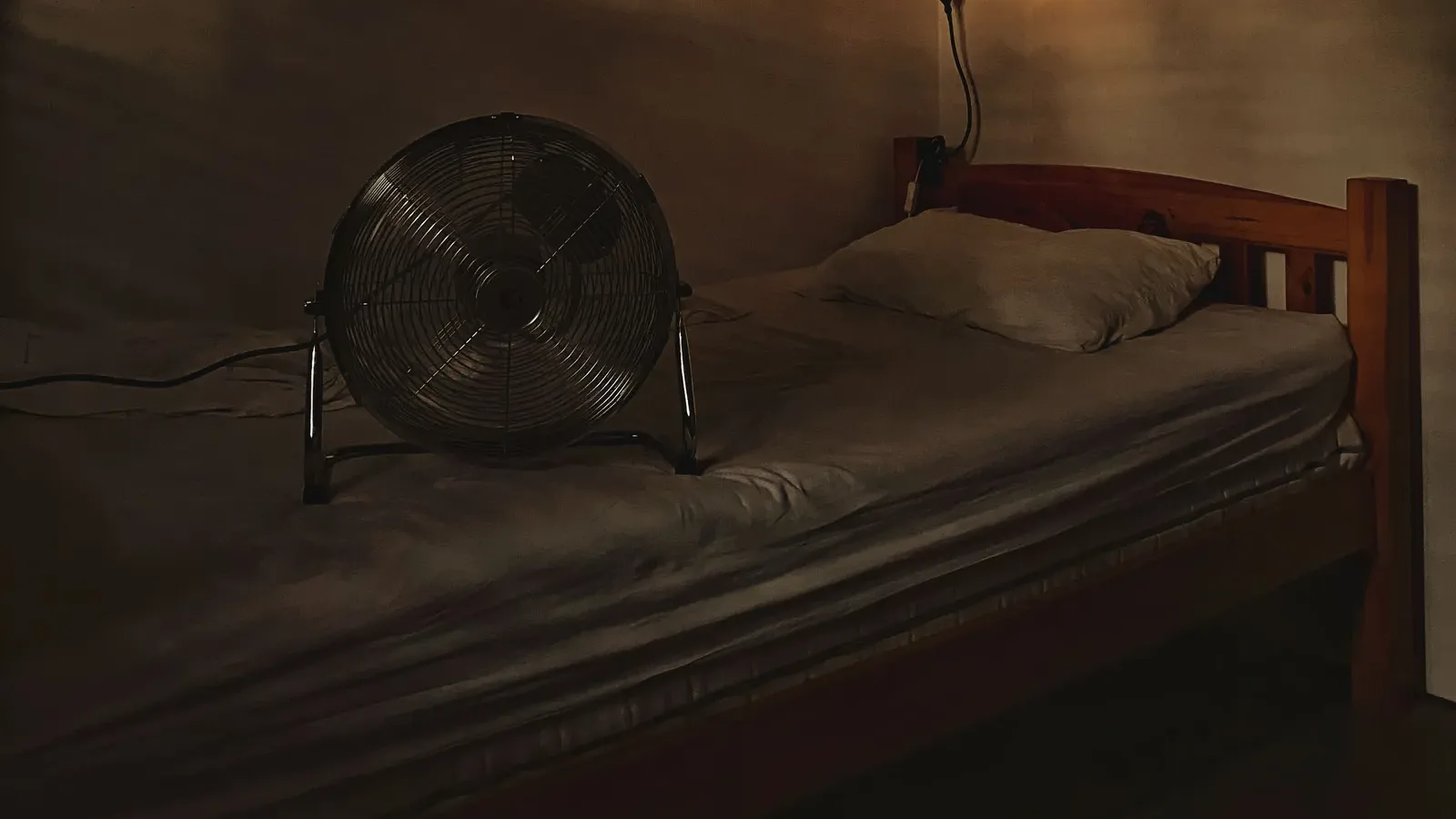
If you've ever lain awake at 3 a.m. in menopause, listening to a refrigerator hum, a neighbor's car or a partner's snoring, a steady "shhh" in the background sounds like an easy fix. White noise is everywhere in sleep advice, and broken sleep makes it tempting.
So I read what the research actually says about white noise for sleep in menopause and midlife: what it can and can't do, how loud is too loud, and who should check with a doctor first. The honest answer is more mixed than the ads.
White noise is steady, even background sound that can mask the small noises that wake you. The best review I found, a 2021 systematic review, rated the evidence that it improves sleep as very low quality. It may help some people sleep, but it's not proven. Keep it quiet, and see a doctor about tinnitus or loud snoring.
What is white noise, and how is pink noise different?
White noise is a steady, broadband sound with a flat "hiss" like static or a running air conditioner. Pink noise has more low-pitched energy, so it sounds softer, like steady rain or wind. Brown noise is deeper still. Sleep apps and machines also offer ocean waves, fan hum and similar steady sounds.
The research tends to lump these together. The main review I'll quote below looked at "continuous white noise or similar broadband noise," so it covers more than pure static. When someone says "white noise helps me sleep," they could mean any of these steady sounds.
The theory behind all of them is masking. A steady sound can make sudden sounds (a door, a snore, a car) less noticeable, so they are less likely to pull you out of sleep. As you'll see, that theory has rarely been tested directly.
Does white noise actually help you sleep?
The evidence is weak and mixed. A 2021 systematic review in Sleep Medicine Reviews looked at 38 studies of continuous white noise or similar broadband noise. Its authors rated the quality of evidence for noise improving sleep as very low and said that contradicts how widely it is used.
The reviewers listed why the results are all over the place: the studies used different kinds of noise, measured sleep in different ways, and had different control groups. They also noted differences in how well people stuck with the noise. They called for more research with objective sleep measures before promoting continuous noise as a sleep aid, "especially since it may also negatively affect sleep and hearing."
A 2025 perspective in the journal Sleep reaches a similar place. It says findings on ambient sounds such as white and pink noise are "inconclusive," and that two systematic reviews found no consistent evidence they improve sleep. It describes the most consistent improvements as coming from hospital studies, while home-based results were very inconsistent.
I did not find a trial of white noise in perimenopausal or menopausal women. That matters, because none of the studies I found were in menopausal women, and the 2025 perspective notes the most consistent results came from hospital-based studies. They may not apply to someone woken by night sweats. Whatever works for you will be your own experiment, not a proven result.
What about pink noise and memory?
You may have read that pink noise improves deep sleep and memory. That research is real, but it is about a specific technique. It uses "closed-loop" auditory stimulation, where sound is delivered in a way linked to brain activity. It is not the same as leaving a machine on all night, and I would not treat the two as equal.
A 2026 perspective article in The Neuroscientist says pink noise "appears to be an effective auditory stimulus for enhancing memory consolidation," but that the mechanism is unclear. It offers a hypothesis and says the idea "currently lacks direct support from subcortical recordings." In other words, it is an interesting area of science, not a bedtime prescription.
A 2026 narrative review of physical therapies for insomnia, which included auditory stimulation, concluded these may be "promising adjunctive options for selected insomnia phenotypes," while the evidence for several of these therapies remains heterogeneous and preliminary. That is a fair summary of where white and pink noise stand today: worth watching, not proven.
Can white noise help with night wake-ups or a partner's snoring?
White noise may help if outside sounds are what wake you, because masking those sounds is its whole purpose. But the review authors said this works as a theory rather than as established fact, and the 2025 perspective notes that masking has rarely been tested directly. It won't help when something inside you is waking you up.
In menopause, many awakenings come from inside: a night sweat, a racing heart, a full bladder, or worry. A steady sound does nothing for a hot flash. If that sounds like you, the pages on using a fan for night sweats and falling back asleep at 3 a.m. cover more likely fixes.
For a partner who snores, white noise is a common workaround, and some couples find it takes the edge off. Our guide on snoring and sleeping apart in menopause covers the other options. Keep in mind that snoring can be a symptom, not just a nuisance, as the section on apnea below explains.
How loud should white noise be?
Keep white noise as quiet as still covers the sound you want to mask. The National Institute on Deafness and Other Communication Disorders (NIDCD) says sounds at or below 70 A-weighted decibels (dBA), even after long exposure, are unlikely to cause hearing loss, while long or repeated exposure to sounds at or above 85 dBA can cause it.
These numbers matter because sleep machines don't have to be quiet. A 2014 study in Pediatrics measured 14 infant sleep machines at maximum volume. All were above 50 dBA at 30 cm (about 1 foot), and three were above 85 dBA. That study was about infants, not adults, but it shows that a sound machine on full volume can reach levels well above 70 dBA.
The NIDCD's rule of thumb is to "avoid noises that are too loud, too close, or last too long." For a bedroom, that suggests putting the device across the room instead of on the pillow, and turning it down until it is just audible. A free sound-level app on your phone can give you a rough reading, though phone microphones are not precise.
Machine, fan or app: which is best?
There is no evidence that one source beats the others, so choose by practical fit. A dedicated machine, a fan and a phone app each have trade-offs in cost, screen light, volume control and extras. The NIDCD's tinnitus page lists tabletop sound generators, smartphone sound generators, a radio and a household fan as options people use.
| Source | Upside | Watch out for |
|---|---|---|
| Sound machine | Simple, no screen, can sit across the room | Some models can get very loud, so check the volume |
| Fan | Steady sound plus moving air, which can ease night sweats | Keep it off your face; the sound can't be adjusted easily |
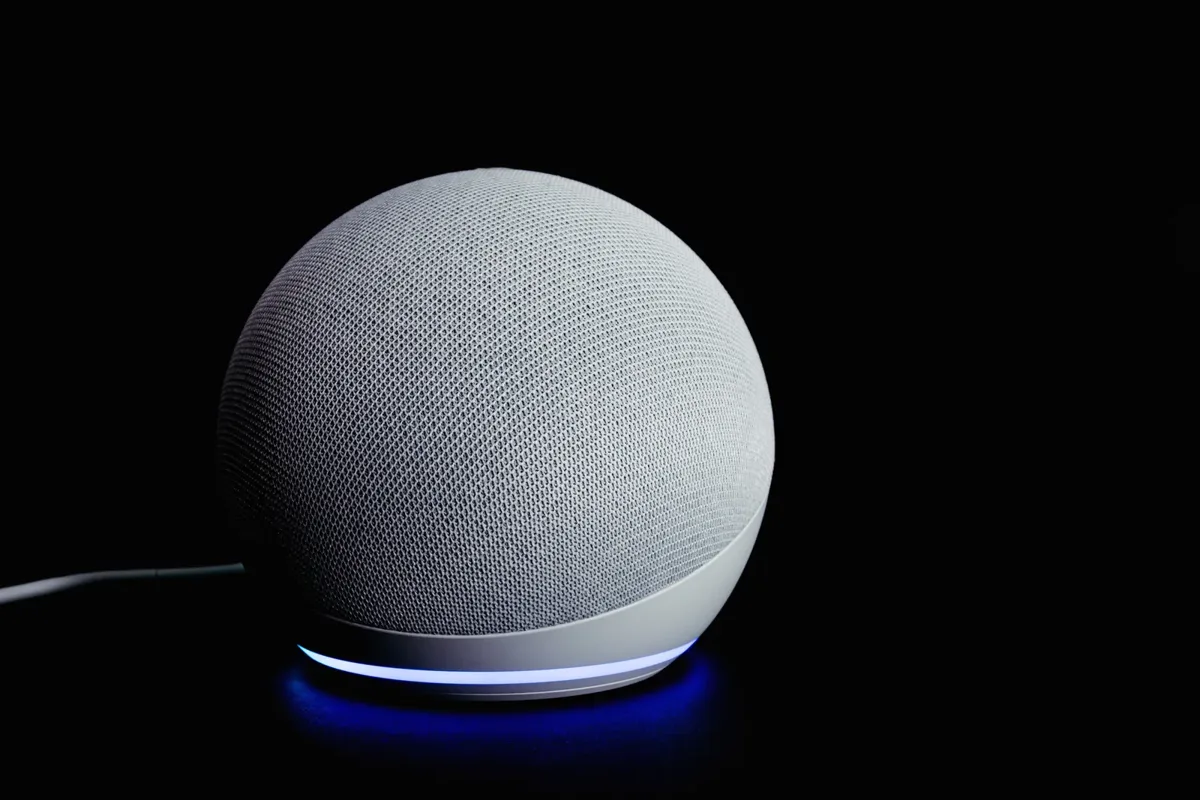
| Phone app or smart speaker | Free or cheap, many sounds, timers | Bedtime screen use; notifications; low battery cutting the sound |
The 2025 Sleep perspective raises one concern with apps: app-based sleep sounds can clash with sleep hygiene advice, which typically discourages screen use at bedtime. If you use your phone, set it up before you lie down, switch on Do Not Disturb and put the screen face down.
A fan is the one option that does two jobs in menopause. If night sweats are part of your problem, our article on bed fans and night sweats goes through placement and safety in more detail.
When won't white noise fix the problem?
White noise treats noise, not the causes of insomnia. If you have heavy snoring with pauses in breathing, hot flashes that wake you, restless legs or a mind that won't stop, a sound machine will not address them. A steady hiss can make a bedroom more comfortable without changing why you are awake.
Sleep apnea is the one I would not want you to miss. MedlinePlus says that with obstructive sleep apnea you usually begin snoring heavily soon after falling asleep, snoring may be interrupted by a silent period when breathing stops, and sometimes people wake up gasping for air. It also lists feeling sleepy during the day. It advises contacting your provider if you feel very tired and sleepy during the day, or if you or your family notice symptoms.
Our article on menopause and sleep apnea explains how the condition relates to menopause and why it can be missed. If this sounds familiar, masking the sound of the snore is not the goal. Getting it checked is.
For long-term insomnia, the approach with the strongest backing is cognitive behavioral therapy for insomnia. Our CBT-I guide explains what it involves, and the complete sleep guide shows where noise fits among the other habits.
Who should not use white noise, or should check first?
Check with a doctor before using white noise if you have tinnitus, hearing loss, ear pain or dizziness. The NIDCD says that if you have tinnitus, you should first see your primary care doctor. In rare cases the sound pulsates, often in time with your heartbeat, and a specialist may order imaging.
For people with tinnitus, the NIDCD's page does say that tabletop or smartphone sound generators are typically used as an aid for relaxation or sleep, and that if your tinnitus is mild this might be all you need to help you fall asleep. So it is a common tool. The point is to rule out a medical cause first.
- Tinnitus or new ringing: see your primary care doctor first. A sound that pulses with your heartbeat needs a medical check.
- Hearing loss or ear symptoms: ask a clinician before playing sound for hours every night.
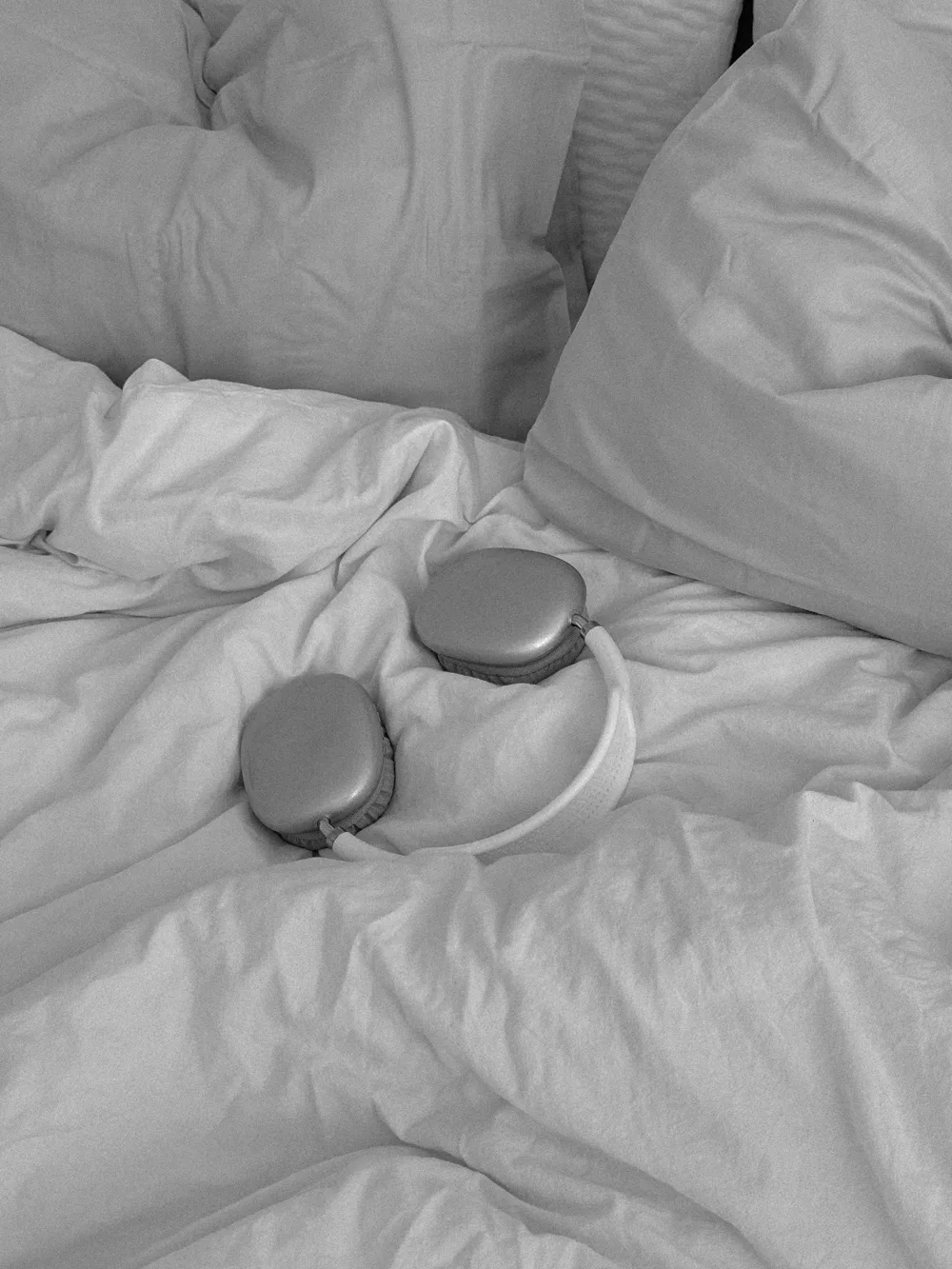
- Earbuds or headphones in bed: the NIDCD lists high-volume listening through earbuds or headphones as a hearing risk, and the closer the sound source, the more careful you need to be.
- Anyone who can't hear a smoke alarm or a call for help: this is my own safety suggestion, not from a study. Make sure the sound doesn't mask alarms; keep it low and test that you can still hear them.
What are the possible downsides?
The main downsides are possible harm to hearing at high volume, possible worse sleep for some people, and relying on a device to fall asleep. The 2021 review's authors noted that continuous noise "may also negatively affect sleep and hearing," and the 2025 perspective says the risks have been largely unexplored.
That perspective also raises the "risk of increased dependency on technology." It says the worry applies to app-based sleep aids in general, not to white noise specifically, so I read it as a reminder to notice whether you now can't sleep without the sound. If you do find that, it is useful information about your habits, not a failure.
Because the research has not tested long-term use, the safest approach is to treat white noise as a bedroom tool you can drop, not a treatment you must keep. Keep the volume low, and stop if it seems to make your sleep worse or if you notice ringing in your ears or muffled hearing in the morning.
How can you try white noise sensibly?
Run it as a short, honest experiment. Because there is no proven recipe, the aim is to find out whether it helps you. These steps are my own practical suggestions based on the volume guidance above, not a protocol from a trial, so adjust them to what works for you.
- Name the noise. Write down what actually wakes you for a week. If it is mostly heat, a full bladder or worry, noise masking is unlikely to be the answer.
- Start quiet. Choose a steady sound and set it just loud enough to blur the outside noise. Place the speaker or machine across the room.
- Try it for two weeks. Note how long you take to fall asleep and how many times you wake. If nothing changes, drop it.
- Avoid the all-night maximum. Use a timer if your device has one, or keep the sound low enough that you could talk over it comfortably.
- Check your ears. Muffled hearing or ringing in the morning means turning it down or stopping, and mentioning it to a doctor.
If you've tried this for a couple of weeks and still wake every night, that is a pattern to discuss with your doctor, not something to solve by turning up the volume.
Talk to your doctor if you have new ringing or a pulsing sound in your ears, sudden changes in hearing, loud snoring with gasping or pauses in breathing, daytime sleepiness that interferes with driving or work, or sleep problems that last for weeks. Those call for a medical check, not a sound machine.
Where to go from here
If night sweats are what wake you, start with bed fans and night sweats. If you wake at 3 a.m. with a busy mind, read how to fall back asleep at 3 a.m. For a snoring partner, see sleeping apart, and for the bigger picture, the complete sleep guide.
Key takeaways
- Evidence is weak: a 2021 review of 38 studies rated the evidence that continuous noise improves sleep as very low quality, and I found no trial in menopausal women.
- It may help with outside noise: masking is the idea, but it won't touch night sweats, a racing mind or sleep apnea.
- Keep it quiet: the NIDCD says sounds at or below 70 dBA are unlikely to cause hearing loss, while long exposure at or above 85 dBA can.
- Machine, fan or app: no source is proven better; pick on practicality and keep it across the room.
- See a doctor for red flags: tinnitus, a pulsing sound, or loud snoring with gasping and daytime sleepiness.
Frequently asked questions
Does white noise help you sleep during menopause?
It might, for some people, but the evidence is thin. I found no trial of white noise in menopausal women. A 2021 systematic review of 38 studies rated the evidence that continuous noise improves sleep as very low quality. Some people sleep better with it, and it can be worth a trial.
Is white noise or pink noise better for sleep?
Nobody knows yet. A 2025 perspective in the journal Sleep says findings on ambient sounds such as white and pink noise are inconclusive. Pink noise has more in the lab research, mostly on memory, and it uses a different technique from a machine running all night. Pick whichever you find easiest to ignore.
How loud should white noise be for sleep?
Keep it as quiet as still masks the noise. The NIDCD says sounds at or below 70 A-weighted decibels (dBA) are unlikely to cause hearing loss, even after long exposure, while long or repeated exposure at or above 85 dBA can. Place the device across the room, not next to your pillow.
Can white noise cover my partner's snoring?
It may take the edge off, but it is not a fix. The idea behind white noise is masking disruptive sounds, yet the 2021 review found very low-quality evidence overall. Also, loud snoring with gasping or pauses in breathing can be a sign of sleep apnea, which needs medical evaluation, not just a quieter room.
Is white noise safe if I have tinnitus?
Often, steady sound is used for tinnitus, but talk to a clinician first. The NIDCD says tabletop or smartphone sound generators are typically used as an aid for relaxation or sleep with tinnitus, and that you should first see your primary care doctor. A pulsing sound in time with your heartbeat deserves a medical check.
Can I use a fan instead of a white noise machine?
Yes, a fan is one version of steady background sound. The NIDCD's tinnitus page lists a household fan or a radio among sound generators people use. A fan has a second benefit in menopause, because moving air can help with night sweats. Just keep it clear of your face, and be careful with its noise level.
Sources cited
- Riedy SM, Smith MG, Rocha S, Basner M. Noise as a sleep aid: a systematic review. Sleep Med Rev. 2021;55:101385. pubmed.ncbi.nlm.nih.gov
- Vazzaz J, Matcham F, Economides M, Cavanagh K. Between sound and sleep: a perspective on Sonic Sleep Aids. Sleep. 2025;48(11):zsaf275. pmc.ncbi.nlm.nih.gov
- Sabaghypour S, Farkhondeh Tale Navi F, Batterink LJ. Echoes of pink noise: a hypothesized mechanism for enhancing sleep-dependent memory consolidation with auditory stimulation. Neuroscientist. 2026;32(1):8-19. pmc.ncbi.nlm.nih.gov
- Li S, Long Q, Huang D, Mao Y. Physical factor therapies for insomnia: a narrative review of mechanisms, clinical evidence, and phenotype-guided applications. Front Psychiatry. 2026;17:1835178. pmc.ncbi.nlm.nih.gov
- Hugh SC, Wolter NE, Propst EJ, et al. Infant sleep machines and hazardous sound pressure levels. Pediatrics. 2014;133(4):677-681. pubmed.ncbi.nlm.nih.gov
- National Institute on Deafness and Other Communication Disorders (NIH). Noise-Induced Hearing Loss. nidcd.nih.gov
- National Institute on Deafness and Other Communication Disorders (NIH). Tinnitus. nidcd.nih.gov
- MedlinePlus (NIH). Obstructive sleep apnea. medlineplus.gov
How this article was checked
The NIDCD noise-induced hearing loss and tinnitus pages, the MedlinePlus obstructive sleep apnea page and the 2025 Sleep perspective were read in full. The 2021 Riedy review, the 2014 infant sleep machine study, the 2026 pink noise perspective and the 2026 insomnia review were read as abstracts only. I searched for a trial of white noise in menopausal women and did not find one; that is a statement about my search, not proof none exists.
It has not been reviewed by a clinician. Ellen Hayes is a researcher and writer, not a doctor, and nothing here is a diagnosis or a substitute for being seen by one.
Ellen Hayes
Health & Wellness Writer and Researcher
Hi — I'm Ellen. White noise gets recommended so casually that I wanted to see what the research actually says, and how loud is too loud. It turned out to be a mixed picture, and it's why I'd treat it as a tool to test rather than a cure.
I'm not a doctor. I'm not an expert — and I'm never going to talk down to you like one. I'm a woman in the middle of perimenopause who got tired of vague answers, started reading the actual research, and writes it down here in plain English, the way I'd explain it to a friend over coffee. More about Ellen →