NyQuil for Sleep: It's a Cold Medicine, Not a Sleep Aid
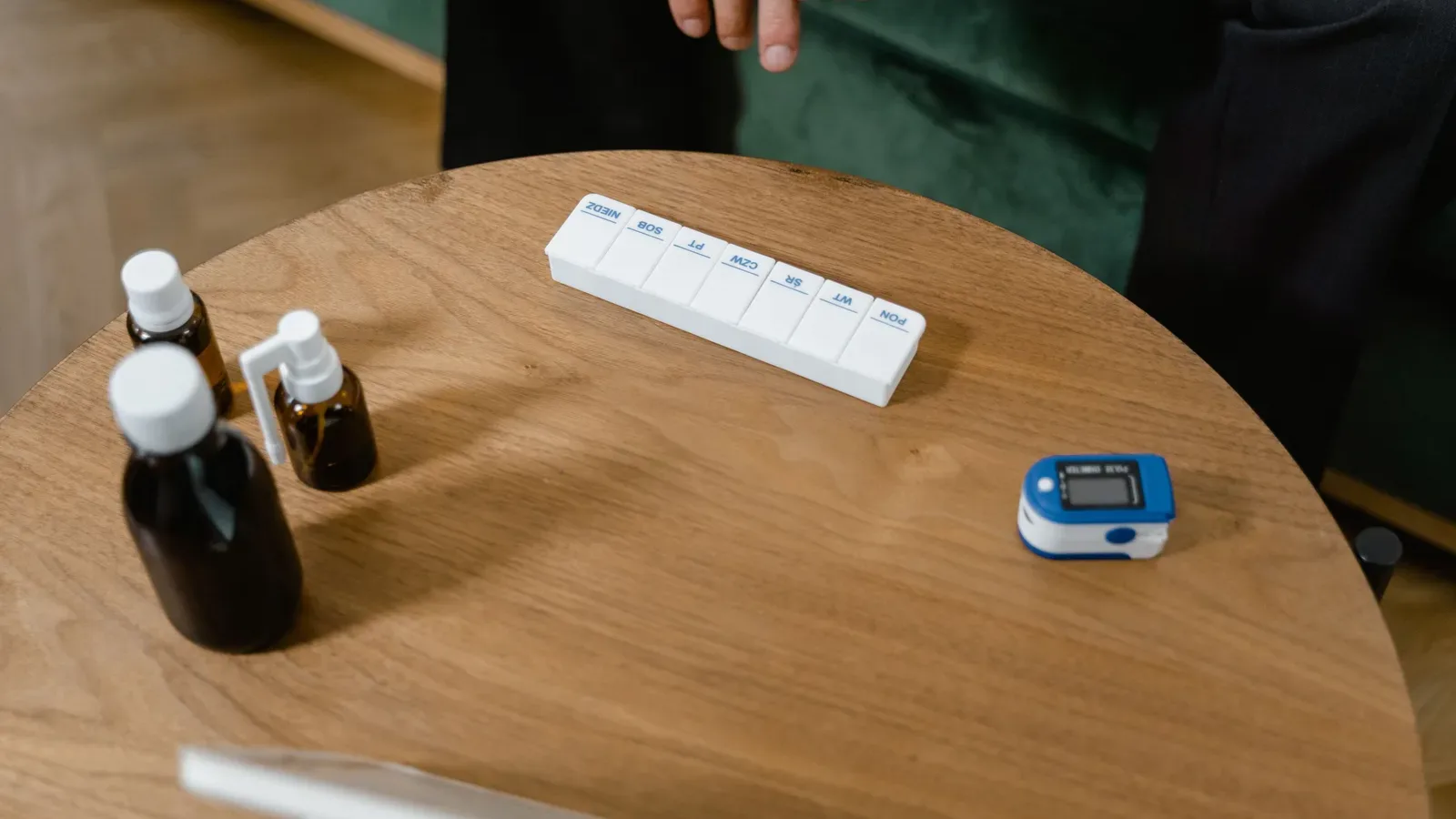
It's 2 a.m., your head is stuffed, and the NyQuil is right there in the cabinet. If you've been awake for months with menopause insomnia, it's easy to think of that green bottle as the thing that finally knocks you out. It's tempting to use NyQuil for sleep.
I'm not a doctor, so I read the current labels, the sleep medicine guideline and the geriatric safety list to see what's actually in the bottle. A cold medicine doing double duty as a sleeping pill comes with extras most people don't count.
NyQuil is a cold and flu medicine, not a sleep aid. Most versions combine acetaminophen, dextromethorphan and doxylamine, an antihistamine that causes drowsiness. Taking NyQuil for sleep when you aren't sick adds a pain reliever you don't need and a liver limit to track. After 45, the anticholinergic effects of doxylamine matter more.
What is in NyQuil, and is it meant for sleep?
NyQuil is a family of cold and flu medicines made by Procter & Gamble, and the active ingredients change from one box to the next. The labels list uses such as cough, sore throat, headache, aches, fever and runny nose. Several add "cough to help you sleep." None says it treats insomnia.
I read the current labels on file with the FDA (via openFDA) for the main nighttime versions. Here's what they list:
| Version | Active ingredients (per dose on label) | Notes from the label |
|---|---|---|
| Vicks NyQuil Cold and Flu (liquid) | Acetaminophen 650 mg, dextromethorphan HBr 30 mg, doxylamine succinate 12.5 mg per 30 mL | Uses include "cough to help you sleep." Max 4 doses in 24 hours. Contains alcohol; bottle reads "Alcohol 10%." |
| Vicks NyQuil Intense Flu (liquid) | Acetaminophen 1,000 mg, dextromethorphan HBr 30 mg, doxylamine succinate 12.5 mg per 30 mL | The liver warning names 3 doses as the daily maximum, while the directions line says not to exceed 4 doses per 24 hours. Contains alcohol; bottle reads "Alcohol 10%." |
| Vicks NyQuil Severe Cold and Flu (liquid) | Acetaminophen 650 mg, dextromethorphan HBr 20 mg, doxylamine succinate 12.5 mg, phenylephrine HCl 10 mg per 30 mL | Adds a nasal decongestant. Asks you to check with a doctor first if you have heart disease, high blood pressure, thyroid disease or diabetes. Contains alcohol. |
| Vicks NyQuil VapoCOOL (caplets) | Acetaminophen 325 mg, dextromethorphan HBr 10 mg, doxylamine succinate 6.25 mg per caplet | 2 caplets every 4 hours, max 8 in 24 hours. The inactive ingredients I read list no alcohol. |
| Vicks NyQuil High Blood Pressure Cold and Flu (LiquiCaps) | Nighttime LiquiCap: acetaminophen 325 mg, dextromethorphan HBr 10 mg, doxylamine succinate 6.25 mg | No decongestant. 2 LiquiCaps every 4 hours, max 8 in 24 hours. The inactive ingredients I read list no alcohol. |
| Vicks NyQuil Hot Remedy (packets) | Acetaminophen 650 mg, diphenhydramine HCl 25 mg per packet | A different antihistamine (diphenhydramine) instead of doxylamine. One packet every 4 hours, max 6 in 24 hours. The label says not to use it with any other diphenhydramine product, even one used on skin. |
The point of the table is that "NyQuil" doesn't tell you what you're swallowing. Doxylamine is the drowsy part. The same ingredient is the active drug in ZzzQuil Ultra, whose label says it "helps to reduce difficulty in falling asleep" at 25 mg per tablet, twice the 12.5 mg in a 30 mL dose of NyQuil liquid.
Labels change and store brands copy them, so check the box in your hand. I'm describing what the registered labels said when I wrote this, not giving a dose for you.
Why does NyQuil make you sleepy?
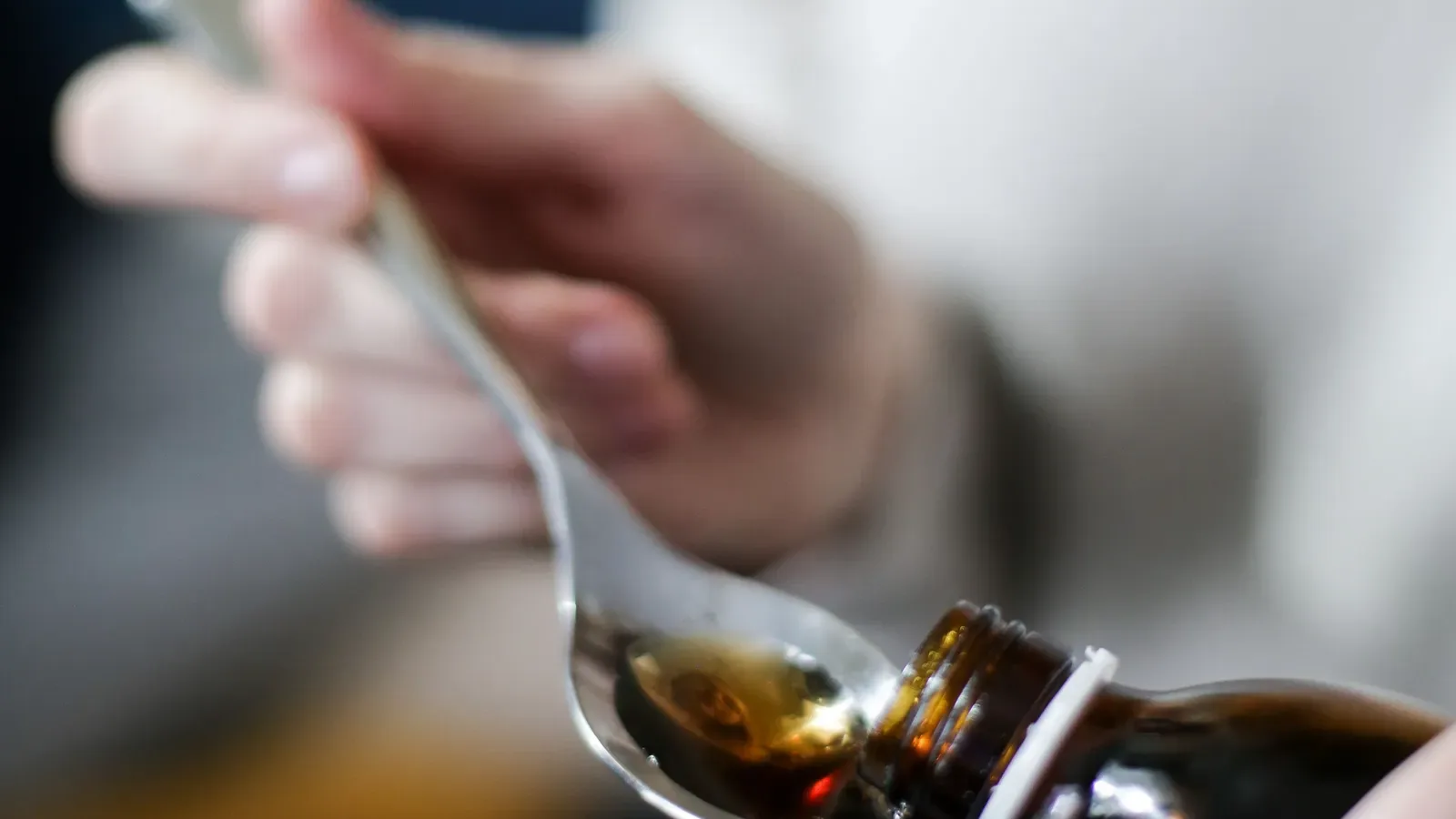
NyQuil makes you sleepy because of doxylamine succinate, a first-generation antihistamine that crosses into the brain and causes drowsiness. The labels warn that "marked drowsiness may occur" and tell you to avoid driving or operating machinery. The drowsiness is a side effect of treating a cold at night, not a tested sleep treatment.
The ZzzQuil article on this site explains the sleep-only line: ZzzQuil is a brand whose products are made for sleeplessness, and our ZzzQuil guide covers what each one contains. The Unisom guide covers the doxylamine version of Unisom. NyQuil sits in a different category, because every dose also brings a pain reliever and a cough suppressant.
Doxylamine isn't mentioned at all in the 2017 American Academy of Sleep Medicine guideline on drugs for chronic insomnia, so that document can't tell us how it performs for sleep. I also found no trial of doxylamine or NyQuil in menopausal women. Anything said about NyQuil helping "menopause sleep" is borrowed from other groups.
How much acetaminophen are you actually taking?
Every NyQuil dose carries acetaminophen, the pain reliever and fever reducer in Tylenol, and the labels warn of severe liver damage above the maximum daily amount. The FDA says adults should not take more than 4,000 mg a day from all sources. Taking NyQuil with no pain or fever means taking that load for nothing.
Here's my arithmetic from the label doses. The Cold and Flu liquid at its maximum of 4 doses is 2,600 mg of acetaminophen. The LiquiCaps and caplets at 8 a day are also 2,600 mg. Intense Flu at the 3 doses named in its liver warning is 3,000 mg, and its directions line says 4, which would be the whole 4,000 mg. Hot Remedy at its 6-packet maximum is 3,900 mg. When a label disagrees with itself, as Intense Flu's does, ask a pharmacist which limit applies to you. The room left under 4,000 mg is smaller than most people think, and it disappears fast if you also take a headache or "PM" product.
The labels are direct about this: "Do not use with any other drug containing acetaminophen (prescription or nonprescription). If you are not sure whether a drug contains acetaminophen, ask a doctor or pharmacist." Many allergy, sinus, sleep and pain products contain it, as do some prescription drugs. Read the active ingredients on every box before you stack anything.
The labels also list "3 or more alcoholic drinks every day while using this product" among the liver-damage risks, and they say to ask a doctor before use if you have liver disease. If you take NyQuil on a night when you've also been drinking to unwind, that is exactly the combination the label points at. Our article on alcohol and menopause sleep covers the alcohol side of the picture.
Does NyQuil contain alcohol?
The classic NyQuil liquids do contain alcohol, while the LiquiCaps and caplets I read do not list it. The labels for Cold and Flu, Intense Flu and Severe Cold and Flu name alcohol among the inactive ingredients, and the bottle fronts read "Alcohol 10%." Every version I read also tells you to avoid alcoholic drinks.
I read the front-of-bottle panel text on file with the FDA for three liquid versions. The label's "Alcohol 10%" is a labeled strength, and I didn't dig into how it's measured. For someone avoiding alcohol for sleep, health or personal reasons, it's worth knowing that the liquid is not alcohol-free while the capsule and caplet forms I read list none.
The bigger label warning isn't about the alcohol in the bottle. It says alcohol, sedatives and tranquilizers "may increase drowsiness," which stacks on top of what doxylamine already does. A glass of wine plus NyQuil is two sedating things in one night, plus the acetaminophen and alcohol liver warning above.
What about phenylephrine and high blood pressure?
Some NyQuil versions, such as Severe Cold and Flu, contain phenylephrine, an oral nasal decongestant, and the label tells people with high blood pressure to ask a doctor before use. The FDA has also proposed removing oral phenylephrine from over-the-counter products because it doesn't work at the recommended dose, a question about effectiveness, not safety.
Phenylephrine versions are still on the registered label list: the NyQuil Severe Cold and Flu label effective October 2026 includes phenylephrine HCl 10 mg. So whether you have one on your shelf comes down to which box you bought. For menopause, the relevant question is what else is on your list. Blood pressure often rises in midlife, as our menopause high blood pressure article explains.
If you have high blood pressure or take blood pressure medicine, show the box to your pharmacist. NyQuil also sells a "High Blood Pressure" version whose label lists no decongestant. I didn't find anything on that label that makes it a sleep product, and it still carries doxylamine and acetaminophen in its nighttime form.
What are the risks of doxylamine after 45?
The main risk after 45 is anticholinergic effects, including dry mouth, constipation and confusion. The American Geriatrics Society's 2023 Beers Criteria lists doxylamine among first-generation antihistamines to avoid in adults 65 and older, but the effects don't switch on at 65, and nothing in the list is specific to NyQuil.
Three points stand out for a menopausal woman. First, the Beers table says tolerance builds when these drugs are used as a sleep aid, so a nightly bottle can stop working. Second, the label's urinating warning is written for an enlarged prostate, but trouble emptying the bladder is a known anticholinergic effect, and night-time bathroom trips are already common in midlife. Third, a sedated walk to the bathroom is a fall risk.
Beers is a guide for people 65 and older, and none of this says an occasional dose of NyQuil for a true cold is harmful to a 50-year-old. It does say that nightly use of an antihistamine for sleep is the pattern the safety lists warn about. For the same effects with another ingredient, see our diphenhydramine and Benadryl article.
What does the label say about how long to use it?
The NyQuil labels are written for short colds, not for sleep. They say to stop use and ask a doctor if pain or cough gets worse or lasts more than 7 days, or if fever lasts more than 3 days. Unlike ZzzQuil, the NyQuil labels I read have no line about sleeplessness lasting two weeks.
That difference is useful. ZzzQuil's labels tell you plainly that insomnia can be a symptom of a serious medical problem and to stop and ask a doctor after two weeks. A cold medicine has no such prompt because it assumes you have a cold. If you're reaching for NyQuil for sleep, you've stepped outside what the label expects, and nobody on the bottle is watching your sleep.
The directions also include the line "take only as directed" and, for liquids, "only use the dose cup provided." The liquid Cold and Flu label allows a dose every 6 hours; the Severe version every 4 hours; the capsules and caplets every 4 hours. These are labeled dosing intervals for daytime-and-night colds. I'm not giving you a dose, and none of this is a plan for sleep.
Who should not take NyQuil without talking to a doctor?
The labels say not to use NyQuil with any other acetaminophen product, or if you take a prescription MAOI antidepressant or stopped one within 2 weeks. They tell you to ask a doctor first about liver disease, glaucoma, breathing problems, trouble urinating from an enlarged prostate, and pregnancy or breast-feeding. Several add heart disease, blood pressure, thyroid disease and diabetes.
- MAOI antidepressants: certain drugs for depression, psychiatric or emotional conditions, or Parkinson's disease. The label says not to use NyQuil while taking one, or for 2 weeks after stopping.
- Other acetaminophen products: prescription or nonprescription. If you aren't sure, ask a pharmacist.
- Liver disease, or 3 or more drinks every day: the liver warning applies.
- Glaucoma, a breathing problem such as asthma, chronic bronchitis or emphysema: listed on the label.
- Sedatives, tranquilizers or warfarin: the labels say to ask a doctor or pharmacist first.
- Heart disease, high blood pressure, thyroid disease or diabetes: listed on the Severe (phenylephrine) label. There are also diabetes-focused NyQuil versions on file; read the box for yours.
- Pregnancy or breast-feeding: the labels say to ask a health professional before use. Perimenopausal women can still become pregnant.
- Adults 65 and older: the Beers Criteria say to avoid first-generation antihistamines such as doxylamine.
- Sleep apnea or unexplained snoring: the labels don't address it, but a sedating drug is a question to raise with your doctor.
What are the side effects of NyQuil?
The main side effects are marked drowsiness, dry mouth and slowed reactions, along with the acetaminophen skin and liver warnings. The labels say "marked drowsiness may occur," that excitability may occur, and that alcohol, sedatives and tranquilizers may increase drowsiness. They advise being careful when driving or operating machinery.
- Marked drowsiness and slowed reactions.
- Dry mouth, constipation, confusion and other anticholinergic effects (described in the Beers Criteria for doxylamine).
- Excitability or restlessness. The label notes this especially in children, and on the Severe version, to stop and ask a doctor if you get nervous, dizzy or sleepless.
- Severe skin reactions from acetaminophen: skin reddening, blisters or rash. The label says to stop use and get medical help right away.
- Liver damage if the daily amount is exceeded, if combined with other acetaminophen, or with 3 or more drinks every day.
For the full list, read the Drug Facts panel on your box. In case of overdose, the label says to get medical help or contact Poison Control right away, even without symptoms. Poison Control's number is 1-800-222-1222.
When should you talk to your doctor about using NyQuil for sleep?
Talk to your doctor if you've used NyQuil for sleep more than a night or two, if you don't have cold symptoms, or if sleeplessness keeps going. Bring the box and every other medicine you take. Persistent insomnia can come from sleep apnea, depression, restless legs, thyroid problems or hot flashes, all of which have their own treatments.
Talk to your doctor if... you're using NyQuil to fall asleep and don't have a cold, you take any other medicine with acetaminophen, you have liver disease or drink most nights, you have high blood pressure, glaucoma or trouble urinating, you take an MAOI, sedatives or warfarin, you might be pregnant, you wake confused or fall at night, or your sleep problem has lasted more than a couple of weeks. Call Poison Control (1-800-222-1222) or seek emergency care after an overdose.
I'm not a doctor, and I can't tell you how much to take. If you and your doctor decide a sleep medicine makes sense, ask which one is built for sleep, for how long, and how you'll stop.
What do sleep doctors recommend instead?
Sleep doctors recommend cognitive behavioral therapy for insomnia (CBT-I) first. The 2017 AASM guideline says all adults with chronic insomnia should receive CBT-I as a primary intervention, with medicines considered mainly for people who can't take part in it, who still have symptoms despite it, or sometimes as a temporary add-on.
CBT-I retrains the habits and thoughts that keep sleeplessness going, and it doesn't depend on a bottle at night. Our CBT-I guide explains how it works and how to start. If hot flashes or night sweats are what wake you, treating them directly may help more than a sedating antihistamine, which only dulls the waking.
If you want to compare medicines that are actually labeled and studied for insomnia, our sleeping pills overview is the hub for this series. And if what you really need is a cold medicine that doesn't wreck your night, ask your pharmacist for a daytime, non-drowsy option instead of a nighttime one.
Where to go from here
For the whole picture of why sleep changes in midlife and what to try in what order, start with our complete perimenopause and menopause sleep guide. For other over-the-counter sleep products, the ZzzQuil and Unisom articles cover what's in each box.
Key takeaways
- It's a cold medicine: the labels list cold and flu uses; none says it treats insomnia.
- The drowsy part is doxylamine: a first-generation antihistamine, also the ingredient in ZzzQuil Ultra and one type of Unisom.
- Watch the acetaminophen: 650 to 1,000 mg per dose; the FDA says adults should not exceed 4,000 mg a day from all products.
- Check the version: the liquids list alcohol (10% on the bottle); Severe adds phenylephrine and asks people with high blood pressure to check with a doctor.
- After 45, anticholinergic effects count: Beers says avoid this class at 65 and older, and notes risks even in younger adults with cumulative use.
- CBT-I comes first: it is the guideline's primary treatment for chronic insomnia.
Frequently asked questions
Is NyQuil a sleep aid?
No. NyQuil is a cold and flu medicine. Its labels list uses like cough, sore throat, aches, fever and, on several versions, "cough to help you sleep." They do not say it treats insomnia. The drowsiness comes from doxylamine, an antihistamine, which is a side effect of the formula, not its stated purpose.
Is it safe to take NyQuil for sleep when you aren't sick?
The label gives no support for that. Most NyQuil versions contain acetaminophen, dextromethorphan and doxylamine, and the labels are written for cold and flu symptoms. Taking it without symptoms means taking a pain reliever and cough suppressant you don't need. Ask your doctor or pharmacist before using it just to fall asleep.
How much acetaminophen is in NyQuil?
It depends on the version. NyQuil Cold and Flu has 650 mg per 30 mL dose, with up to 4 doses a day on the label. Intense Flu has 1,000 mg per dose, and its liver warning names 3 doses as the maximum. The FDA says adults should not exceed 4,000 mg of acetaminophen a day from all products.
Does NyQuil liquid contain alcohol?
The standard liquids do. The labels for NyQuil Cold and Flu, Severe Cold and Flu and Intense Flu list alcohol among the inactive ingredients, and the bottle fronts read "Alcohol 10%." The LiquiCap and caplet labels I read list no alcohol. Every version I read also says to avoid alcoholic drinks while using it.
Can I take NyQuil if I have high blood pressure?
Check the version. The label for NyQuil Severe Cold and Flu, which contains phenylephrine, says to ask a doctor before use if you have heart disease, high blood pressure, thyroid disease or diabetes. A separate NyQuil High Blood Pressure Cold and Flu product lists no decongestant. Show your pharmacist the box and your medication list.
Is NyQuil bad for you after 45 or 50?
Doxylamine is a first-generation antihistamine, and the 2023 Beers Criteria say to avoid that class in adults 65 and older because of anticholinergic effects such as confusion, dry mouth and constipation. The warning notes cumulative exposure is linked to falls and dementia risk, even in younger adults. An occasional night is different from nightly use.
Sources cited
- Vicks NyQuil Cold and Flu (liquid; acetaminophen 650 mg, dextromethorphan HBr 30 mg, doxylamine succinate 12.5 mg per 30 mL), drug label. The Procter & Gamble Manufacturing Company (openFDA; version effective October 5, 2026). dailymed.nlm.nih.gov
- Vicks NyQuil Intense Flu (liquid; acetaminophen 1,000 mg per 30 mL), drug label. The Procter & Gamble Manufacturing Company (openFDA; version effective October 5, 2026). dailymed.nlm.nih.gov
- Vicks NyQuil Severe Cold and Flu (liquid; with phenylephrine HCl 10 mg), drug label. The Procter & Gamble Manufacturing Company (openFDA; version effective October 6, 2026). dailymed.nlm.nih.gov
- Vicks NyQuil VapoCOOL Cold and Flu (caplets), drug label. The Procter & Gamble Manufacturing Company (openFDA; version effective November 6, 2026). dailymed.nlm.nih.gov
- Vicks DayQuil NyQuil High Blood Pressure Cold and Flu (LiquiCaps), drug label. The Procter & Gamble Manufacturing Company (openFDA; version effective October 5, 2026). dailymed.nlm.nih.gov
- Vicks NyQuil Hot Remedy Cold and Flu (packets; acetaminophen 650 mg, diphenhydramine HCl 25 mg), drug label. Procter & Gamble Manufactura S de RL de CV (openFDA; version effective October 2, 2026). dailymed.nlm.nih.gov
- Vicks ZzzQuil Ultra tablets (doxylamine succinate 25 mg), drug label. The Procter & Gamble Manufacturing Company (openFDA; version effective November 9, 2026). dailymed.nlm.nih.gov
- U.S. Food and Drug Administration. Acetaminophen. Safe Use of Over-the-Counter Pain Relievers and Fever Reducers. fda.gov
- U.S. Food and Drug Administration. FDA proposes ending use of oral phenylephrine as OTC monograph nasal decongestant active ingredient (press announcement, November 7, 2024). fda.gov
- U.S. Food and Drug Administration. Key Information about Nonprescription (OTC) Oral Phenylephrine. fda.gov
- Sateia MJ, Buysse DJ, Krystal AD, Neubauer DN, Heald JL. Clinical practice guideline for the pharmacologic treatment of chronic insomnia in adults: an American Academy of Sleep Medicine clinical practice guideline. J Clin Sleep Med. 2017;13(2):307-349. pmc.ncbi.nlm.nih.gov
- 2023 American Geriatrics Society Beers Criteria Update Expert Panel. American Geriatrics Society 2023 updated AGS Beers Criteria for potentially inappropriate medication use in older adults. J Am Geriatr Soc. 2023;71(7):2052-2081. pmc.ncbi.nlm.nih.gov
How this article was checked
Ingredients, amounts, directions, alcohol and warnings come from the current labels on file with the FDA (via openFDA) for the NyQuil versions listed; other versions exist and were not all read. The acetaminophen figures are from the FDA's acetaminophen safe-use page. The phenylephrine proposal was read on the FDA's own pages, and I could not confirm whether a final order has been issued. The AASM guideline and the Beers Criteria were read in full text. I found no trial of NyQuil or doxylamine in menopausal women.
It has not been reviewed by a clinician. Ellen Hayes is a researcher and writer, not a doctor, and nothing here is a diagnosis or a substitute for being seen by one.

Ellen Hayes
Health & Wellness Writer and Researcher
Hi — I'm Ellen. I read the NyQuil labels line by line so you don't have to squint at them in the dark.
I'm not a doctor. I'm not an expert — and I'm never going to talk down to you like one. I'm a woman in the middle of perimenopause who got tired of vague answers, started reading the actual research, and writes it down here in plain English, the way I'd explain it to a friend over coffee. More about Ellen →