Lavender for Sleep in Menopause: Smell It or Swallow It?
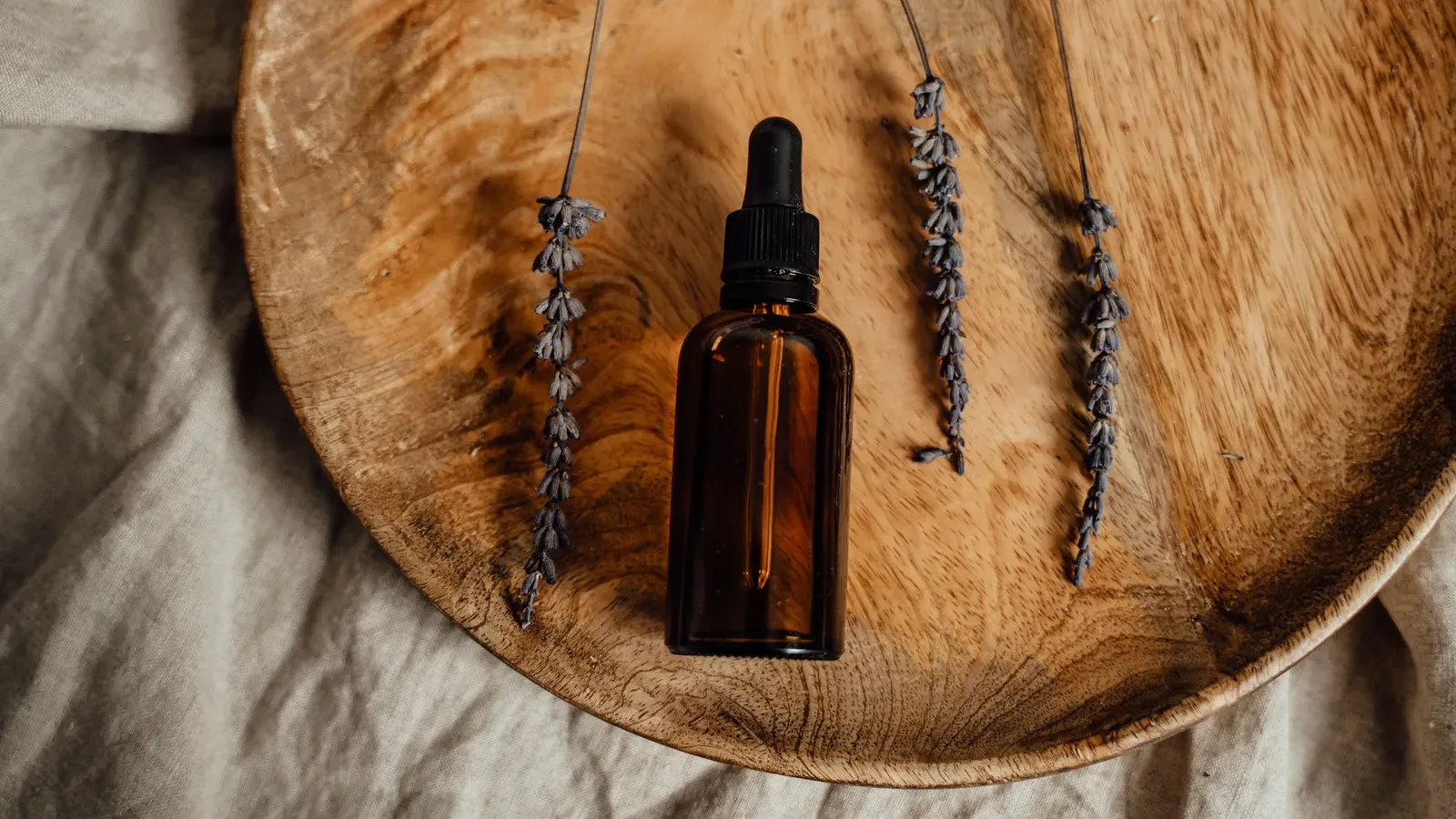
If you have ever dabbed lavender on your pillow at 2 a.m. hoping the night-sweat wake-up would be your last, you may have wondered whether it does anything at all. Lavender for sleep is an easy thing to try, which is exactly why it deserves a look at the evidence first.
I went through the pooled analyses, the trials in menopausal women and the studies of the Silexan capsule to find out what has actually been tested, and what has not. The two ways of using lavender have very different evidence, so I kept them apart.
Lavender for sleep comes in two forms with different evidence. Smelling or applying the oil helped sleep scores in a 2026 pooled analysis of 11 trials, though quality was uneven. The Silexan capsule improved sleep scores in a 221-person anxiety trial, and a second trial reported a similar trend. The National Institutes of Health calls the sleep benefit unclear.
What is lavender for sleep, and what are the two forms?
Lavender for sleep means using the oil of the lavender plant, Lavandula angustifolia, to try to settle at night. It comes in two forms: aromatherapy, where you smell the oil or put it on your skin, and a swallowed capsule made from the oil. The research on each is separate.
The first form is aromatherapy: a few drops on a pillow, a diffuser, or oil on the skin. The second is a capsule. The best-studied capsule is Silexan, a patented lavender oil preparation taken once a day, and the trials of it were mostly designed to test anxiety, not insomnia.
The sleep link is indirect. Many of the capsule trials enrolled people with anxiety who also slept badly, then measured sleep as a second result. That can be relevant in menopause, when worry and 3 a.m. waking often travel together, as our article on insomnia and anxiety at night in menopause explains.
One more distinction matters before the numbers. A capsule like Silexan is a measured, standardized product. Drops from a bottle of essential oil are not the same thing, and I did not find a trial that tested swallowing essential oil drops. This article does not suggest doing that.
What the National Institutes of Health says: the NCCIH page on lavender (last updated February 2025) says it is unclear whether aromatherapy with lavender oil has benefits for sleep quality or insomnia. For oral lavender oil, it says studies suggest it might help anxiety, but the research has limits, including small studies and a lack of independent funding and testing.
Does smelling lavender oil help you sleep?
Smelling lavender oil seems to help sleep a little on average, but the evidence is uneven. A 2026 meta-analysis pooled 11 randomized trials in 628 adults and found better sleep quality with lavender oil, with a standardized mean difference of −0.56. The authors rated the overall risk of bias as moderate.
In plain terms, the average result favored lavender, but the true size of the effect could be small or fairly large, and the trials disagreed with each other. Nine of the 11 trials used inhaled oil and two put it on the skin. None used a swallowed form.
Two details help you read it. Trials lasting two weeks or longer showed a clear benefit (−0.84), while trials shorter than two weeks did not (−0.20). And trials with a placebo showed a bigger effect (−0.87) than trials that compared lavender with usual care or no treatment (−0.39, not statistically significant). The authors also said the quality of some of the original studies was low.
The participants were mostly not women in menopause. The trials covered groups such as hospital patients, nurses and older adults, and the paper lists only one trial in postmenopausal women with insomnia (35 participants). So this result is a general signal, not a menopause answer.
What do the trials in menopausal women show?
The trials in menopausal women are mixed, mostly positive, but are small, mostly from Iran, and mostly short. A 2019 systematic review found three trials of lavender for sleep in menopausal and older women, and two of those were in postmenopausal women. Both found better sleep scores than the comparison group.
Here is what I could confirm from each, with the limits:
| Trial | Who and how | Sleep result | What to keep in mind |
|---|---|---|---|
| Gholamalian 2015, Iran (via a 2019 review) | 76 postmenopausal women, average age mid-50s; two drops of lavender on a cotton piece worn near the neck for a month, versus saline | Better Pittsburgh Sleep Quality Index (PSQI) score than the saline group (P < 0.001) | I read the trial only as the review reports it. A lower PSQI score means better sleep. |
| Kamalifard 2018, Iran (via the same review) | 104 menopausal women; a 500 mg capsule of dried lavender flower powder or a starch placebo for 8 weeks | Better PSQI than placebo (P = 0.003); no serious side effects reported | The review says the groups differed in average age and years since menopause, and the groups' sleep scores already differed at the start. The capsule is not Silexan. |
| Salehi-Pourmehr 2025, Iran | 132 postmenopausal women aged 50 to 60 with mild to moderate anxiety; lavender and bergamot oil inhaled and applied to the forearm three times a day for 8 weeks | PSQI improved versus control (adjusted difference −1.7, 95% CI −3.3 to −0.1) | I read the abstract only. The oil was a lavender-bergamot blend, the lower end of the confidence interval nearly touches zero, and the group that got oil plus mindfulness did no better than control. |
A fourth Iranian trial, published in 2026, enrolled 135 postmenopausal women in group cognitive behavioral therapy, with or without lavender aroma. In the lavender group, 79.1% reached good sleep quality (PSQI of 5 or lower), while the placebo-aroma and control groups showed no significant improvement. I read only the abstract. Because the design mixes therapy with scent, it is hard to say how much came from the lavender.
One trial points the other way. In a Brazilian double-blind trial of 35 postmenopausal women diagnosed with insomnia, inhaled lavender for 29 days did not improve sleep scores more than a sunflower-oil placebo (P = 0.22), although both groups improved with sleep hygiene advice.
A broader 2025 meta-analysis of aromatherapy for menopause symptoms (13 trials in the pooled analysis, many different oils) also found better sleep quality with aromatherapy, though only three trials fed the sleep result. The authors rated the evidence for most outcomes as low to very low, which is a reminder to hold these results loosely. I read its abstract only.
Does lavender help with hot flashes?
Only one trial, a crossover study of 100 Iranian women, found fewer hot flashes with lavender scent; two other trials (an inhaled-oil pilot in Brazil and an oral lavender softgel in Iran) found no difference from placebo. In the positive trial, women smelled lavender for 20 minutes twice a day for 12 weeks.
The positive trial compared lavender with diluted milk, and the two null trials were small (35 and 72 women), so together they are not enough to say lavender treats hot flashes. If night sweats are what wake you, a scent is unlikely to be the whole answer, and our herbal supplements guide explains how weak the evidence is for most plant remedies.
What is Silexan, and does the capsule help sleep?
Silexan is a standardized lavender oil capsule that has been studied at 80 mg a day, mostly for anxiety. In a 10-week trial of 221 adults with anxiety and poor sleep, PSQI scores fell by 5.5 points on Silexan and 3.8 on placebo. I found no Silexan trial in menopausal women.
The sleep results come from trials designed around anxiety, so they are a second question, not the main one:
- Kasper 2010: 221 adults with anxiety not otherwise specified, all with a PSQI above 5, took 80 mg a day or placebo for 10 weeks. The PSQI dropped by 5.5 points (44.7%) on Silexan versus 3.8 (30.9%) on placebo (P < 0.01, one-sided test). Anxiety scores also fell more, and 76.9% responded versus 49.1% on placebo.
- Kasper 2015: 170 outpatients with anxiety-related restlessness and disturbed sleep took 80 mg or placebo for 10 weeks. Anxiety scores fell by 12.0 points versus 9.3 (P = 0.03). The abstract says Silexan did better in all outcome measures, including the PSQI, but it does not give the sleep numbers.
- Woelk 2010: in adults with generalized anxiety disorder, 80 mg of Silexan for 6 weeks lowered anxiety scores by 11.3 points versus 11.6 for the benzodiazepine lorazepam, and the sleep diary results were comparable. This trial had no placebo group.
The 2010 trial's own abstract concluded that Silexan "alleviates anxiety related disturbed sleep." That fits the pattern: when sleep is poor because of anxiety, the capsule may help both. Whether it helps sleep broken by hot flashes, or by a body clock that has shifted, has not been tested in the studies I found.
The National Institutes of Health cautions that the oral lavender research has limitations, including small studies and a lack of independent funding and testing. I did not check who paid for each trial, so keep that in mind when reading these numbers.
Is Silexan approved by the FDA, and what does that mean?
Silexan is sold in the US as a dietary supplement, not as an FDA-approved medicine. The National Institutes of Health notes that dietary supplements are not approved by the FDA before they are sold. A supplement bottle can therefore be on a US shelf without proof that it treats anxiety or insomnia.
A US product that contains Silexan, Nature's Way CalmAid, is labeled as a dietary supplement in the NIH Dietary Supplement Label Database, with 80 mg per softgel and the standard note that its statements have not been evaluated by the FDA. Its label allows one softgel once or twice daily, while the trials tested 80 mg once a day. Outside the US, Silexan is authorized as a medicine in more than 20 countries, according to a 2025 review.
Trial results apply only to the specific preparation tested, at 80 mg a day, not to any lavender product.
How do lavender scent and lavender capsules compare?
Lavender scent and lavender capsules have different evidence, risks and uses. The scent has more sleep trials but they vary a lot, while the Silexan capsule has stronger trials for anxiety. Neither has been tested head to head for sleep, and neither has a large trial in menopausal women.
| Aromatherapy (scent or skin) | Silexan capsule (swallowed) | |
|---|---|---|
| Main target studied | Sleep quality | Anxiety, with sleep as a second result |
| Best evidence I read | 2026 pooled analysis, 11 trials, 628 adults | Placebo-controlled trials of 170 and 221 adults, 10 weeks |
| Menopause-specific data | Several small Iranian trials (see above) | No Silexan trial found. One Iranian trial gave 72 postmenopausal women an 80 mg lavender oil softgel or placebo for 60 days; only sexual symptoms improved more than placebo. |
| Side effects the NIH lists | Headache, cough; allergic skin reaction if applied to skin | Diarrhea, headache, nausea, burping |
| Main limit | Mixed trial quality; large differences between trials | Mostly anxiety trials; small studies and funding concerns noted by the NIH |
If your main problem is a racing mind at night, the capsule evidence is more relevant. If you simply want a low-risk bedtime ritual, scent has more sleep-focused trials behind it. Our menopause anxiety guide explains the wider picture of worry, hormones and sleep.
Who should not use lavender?
Several groups should skip lavender or ask a professional first. The National Institutes of Health points to people who are allergic to it, those who are pregnant or breastfeeding, those taking sedative drugs or herbs, and anyone with surgery coming up. It also notes a few cases of breast swelling in children using lavender skin products.
- Anyone allergic to lavender or prone to skin reactions. The NIH says lavender products used on the skin may cause allergic skin reactions in some people. Stop if a rash, itching or swelling appears.
- Pregnancy and breastfeeding. The NIH says little is known about whether lavender is safe in either, and the CalmAid label says not to use it if you are pregnant, nursing or under 12 years of age. Pregnancy is still possible in perimenopause, so this matters until a doctor confirms you are postmenopausal.
- People taking sedatives or having surgery. The NIH says there are theoretical reasons to suspect lavender might interact with some sedative drugs or herbs, which is especially important before a surgical procedure.
- Children. The NIH reports a few cases of breast tissue swelling in children who used skin products containing lavender, and says it is unclear whether lavender was the cause. A 2023 review counted eight boys and four girls in reports since 2007, all of whom improved after stopping lavender and/or tea tree oil, and said a cause could not be established. If grandchildren are around, don't put lavender products on them.
What are the possible side effects of lavender?
The side effects of lavender depend on the form. The National Institutes of Health says oral lavender products may cause diarrhea, headache, nausea or burping, aromatherapy may cause headache or coughing, and lavender on the skin may cause allergic reactions. Lavender is likely safe in food amounts and possibly safe as aromatherapy, according to the same page.
In the Silexan trials, a 2025 review describes the side effects as limited to burping and mild, short-lived stomach complaints. In the 2015 restlessness trial, 33.7% of people on Silexan and 35.7% on placebo reported some adverse event, so overall rates were similar. A separate 2021 study of 34 evaluable recreational drug users found that 80 mg and a much higher 640 mg dose of Silexan were rated like placebo and caused no sedation, unlike lorazepam.
These findings are reassuring but come from short trials, and 10-week trials cannot tell us what happens after months or years. The 2025 review says Silexan was not associated with drug interactions, sedation or dependence, but its lead author led several of the trials it summarizes, and both authors report consulting or advisory roles for Schwabe, the company that makes Silexan, so it is not an independent check. The NIH's caution about sedatives still stands.
Can lavender interact with sleeping pills or other medicines?
Lavender might interact with sedatives, but nobody has shown it. The National Institutes of Health says there are theoretical reasons to suspect lavender could interact with some sedative drugs or herbs. Silexan trial reports describe no sedation and no interactions, so the risk may be small, yet it has not been ruled out for every combination.
If you take a prescription sleep medicine, a benzodiazepine, an anti-anxiety drug or an antidepressant, tell your pharmacist you want to add lavender. The same goes for other calming herbs: our articles on valerian, lemon balm, chamomile and GABA each describe their own cautions, and stacking several at once makes it impossible to tell which one is doing what.
If you want to try lavender, how do you do it sensibly?
If you try lavender, change one thing at a time and give it a fair test. In the pooled analysis, trials lasting two weeks or more showed a clear benefit, while shorter trials did not. So use it nightly for at least two weeks, keep a simple sleep log, and compare with how you slept before.
- Scent first. It is the lowest-risk option in the trials I read. I am not giving an amount of oil, because the trials used very different methods (drops on a pillow, a cotton piece near the neck, an inhaled blend).
- Dilute, and watch your skin. The authors of the pooled analysis noted that undiluted oil was less effective than diluted oil, which they called unexpected. Whatever you do, the NIH warns that skin products can cause allergic reactions.
- Choose a capsule only with a pharmacist's or doctor's input. The trial dose was 80 mg a day of a standardized preparation, but that is a trial detail, not advice for you.
- Judge it by your sleep, not by promises. If nothing changes in a few weeks, stop and move on. Our herbal supplements guide compares the other options.
Talk to your doctor if...
You should talk to your doctor if poor sleep lasts most nights for weeks, if worry or low mood is heavy, or if you take medicines that make you sleepy. Lavender is a small tool, and these signs can point to something that needs a proper plan, not a scented pillow.
- you are pregnant, could be pregnant, or are breastfeeding
- you take a sleeping pill, benzodiazepine, antidepressant, opioid or any other sedating medicine
- you have surgery planned, since the NIH flags possible sedative interactions around procedures
- you get a rash, swelling, a cough that will not settle or stomach problems after starting lavender
- anxiety, panic or low mood is affecting your days, not only your nights
- you wake drenched in sweat most nights, which may call for treatment aimed at hot flashes
Where to go from here
Where you go next depends on what is keeping you up. If waking at night comes with a racing mind, read insomnia and anxiety at night in menopause and the menopause anxiety guide. For other plant options, with their own evidence and cautions, see our herbal supplements guide, valerian and lemon balm.
Key takeaways
- Two forms, two bodies of evidence: scent has sleep trials; the Silexan capsule has anxiety trials that also measured sleep.
- The signal is positive but uneven: a 2026 pooled analysis of 11 trials favored lavender oil for sleep, with large differences between trials.
- Menopause data are small: a few Iranian trials found better sleep scores, and most I could read only through summaries.
- The NIH calls it unclear: its lavender page says the sleep benefit of aromatherapy is unclear and oral studies have limits.
- Check safety first: allergy, pregnancy, sedatives, surgery and children are the cautions the NIH names.
Frequently asked questions
Does lavender help you sleep in menopause?
Possibly a little, but the proof is thin. A few small trials in postmenopausal women, mostly from Iran, found better sleep scores with lavender scent or capsules. A 2026 pooled analysis of lavender oil in adults also leaned positive. The National Institutes of Health still calls the sleep benefit unclear, so treat lavender as a low-risk experiment, not a treatment.
Is lavender oil or a lavender capsule better for sleep?
Nobody has compared them head to head for sleep. Scent has the most sleep trials, but they are uneven. The Silexan capsule has the stronger trials, mainly for anxiety, with sleep as a second measure. A capsule is a swallowed supplement, so it raises more medicine-interaction questions than a few drops of oil on a pillow.
Is Silexan FDA approved?
Silexan is not FDA approved; in the US it is sold as a dietary supplement. The National Institutes of Health notes that supplements are not approved by the FDA before they are sold. Silexan has been studied in trials for anxiety, but a supplement label on a US shelf is not an FDA approval for treating anxiety or insomnia.
Can lavender oil interact with sleeping pills?
It might. The National Institutes of Health says there are theoretical reasons to suspect lavender could interact with some sedative drugs or herbs, which matters especially before surgery. Silexan trial reports describe no sedation or drug interactions, but if you take a sleeping pill, a benzodiazepine or another sedative, ask your pharmacist before adding lavender.
What are the side effects of lavender?
Swallowed lavender oil products can cause burping, nausea, diarrhea or headache, according to the National Institutes of Health. Aromatherapy may cause headache or coughing, and lavender products on the skin may cause allergic reactions. In the Silexan trials, burping and mild stomach upset were the main side effects described, and in one trial overall side-effect rates were similar to placebo.
Is lavender safe during pregnancy or around children?
The evidence is limited. The National Institutes of Health says little is known about whether lavender is safe during pregnancy or breastfeeding. It also notes a few cases of breast tissue swelling in children who used skin products containing lavender, though it is unclear whether lavender caused them. Anyone who could still become pregnant should ask a doctor.
Sources cited
- National Center for Complementary and Integrative Health. Lavender (last updated February 2025). nccih.nih.gov
- Shen H, Zhang LJ, Zhu WY. The sleep-enhancing effect of lavender essential oil in adults: a systematic review and meta-analysis. Holist Nurs Pract. 2026;40(2):105-118. pmc.ncbi.nlm.nih.gov
- Roozbeh N, Ghazanfarpour M, Khadivzadeh T, et al. Effect of lavender on sleep, sexual desire, vasomotor, psychological and physical symptom among menopausal and elderly women: a systematic review. J Menopausal Med. 2019;25(2):88-93. pmc.ncbi.nlm.nih.gov
- Salehi-Pourmehr H, Mojtahedi M, Asnaashari S, Farshbaf-Khalili A, Ostadrahimi A. The impact of aromatherapy with Citrus bergamia-Lavandula angustifolia essential oil and/or mindfulness-based therapy on postmenopausal health: a factorial randomized controlled trial. Complement Ther Med. 2025;91:103190. pubmed.ncbi.nlm.nih.gov
- Shayan A, Tapak L, Satari M, et al. The impact of cognitive behavioral group therapy with or without lavender aroma on sleep quality in menopausal women: randomized controlled trial. Curr Aging Sci. 2026. pubmed.ncbi.nlm.nih.gov
- Karimi L, Larki M, Mohammadi S, Safyari M, Makvandi S. Aromatherapy for the management of menopause symptoms: an updated systematic review and meta-analysis. J Caring Sci. 2025;14(1):58-71. pmc.ncbi.nlm.nih.gov
- Kasper S, Gastpar M, Müller WE, et al. Silexan, an orally administered Lavandula oil preparation, is effective in the treatment of 'subsyndromal' anxiety disorder: a randomized, double-blind, placebo controlled trial. Int Clin Psychopharmacol. 2010;25(5):277-287. pubmed.ncbi.nlm.nih.gov
- Kasper S, Anghelescu I, Dienel A. Efficacy of orally administered Silexan in patients with anxiety-related restlessness and disturbed sleep: a randomized, placebo-controlled trial. Eur Neuropsychopharmacol. 2015;25(11):1960-1967. pubmed.ncbi.nlm.nih.gov
- Woelk H, Schläfke S. A multi-center, double-blind, randomised study of the lavender oil preparation Silexan in comparison to lorazepam for generalized anxiety disorder. Phytomedicine. 2010;17(2):94-99. pubmed.ncbi.nlm.nih.gov
- Kasper S, Eckert A. Silexan in anxiety, depression, and related disorders: pharmacological background and clinical data. Eur Arch Psychiatry Clin Neurosci. 2025;275(6):1621-1635. pmc.ncbi.nlm.nih.gov
- Seifritz E, Möller HJ, Volz HP, et al. No abuse potential of Silexan in healthy recreational drug users: a randomized controlled trial. Int J Neuropsychopharmacol. 2021;24(3):171-180. pmc.ncbi.nlm.nih.gov
- Braunstein EW, Braunstein GD. Are prepubertal gynaecomastia and premature thelarche linked to topical lavender and tea tree oil use? touchREV Endocrinol. 2023;19(2):60-68. pmc.ncbi.nlm.nih.gov
How this article was checked
The NCCIH lavender page and the Shen 2026 meta-analysis were read in full text. The Roozbeh review was read in full through Europe PMC; its sleep trials (Gholamalian, Kamalifard) are described only as that review reports them. The Salehi-Pourmehr, Shayan, Karimi, Kasper 2010, Kasper 2015, Woelk, Kasper and Eckert, Seifritz and Braunstein papers were read as abstracts only. I did not check who funded each trial. The CalmAid label was read in the NIH Dietary Supplement Label Database record (through its public data feed). This article gives no dose advice beyond the doses used in trials.
It has not been reviewed by a clinician. Ellen Hayes is a researcher and writer, not a doctor, and nothing here is a diagnosis or a substitute for being seen by one.

Ellen Hayes
Health & Wellness Writer and Researcher
Hi — I'm Ellen. I'm not a doctor. I read the research on lavender for sleep, and this is what it does and doesn't show.
I'm not a doctor. I'm not an expert — and I'm never going to talk down to you like one. I'm a woman in the middle of perimenopause who got tired of vague answers, started reading the actual research, and writes it down here in plain English, the way I'd explain it to a friend over coffee. More about Ellen →