Menopause and Diabetes: Why Hot Flashes Matter More Than Age
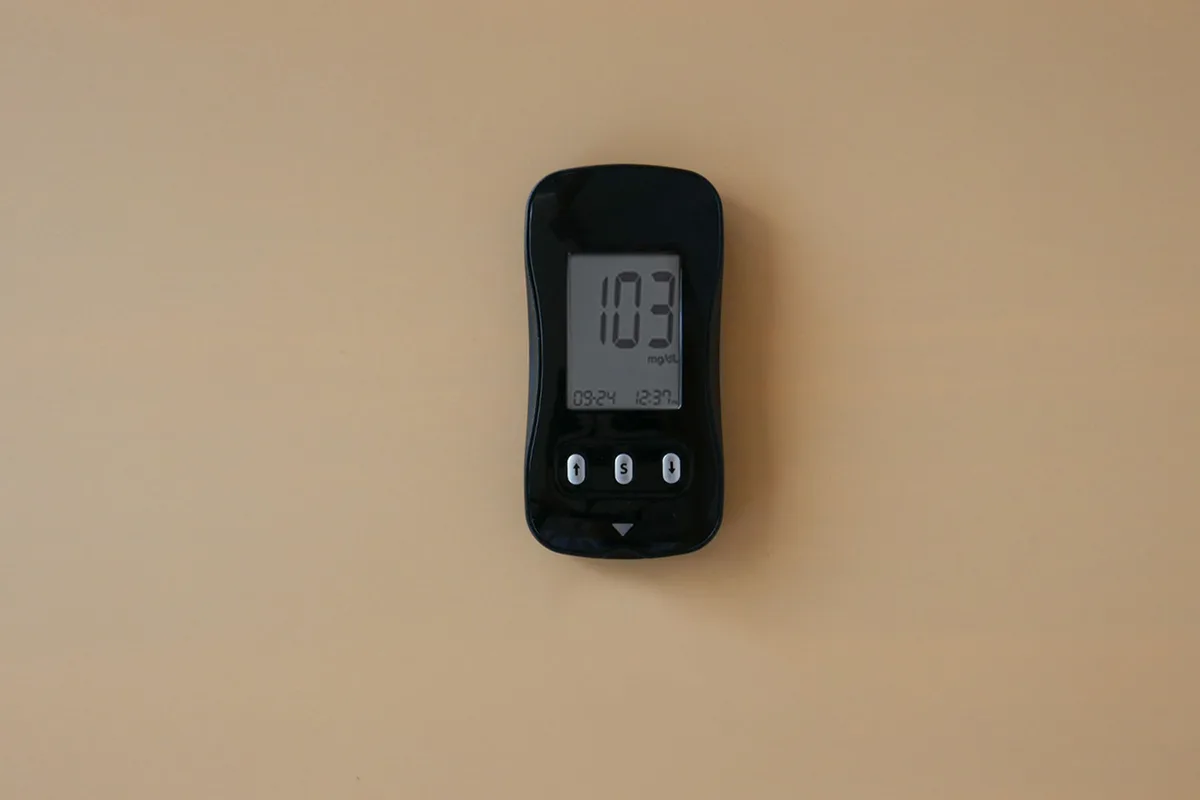
Menopause does raise your average diabetes risk, but age at menopause itself is a surprisingly weak predictor unless it happens quite early. A newer, stronger signal has emerged instead: women with persistent hot flashes and night sweats through the transition have about 50% higher odds of developing diabetes, regardless of their weight or activity level.
I went looking for this one expecting a tidy story — menopause lowers estrogen, estrogen protects insulin sensitivity, so diabetes risk should climb in a straight line with how early you go through it. The actual research, once I read the studies themselves instead of the headlines about them, told a messier and more useful story.
Age at menopause, it turns out, barely moves the needle for most women. Something most of us have been taught to think of as merely uncomfortable — frequent hot flashes and night sweats — moves it a lot more.
Does menopause actually raise your diabetes risk?
Yes, on average — menopause does coincide with real metabolic changes, not just the symptoms everyone talks about. A large 2025 cohort study that followed over a million women gives one of the clearest pictures yet of how age at menopause specifically connects to diabetes risk, and the picture is messier than the usual headline.
That's a genuine mechanism, not a guess — but notice it's tested in mice, and the human side of the story is about association, not a proven chain of cause and effect in any one woman. The same researchers also raise a second, less flattering possibility: that early menopause itself might be a marker of faster biological aging in general, rather than a direct cause of diabetes on its own.
How much does the age you reach menopause matter?
Only meaningfully, it turns out, if menopause arrives quite early. The Korean cohort split women into four groups by age at menopause and tracked who developed type 2 diabetes over more than eight years on average, comparing each group back to women who reached menopause at 50 or older.
Read the numbers plainly: a 13% relative increase for the earliest group is real but modest, and by the 45–49 group — where most women actually land — the risk is statistically indistinguishable from menopause at 50 or later. If you went through menopause at a typical age, this particular number isn't telling you much about your own risk at all.
What's a stronger signal than age at menopause?
Hot flashes and night sweats, as it turns out — tracked not just as a yes-or-no symptom but as a pattern over 17 years of follow-up in the long-running Study of Women's Health Across the Nation. And the effect size here is a lot bigger than anything age at menopause produced.
That confidence interval is worth sitting with honestly — it runs from a modest 12% increase up to roughly doubled risk, which is a wide range. But the whole interval sits above 1.0, and it held up after accounting for weight, exercise, smoking, and drinking, which rules out the simplest explanation that hot flashes are just a proxy for a less healthy lifestyle overall.
Why isn't this part of official screening yet?
Because the finding is genuinely new, and the researchers themselves are careful about what it does and doesn't prove. A 50% higher relative risk is real and statistically solid, but the paper doesn't explain the biological mechanism, and the authors stop well short of recommending any change to how diabetes screening works.
What the researchers actually say, no more and no less: “Women with frequent and/or persistent VMS over the [menopause transition] may represent a high-risk group to target for diabetes prevention.” That's a call for more research and attention — not a diagnosis, and not a new screening rule.
I want to be straightforward about what this study is and isn't. It's one well-designed cohort finding a statistically solid association, with a mechanism that isn't pinned down yet. That's exactly the stage of evidence where a finding is worth knowing about and worth mentioning to your doctor — and not yet the stage where it rewrites anyone's guidelines.
Who should actually get screened, and when?
Officially, the criteria have nothing to do with menopause at all — they're based on age and weight. That's worth knowing plainly, because it means a lean woman with frequent hot flashes could easily fall outside the groups current guidelines tell doctors to test.
Other recognized risk factors — family history, a history of gestational diabetes or polycystic ovary syndrome, and certain racial and ethnic groups at higher population risk — can lower that age-35 starting line further. None of that menu currently includes menopause transition symptoms, which is exactly the gap the SWAN findings are pointing at.
What actually helps bring risk down?
The same things that help with almost every other midlife risk on this site, which isn't a cop-out — it's genuinely what the evidence supports. There's no separate, special diabetes-prevention plan hiding behind a hot flash; the lifestyle factors that lower risk in general studies are the ones worth focusing on here too.
Worth mentioning at your next appointment if any of these apply:
- Frequent or persistent hot flashes and night sweats, especially if you don't otherwise meet standard screening criteria
- A family history of type 2 diabetes
- Menopause before age 40
- A history of gestational diabetes or polycystic ovary syndrome
For the specific mechanics of weight and body composition shifting around menopause, I've covered that separately in menopause weight gain; for diet, the Mediterranean diet and menopause sleep covers an eating pattern with real evidence behind it for metabolic health generally, not just sleep. And if you've been told your 3 a.m. waking is a blood sugar crash, blood sugar and menopause sleep is worth reading before you believe it.
Where to go from here
For the hormonal cholesterol shift that tracks a similar pattern around the final period, see menopause cholesterol. For the related, separately-documented blood pressure pattern, menopause high blood pressure covers the non-dipping nighttime pattern specifically. And if the popular "menopause makes you hungrier" claim is part of what brought you here, does menopause really make you hungrier? looks honestly at how thin that specific evidence actually is.
For how all of this fits into the bigger picture of midlife sleep, start at the complete perimenopause and menopause sleep guide.
Key takeaways
- Menopause is linked to real metabolic change, but age at menopause itself only modestly raises diabetes risk, and mainly if menopause happens before 40.
- In a 2025 cohort of 1.1+ million women, premature menopause (before 40) carried a 13% higher diabetes risk than menopause at 50+; menopause at 45–49 carried essentially no added risk.
- Persistent hot flashes and night sweats through the transition were linked to a 50% higher diabetes risk in a 17-year SWAN study, independent of weight, activity, smoking, and alcohol.
- The SWAN researchers don't explain why — only that the pattern holds, describing it as a group worth “targeting for diabetes prevention,” not a diagnosis.
- Official US screening guidelines don't mention menopause at all: testing is triggered by age (35–70) plus overweight or obesity, or earlier for specific risk factors.
- That gap means a lean woman with frequent hot flashes could fall outside current screening criteria despite meaningfully elevated risk.
- The lifestyle factors that lower diabetes risk generally — diet, physical activity, consistent sleep — are the ones worth focusing on here; there's no separate menopause-specific protocol.
Frequently asked questions
Does menopause raise your risk of type 2 diabetes?
Yes, on average, but age at menopause itself is a weak predictor unless menopause happens before 40. A 2025 study of over 1.1 million women found almost no added risk for menopause at 45-49 compared with 50 or older.
What matters more than age at menopause for diabetes risk?
Persistent hot flashes and night sweats. A 17-year SWAN study found women with a persistent vasomotor symptom pattern had about 50% higher odds of developing diabetes, independent of weight, physical activity, smoking, and alcohol use.
Do doctors know why hot flashes would predict diabetes risk?
Not yet. The SWAN researchers found the association but didn't identify a biological mechanism in this study — they describe it as a pattern worth watching, not a proven cause-and-effect relationship.
Does official screening guidance take menopause into account?
No. The current USPSTF recommendation is based on age (35 to 70) and body weight (overweight or obesity), not menopausal status or symptoms like hot flashes.
Should I ask my doctor about diabetes screening if I have frequent hot flashes?
It's a reasonable thing to mention, especially if you don't otherwise meet the standard age-and-weight screening criteria. It isn't an official recommendation yet, but the research is a legitimate reason to raise the question.
What actually lowers diabetes risk around menopause?
The same evidence-based basics that lower it generally: regular physical activity, a diet pattern like the Mediterranean diet, and a consistent sleep schedule — not a separate menopause-specific intervention.
Sources cited
- Ko B, Jung J, Han K, Nam GE. Age at Menopause and Development of Type 2 Diabetes in Korea. JAMA Netw Open. 2025;8(1):e2455388. jamanetwork.com
- Hedderson MM, Liu EF, Lee C, El Khoudary SR, Gold EB, Derby CA, Thurston RC. Vasomotor Symptom Trajectories and Risk of Incident Diabetes. JAMA Netw Open. 2024;7(10):e2443546. pmc.ncbi.nlm.nih.gov
- US Preventive Services Task Force, Davidson KW, Barry MJ, et al. Screening for Prediabetes and Type 2 Diabetes: US Preventive Services Task Force Recommendation Statement. JAMA. 2021;326(8):736–743. uspreventiveservicestaskforce.org
How this article was checked
The Korean cohort's hazard ratios and discussion of mechanism, the SWAN study's vasomotor-symptom hazard ratio and its authors' own clinical-implication statement, and the USPSTF's exact age and weight thresholds were all read directly from the primary documents or publisher pages, not summarized secondhand. Where the SWAN paper didn't offer a mechanism, this article says so explicitly rather than filling the gap with a guess. All sources are listed and linked in full above.
It has not been reviewed by a clinician. Ellen Hayes is a researcher and writer, not a doctor, and nothing here is a diagnosis or a substitute for being seen by one — especially for deciding when you personally should be screened for diabetes.

Ellen Hayes
Health & Wellness Writer and Researcher
Hi — I'm Ellen. I expected this one to be a straightforward "hormones drop, risk goes up" story, and I had to rewrite my own assumptions twice while reading the actual studies. The hot flash finding surprised me more than anything else I've covered this month.
I'm not a doctor. I'm not an expert — and I'm never going to talk down to you like one. I'm a woman in the middle of perimenopause who got tired of vague answers, started reading the actual research, and writes it down here in plain English, the way I'd explain it to a friend over coffee. More about Ellen →